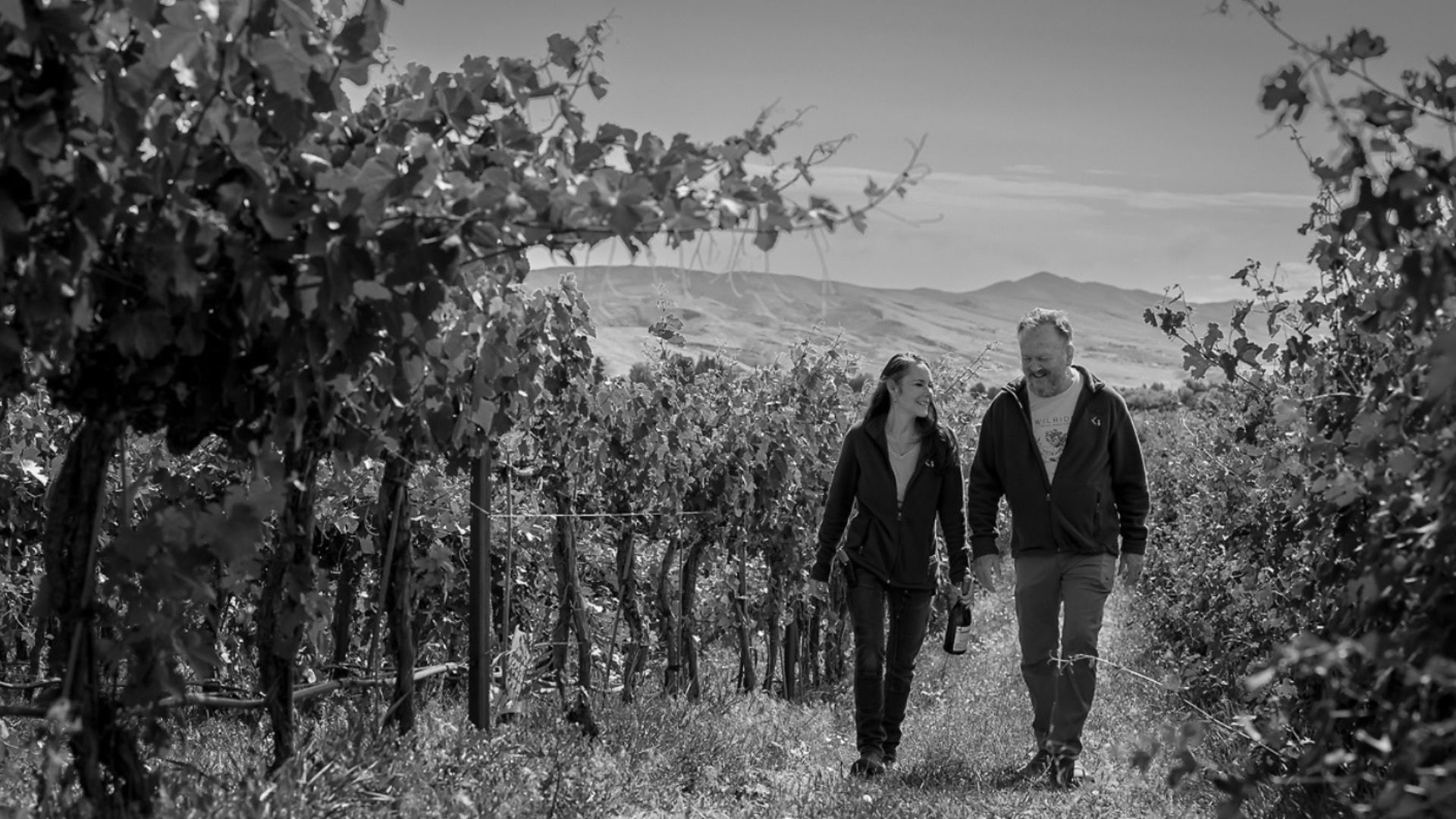
Whether introducing Italian varieties, launching a distillery or changing state wine laws, Wilridge founder Paul Beveridge has repeatedly challenged assumptions about what belongs in Washington wine.
Three years after planting what he believed was Pinot Blanc, Paul Beveridge was standing in his newa Washington vineyard when his friend Stu called out from between the rows of vines.
“Paul, why is the Pinot Blanc purple?”
Somewhere between a half-acre experimental vineyard block and a bundle of dormant winter cuttings, the wrong grape had found its way into the ground. Instead of Pinot Blanc, Beveridge had ended up with Zweigelt, an Austrian red variety few growers in Washington knew much about at the time. Most vineyard owners might have viewed the mix-up as an expensive mistake. Beveridge tasted the wine, loved it and planted more.
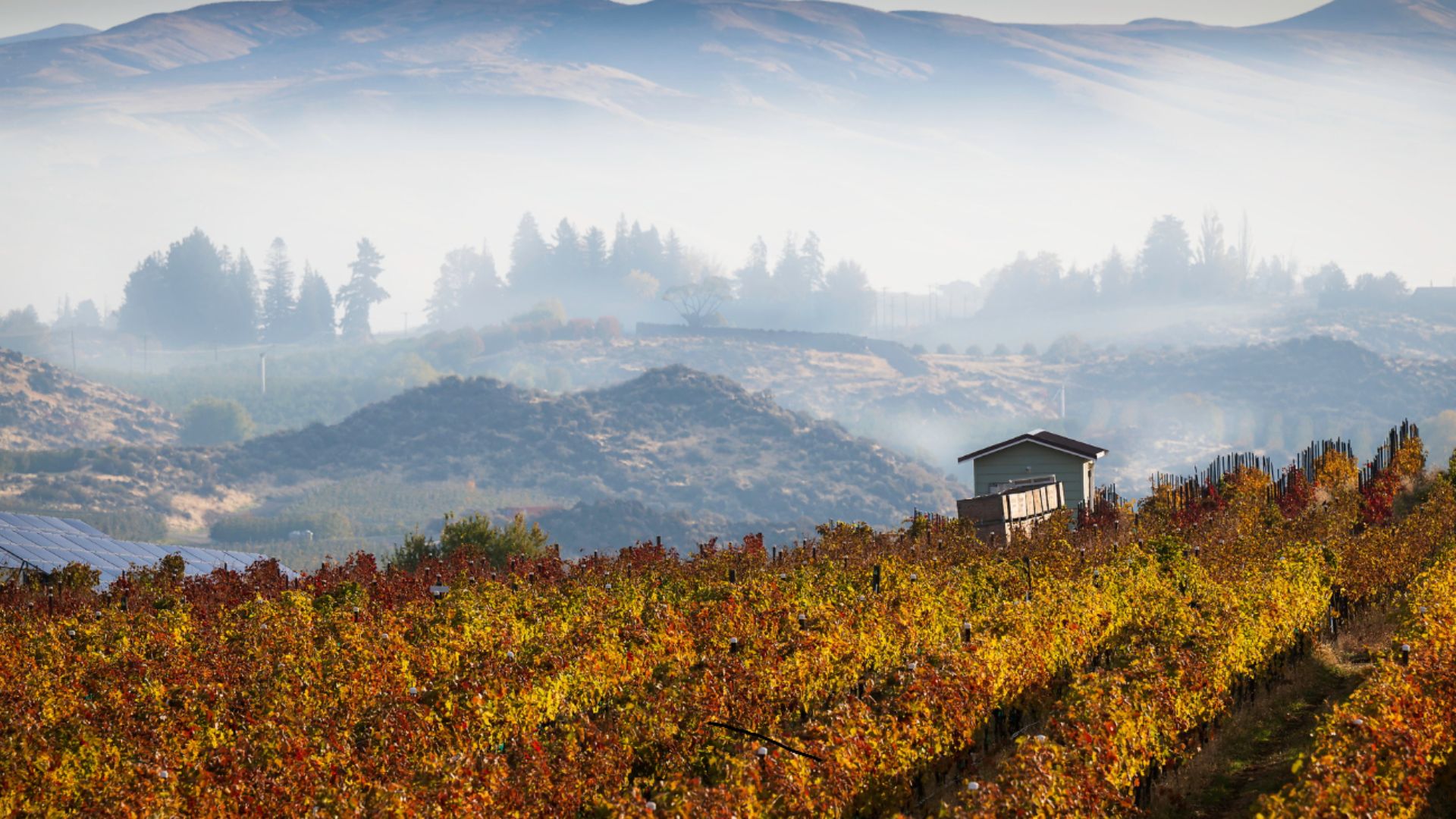
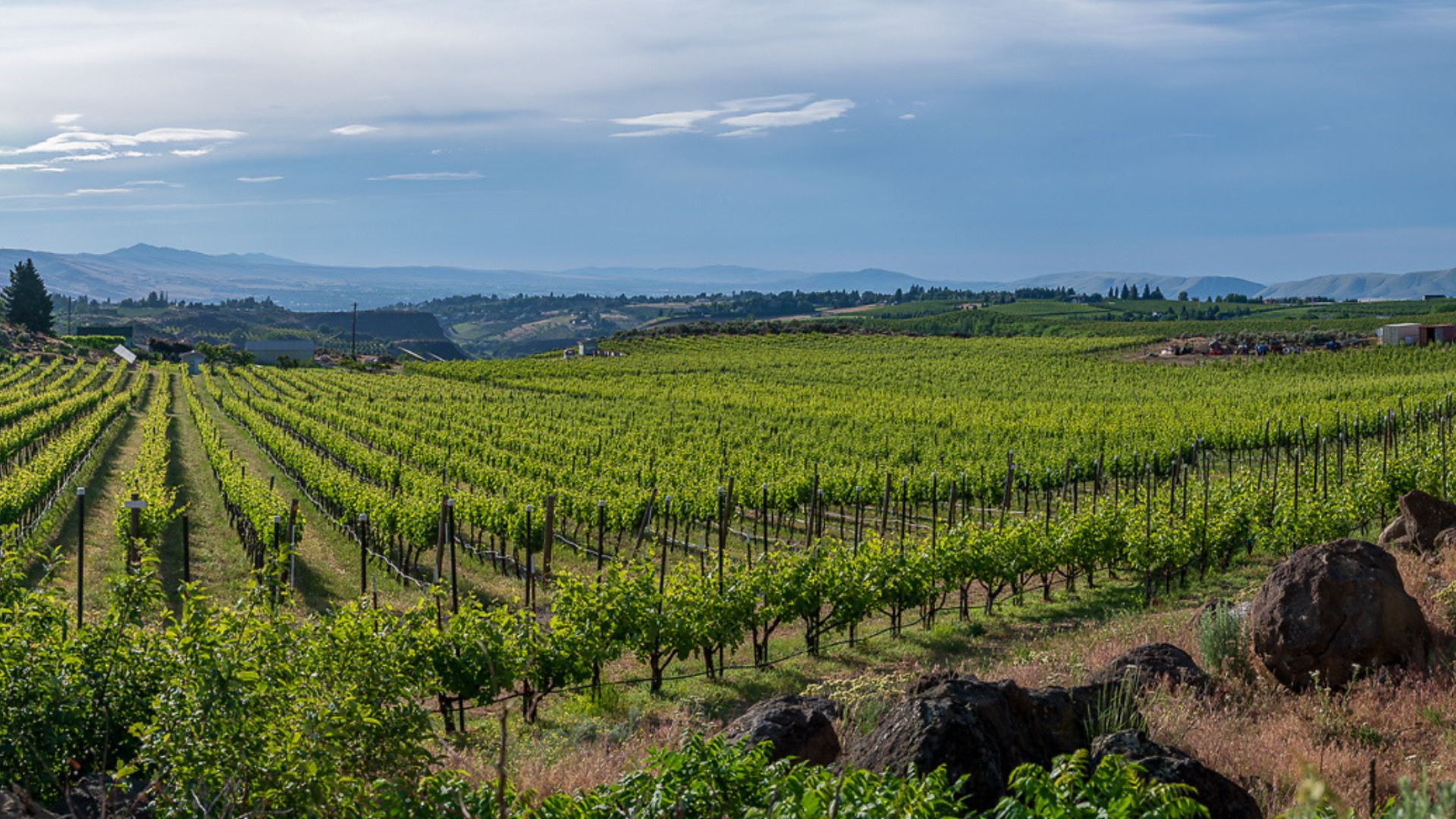
The story has become something of a legend at Wilridge Winery, the Seattle-born winery Beveridge founded in 1988 and later rooted in the volcanic soils of the Naches Heights AVA. Over the decades, Wilridge has evolved into one of Washington wine’s great outliers: a winery where Nebbiolo and Sagrantino share space with Zweigelt and Touriga FrancaNacional, where one of the state’s longest-running certified organic and biodynamic vineyards supplies the cellar, and where a centuries-old Portuguese still transforms grape pomace into grappa.
In many ways, the accidental Zweigelt encapsulates both the winery and its founder. What others might see as a mistake, Beveridge sees as an opportunity.
Beveridge is an environmental attorney, farmer, winemaker, educator, lobbyist and one of Washington wine’s most persistent advocates. From founding the oldest urban winery in Seattle, helping establishing the Naches Heights AVA, to advocating for small wineries in Olympia, from introducing obscure grape varieties, to experimenting with refillable bottles and kegs, Beveridge has spent much of the last four decades pushing against assumptions about what Washington wine can be.
Through Family Wineries of Washington State, the organization he helped create and now leads, he has spent years fighting for small producers and consumers. Along the way, he helped secure legal changes that allowed winery restaurants, off-site tasting rooms, wine tastings at farmers markets and refillable bottle programs.
Yet the heart of Wilridge has always been in the vineyard. At a time when much of Washington wine was defining itself through Cabernet Sauvignon, Merlot, Riesling and Chardonnay, Beveridge found himself increasingly drawn elsewhere. His fascination began with Nebbiolo, the famously temperamental Italian grape responsible for Barolo and Barbaresco.
“What we noticed right off the bat with Nebbiolo was that it suddenly differentiated us from all the other wineries in Washington that were just making French varieties,” he recalls. “Here we were making an Italian-style wine.”
That realization sparked what he describes as a love affair with Italian grapes. Sangiovese followed. Barbera, Pinot Grigio, and finally Sagrantino, the deeply colored, powerfully tannic variety from Umbria that Wilridge introduced to the Pacific Northwest. Today, Beveridge estimates that roughly fifteen vineyards in the region grow Sagrantino, all tracing their origins back to material first planted at Wilridge.
Nebbiolo, meanwhile, has become one of the winery’s most celebrated wines,. “We’ve been called best Nebbiolo a number of times,” Beveridge says. “We won best Nebbiolo made outside of Italy twice.”
The grapes are ultimately part of a larger philosophy. While critics occasionally fault Washington for lacking a signature variety in the mold of Napa Cabernet or Oregon Pinot Noir, Beveridge sees diversity as the state’s greatest advantage.
“Washington State is the same square mileage as half of Italy,” he says. “You wouldn’t expect Italy or FranceFrance or Italy to just focus on one or two grape varieties.”
In his view, Washington remains astonishingly young. Modern winegrowing here stretches back barely half a century, leaving enormous amounts of potential still unexplored.

“We’re only fifty years old,” he says. “We’re just beginning to discover what grows best here.”
The winery’s fascination with alternative varieties extends beyond Italy to Austria and Portugal. The accidental Zweigelt remains a favorite story, but so too do the Portuguese grapes that underpin Wilridge’s ambitious Port-style program. Touriga Nacional, Sousao, Tinta Cão, Tinta Roriz and the state’s first Touriga Franca now feed a 22-barrel solera system, while a ten-year-old tawny bottling waits in the wings. One successful experiment inevitably leads to another. Even now, Beveridge is planning future plantings of Furmint, the Hungarian grape behind Tokaji, along with additional Italian varieties.
If experimentation defines Wilridge’s wines, stewardship defines its farming. When the vineyard was planted, Beveridge had two young children and little interest in exposing them to synthetic chemicals.
“I didn’t want my kids out there playing around a bunch of toxic chemicals,” he says.
Organic farming felt like common sense. Washington’s dry climate, low disease pressure and rain-free harvests made it one of the easiest places in the world to grow grapes organically, though Beveridge still finds it surprising that more producers have not embraced the approach.
“I went to a conference and they had a list of biodynamic wineries and vineyards from around the world, and they were the top wineries in the world,” he recalls. “I thought, I want to be on that list.”
Today, Wilridge operates what Beveridge says is the oldest certified organic and continuously biodynamic vineyard in Washington.
“We can’t argue with the results,” he says. “The wines are great and the vines are very healthy.”
The roots of that thinking stretch back even further, to a trip through Europe after law school. Traveling through Bra in Italy’s Piedmont region, Beveridge encountered the Slow Food movement and its philosophy of local agriculture, shared meals and community-based food systems. The experience left a lasting impression.
“This whole idea that you should slow down, and enjoy your meals with family, and eat local food and support the local ecosystem.”
Years later, Wilridge became the first Washington producer included in the influential Slow Wine Gguide and later the first in the state to earn its highest distinction, the coveted Snail Award. For Beveridge, the recognition felt less like an accolade than confirmation that the values he had been pursuing for decades still mattered.
Wilridge eventually became home to one of Washington’s first winery-owned distilleriesy. Looking at the piles of grape skins left over after harvest, Beveridge saw something other than compostwaste.
“We had this waste product of the grape skins left over from winemaking. Why not make grappa?”
The answer became another extension of Wilridge’s closed-loop philosophy. Using a traditional Portuguese still design that Beveridge notes has remained largely unchanged for six centuries, the winery began producing grappa and later expanded into fruit brandies made from apples, pears, apricots and plums growing on the property. The orchard fruit, once economically marginal on its own, became the basis for spirits that now appear in cocktails throughout their tasting rooms in Pike Place Market, Woodinville and Yakima.
That same willingness to rethink established systems has guided Beveridge’s advocacy work. Through Family Wineries of Washington State, he continues to push for policies that make local wine easier to sell and easier to find. Some of the battles have taken years. When Wilridge first sought to combine a winery and restaurant, the answer was no. It took three years to change the law. Off-site tasting rooms required another campaign. Farmers market tastings required another. Refillable bottles and kegs required another. The organization’s original “Winery Bill of Rights” for wineries contained ten goals. Eight have now been achieved.
“We’re always trying to make local wine easier to find,” Beveridge says. “Washingtonian’s want to buy local wines, but with retail shelves dominated by corporate wines, they can’t find them.”
Nearly four decades after its founding, Wilridge remains difficult to categorize. It produces Italian reds in a state known for Cabernet, embraces biodynamics and organics in a region slow to adopt themit and continues to champion initiatives that once seemed improbable. Much like its founder, the winery has spent its life asking a simple question: why not?
As Beveridge looks toward future plantings of Furmint and other varieties, he sees the same opportunity that first drew him to Washington wine decades ago. Others may see a region still searching for its identity. Beveridge sees a region still discovering its possibilities.
“Our modern wine industry is We’re only fifty years old,” he says. “We haven’t even begun to plant all the wonderful places and varieties in Washington.”
Hero Photo by Mount Burns III