The name AniChe has appeared on wine labels since 2009. Long before Anaïs Mera knew she would one day help run a winery, it was already part of her identity.
When Rachael Horn and her husband Todd Mera founded AniChe Cellars, she named the Columbia Gorge winery after her two children: Anaïs Mera and Che Horn. At the time, Mera was 18 years old and her brother was about 15. Neither knew exactly what role the winery would play in their future, but both were there from the beginning, helping their mother navigate the uncertainty, excitement and relentless work of building a wine business from scratch.
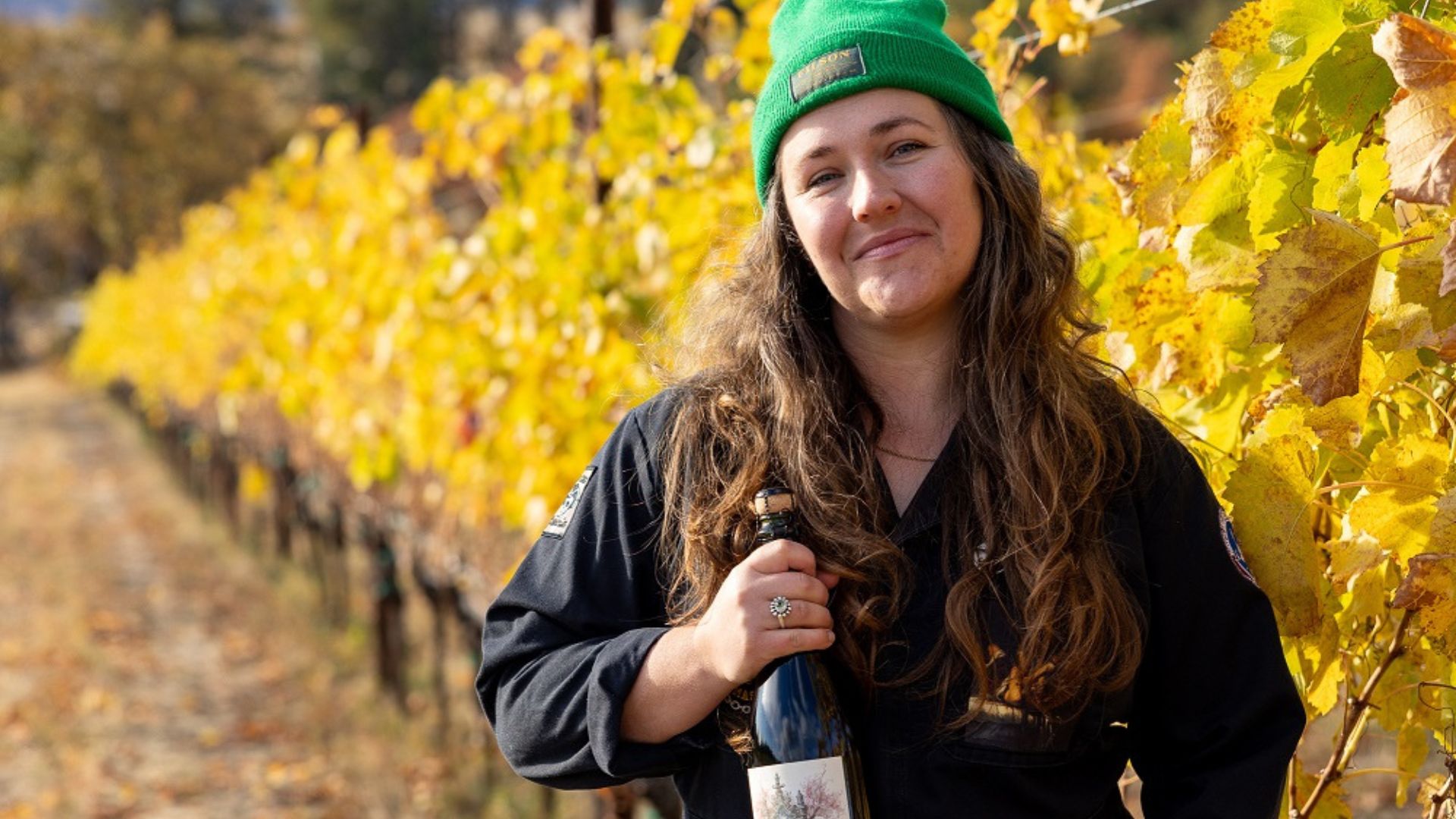
Today, AniChe is entering a new era. Horn has officially stepped back from day-to-day leadership, and the winery is now being run by the second generation. “We’re really truly in that second-generation pattern now; it feels like a very natural evolution,” Mera says.
Taking over the reins, however, was never inevitable, says Mera. Despite growing up in a winery, she didn’t spend her childhood dreaming of becoming a winemaker. If anything, she was more interested in plants than wine. She enrolled in Washington State University’s viticulture certificate program while still a teenager. Had wine not intervened, she suspects she might have found herself in horticulture, ethnobotany or even mycology.
“I always wanted to do the farming stuff,” she says. “Growing was always where I thought I was going to go.”
That fascination with cultivation still runs deep. Mera’s property is packed with plants, and her instinctive way of talking about wine often begins in the vineyard rather than the cellar. But while farming came naturally, wine took longer.
During the winery’s early years, Mera viewed herself primarily as a helper. She worked harvests, bottled wine, barreled down tanks and tackled whatever jobs needed doing, but the business still felt like her mother’s creation. At the same time, she was building a life of her own. She and her husband launched a wedding catering company and spent years balancing that business with family life and seasonal winery work. Summers were spent working on the catering business while falls was devoted to working harvest.The arrangement worked until it didn’t.
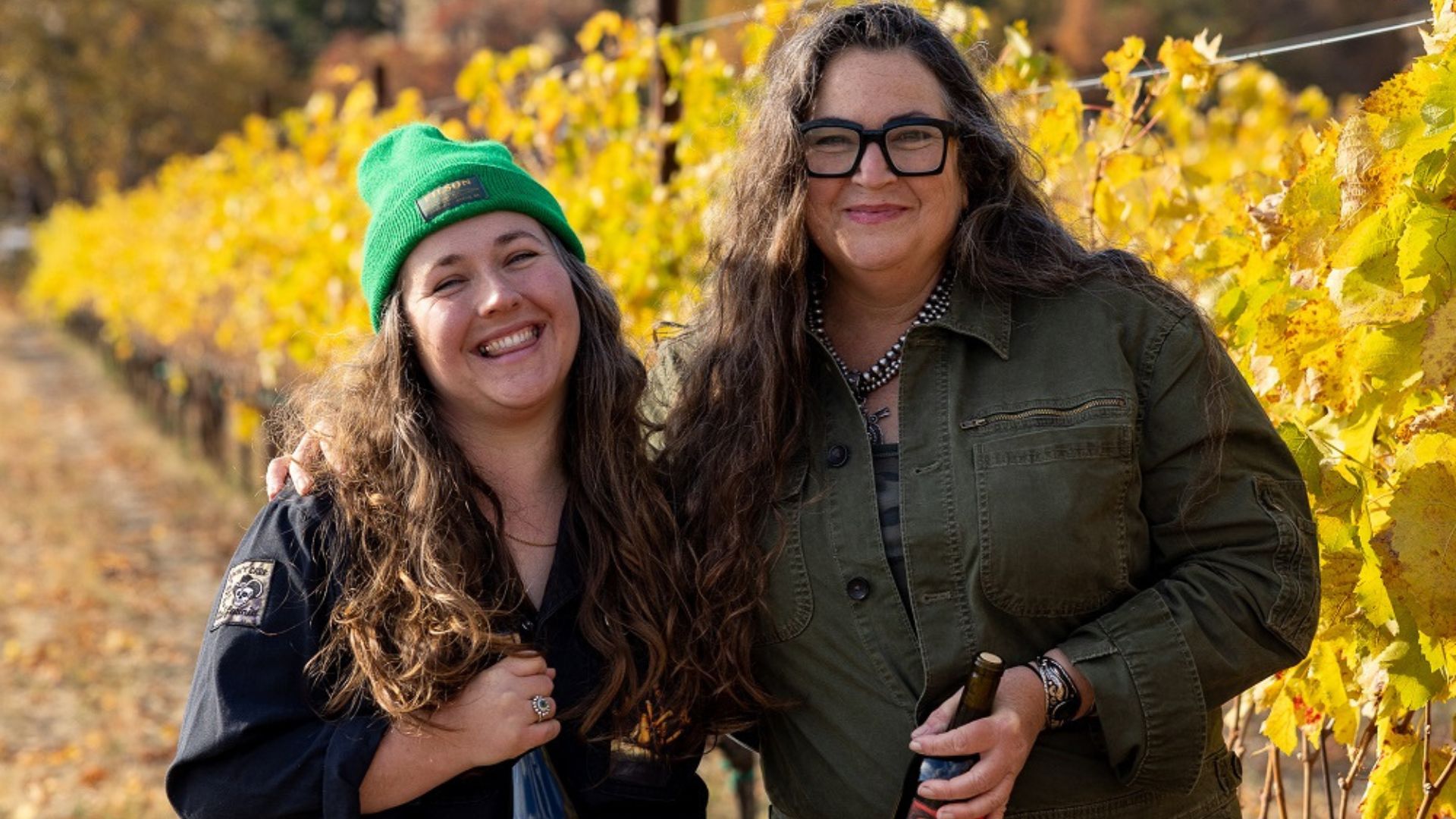
Mera says that the birth of her son, who arrived during harvest season, forced her to reassess what she wanted from her work and life. Catering proved difficult to sustain while raising a family, while the winery kept pulling her back. She found herself looking for reasons to visit the cellar, check on fermentations and see what was happening with the grapes.
“I’d be like, ‘Oh my God, something’s going on,’” she recalls. “I need to go up there. I need to see what’s happening.’”
Mera finds it hard to pinpoint when it happened, but there came a moment when “wine was no longer just the family business. It had become something I genuinely loved.” Part of that transformation happened through study. As Mera immersed herself in wine education, she encountered bottles that altered her understanding of what wine could be.
“Not to sound dramatic, but there were a couple of wines that fully made me cry,” she says. “They just emotionally exploded me for some reason.”
The experience surprised her and clarified her purpose. “I loved what I was doing,” she says. “I loved seeing how stuff was happening. I loved being part of it. And then I was like, ‘This is what I want to do.’”
Mera traces much of AniChe’s culture to her parents’ serial entrepreneurial instincts. Before the winery, her parents operated a soap company and became some of the earliest vendors at a well-known local farmers market. Her father built a career in technology and cybersecurity after years of teaching himself new skills late into the night. The lesson absorbed by the family was simple: if something needed to be done, learn how to do it.
“Collaboratevily and creatively, my family has always operated like its very own think-tank,” Mera says. “We’ll just say, ‘Let’s learn this whole new skill.’ Then we learn it, make mistakes, but you end up knowing how to do stuff. I think there’s a drive for curiosity and a little bit of stubbornness in there.”
That curiosity increasingly shapes the wines coming out of AniChe. For much of its history, the winery operated primarily as a négociant business, sourcing fruit from growers throughout the region and building a reputation for blends. A major turning point came when the family purchased a vineyard across the road from the winery.
“The acquisition fundamentally changed what was possible,” she says. “We’d been working with these grapes for a while and thought we could do this differently.”
Estate ownership gave Mera the opportunity to influence decisions from vineyard to bottle. Rather than beginning with purchased fruit, she could shape farming practices, experiment with varieties and build wines around a clearer sense of place. It also aligned naturally with her background in viticulture.
Among the varieties that excite her most is Grüner Veltliner. While studying wine, Mera became fascinated by examples from Austria, particularly the stylistic range she encountered from producers in the Wachau. Certain wines left such an impression that she became determined to explore those possibilities herself.

Today, AniChe’s estate program includes multiple expressions of Grüner alongside cool-climate Syrah and other site-driven bottlings that reflect the Columbia Gorge’s unique growing conditions. The move toward estate fruit has gradually shifted the winery’s portfolio. Blends remain important, but many of the wines emerging from the estate vineyard now focus on individual varieties and vineyard expression.
“It means staying true to what the vines are,” she says.
The estate program also offered Mera an opportunity to create a body of work that reflected her own vision while still honoring the winery her mother built. “It felt like an opportunity to breathe fresh air into the winery and our brand,” she says. “An opportunity to build a new chapter for our family business.”
As she found her voice as a winemaker, Mera also developed a more critical perspective on the wine industry itself. Falling in love with wine, she says, meant confronting an uncomfortable contradiction. Wine can be deeply moving, intellectually stimulating and culturally rich, yet the industry has often struggled with inclusion. “You’re falling in love with a product and a food that is totally not inclusive.”
She credits much of AniChe’s success to the groundwork laid by Horn, who navigated obstacles and skepticism that accompanied building a winery as a woman in a traditionally male-dominated industry.
Mera witnessed many of those challenges firsthand. She also recognizes that the path she walks today is easier because of the work her mother already did.
“She had to be that person,” Mera says. “And I don’t have to do that. That’s such a gift.”
Mera uses that perspective in how AniChe engages with its community. Over the years, the winery has become increasingly involved in local causes and organizations. Early meetings for what would become Columbia Gorge Pride Alliance were hosted at the winery. Their fundraising efforts expanded, and community partnerships deepened.
Visitors regularly tell her how relieved they feel finding an openly welcoming space in a rural area. People arrive from Portland, Seattle, Vancouver and beyond, uncertain what to expect. “They’ll say they feel so good here, and that matters more than any award or accolade.”
It serves as a reminder that creating a sense of belonging matters just as much as creating great wine.
As Mera looks toward AniChe’s future, her ambitions differ markedly from the growth-focused narratives that often dominate conversations about wine businesses. The family has little interest in becoming dramatically larger, she says. Production has largely reached the level they want. The focus now is sustainability in the broadest sense of the word: environmental sustainability, economic sustainability, community sustainability and family sustainability.
Mera extends that philosophy of sustainability to her own self. In an industry that often glorifies exhaustion, Mera talks openly about the importance of balance. “You don’t really hear winemakers say this,” she says, “but rest should be celebrated.”
Horn built AniChe through grit, sacrifice and relentless determination. Mera says she fully intends to preserve that spirit. What she is less interested in preserving is the assumption that success must always mean becoming bigger. Instead, she envisions a winery deeply rooted in its vineyard, embedded in its community and capable of supporting the people who built it without consuming them.
“What if success isn’t measured by growth,” she asks. “What if it’s measured by depth?”