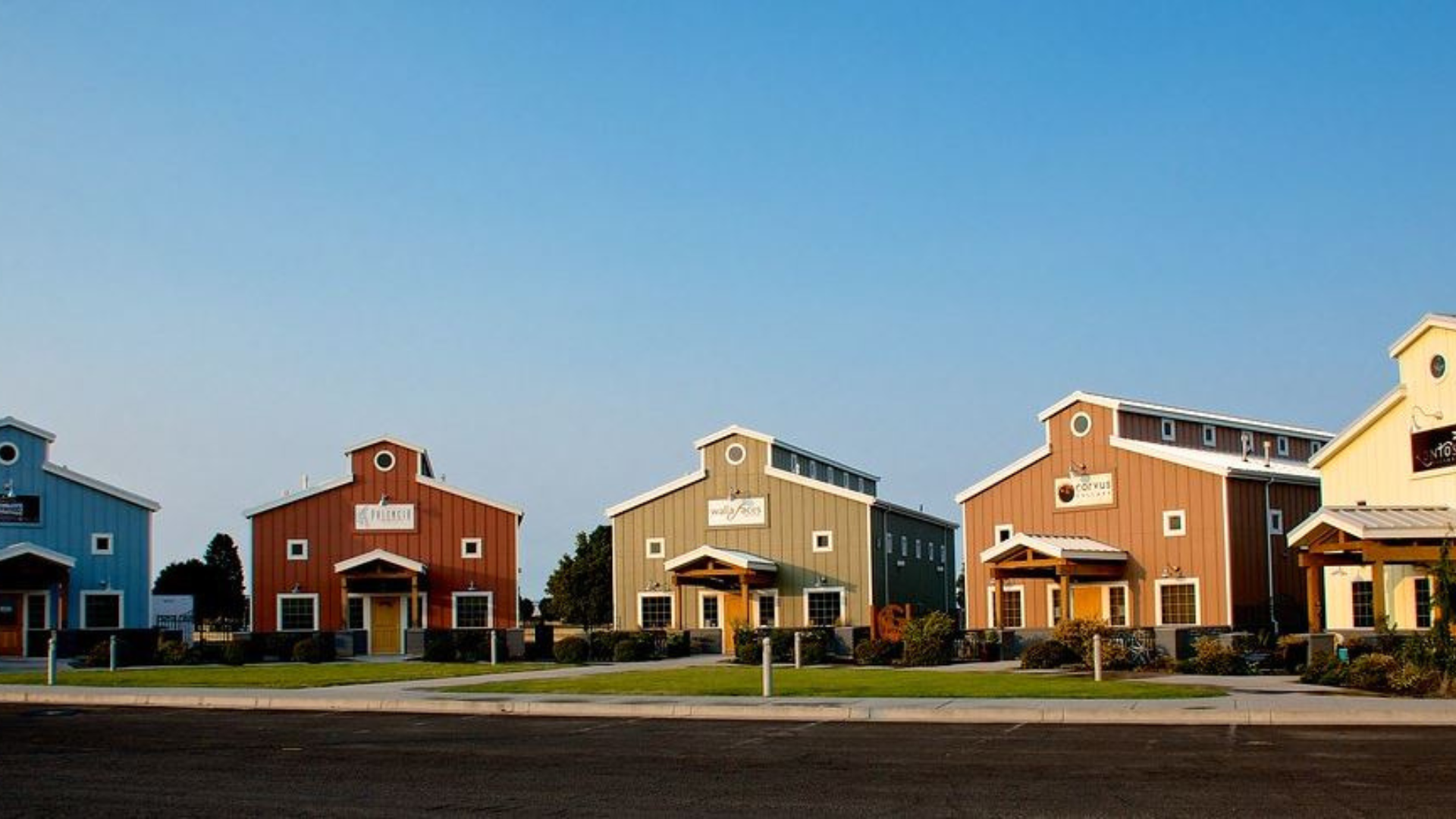
As you pass the Walla Walla Regional Airport and approach the boundary of the Airport District, you’ll notice a row of five identical buildings distinguished by their vibrant color schemes. While they might look like industrial barns from the outside, these 1,600-square-foot spaces exemplify the valley’s entrepreneurial spirit. For more than 20 years, the Port of Walla Walla’s incubators have transformed winemaking, cidermaking and beermaking aspirations into business realities.
Jennifer Skoglund, the port’s airport manager, has been with the organization since 1999. She has a lengthy history supporting the incubator program. Skoglund says that the incubators were no accident; they grew out of a strategic collaboration in the early 2000s between the port and the Walla Walla Community College Enology and Viticulture (EV) program.
“Students were coming out of that program needing space to start their own wineries. That was the catalyst for the port to investigate and the incubator concept started to gather steam,” Skoglund says. With help from industry visionaries like Norm McKibbin, founder of Pepper Bridge Winery, and Dr. Myles Anderson, founder of Walla Walla Vintners, the port secured a $1 million state appropriation to build the first three units in 2005 and added two more a few years later.
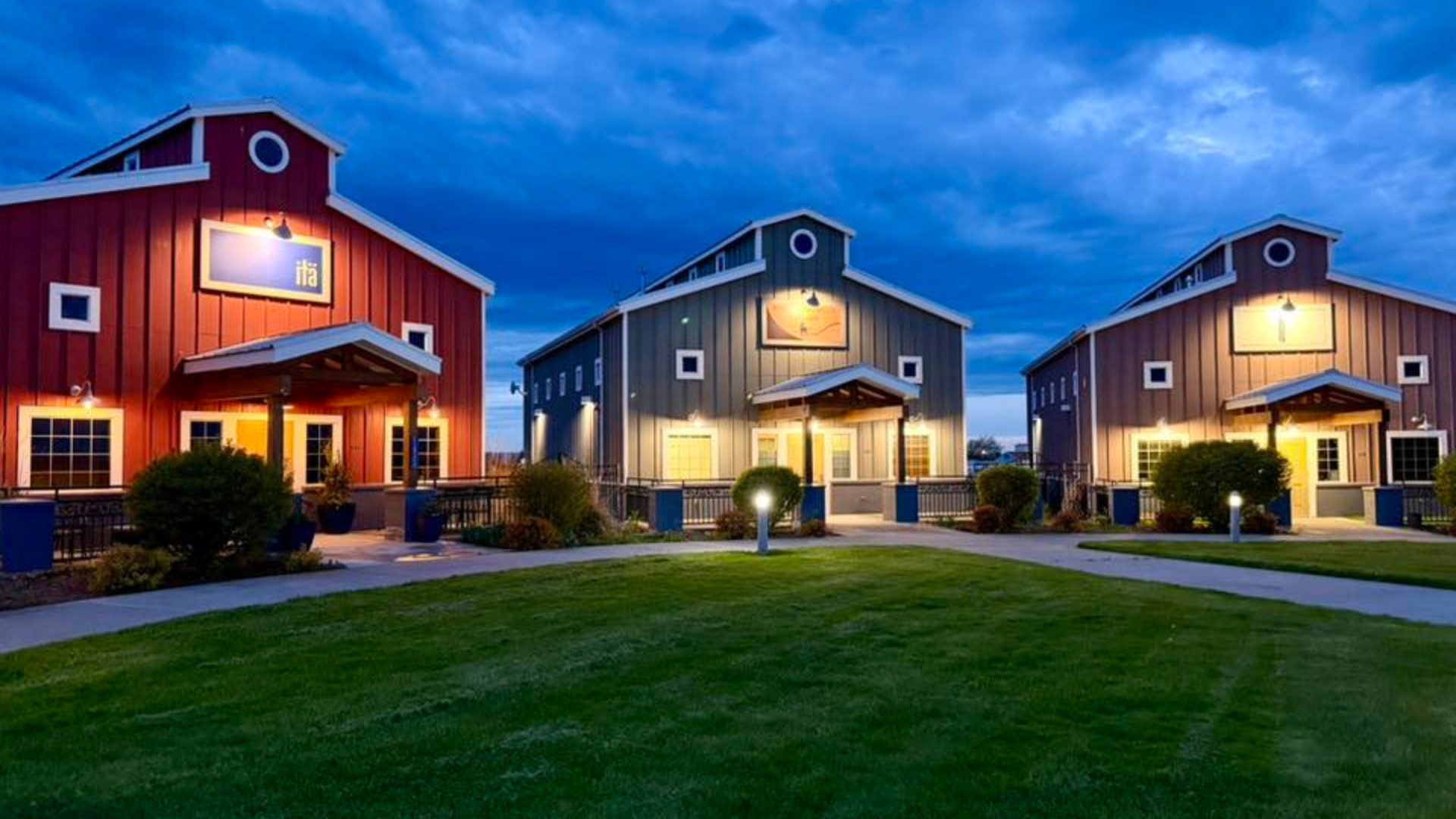
The business model is a masterclass in risk mitigation. Each building is designed specifically for a startup, featuring a concrete floor with drainage, a barrel room and small tasting room. The facilities can handle production up to 1,000 cases. Tenants are given a six-year runway to generate revenue and reach a point where they can move to a larger facility.
The community’s economic well-being serves as a gauge for the port’s return on investment. According to Skoglund, “When these businesses are operational and they move out to private land, they are expanding our region’s tax base, which is one of the biggest indicators of how our valley is doing economically.”

The success metrics are impressive. Eighteen of the 21 wineries, breweries and distilleries that have entered the program have flourished, expanding to larger facilities or opening downtown tasting rooms. Names that are mainstays of the Walla Walla wine scene — Adamant, Cavu, Dillon, Eternal, Golden Ridge, Hoquetus, Kontos and SMAK — all got their start in these modest airport structures.
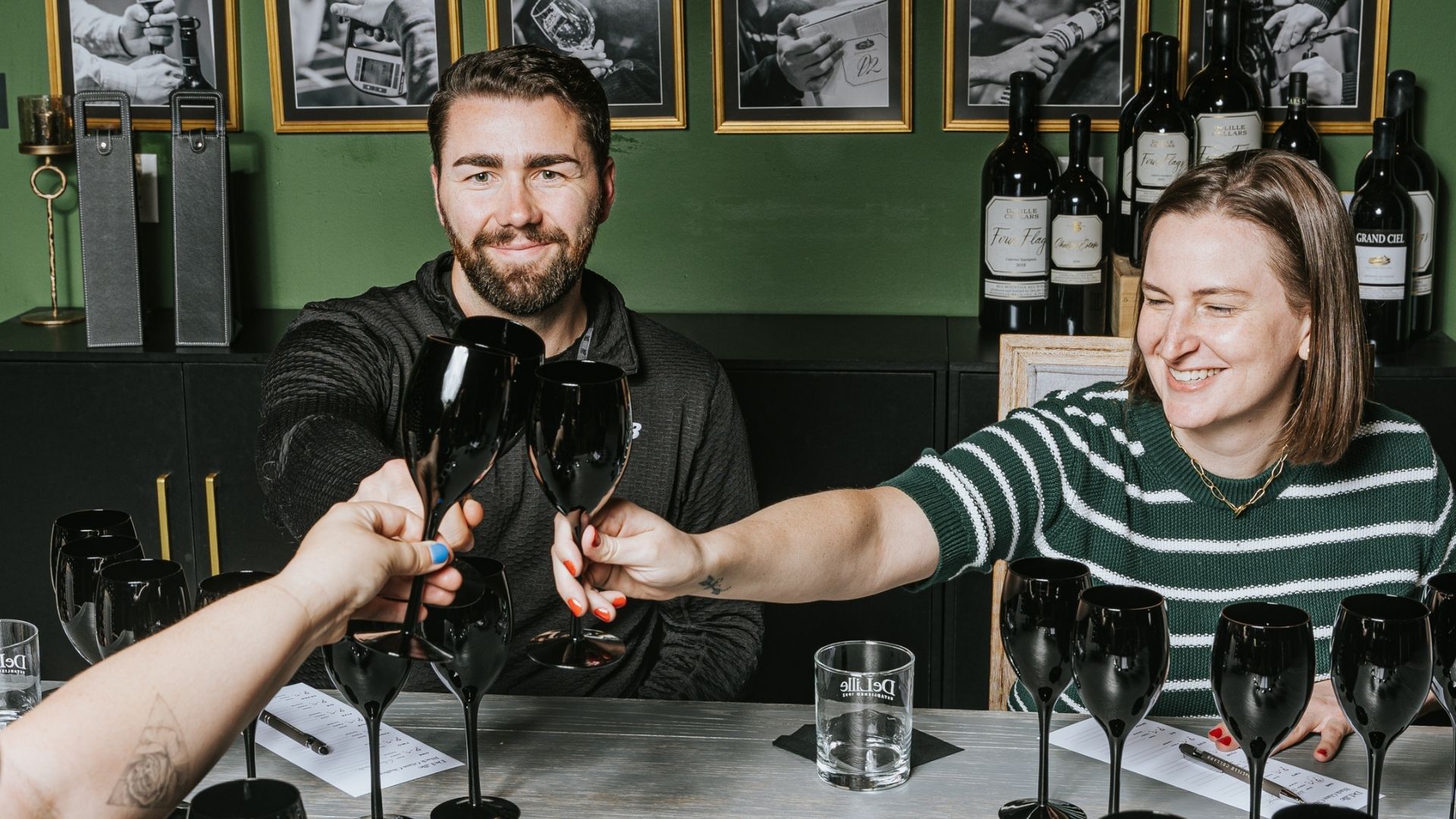
While the economic data is impressive, the real draw for wine (and cider) enthusiasts is the intimacy of the experience found within these cozy spaces. Because they are lean, “shoestring budget” operations, the person hosting you at any of the tasting rooms is likely to be the winemaker or owner. This is true for both veteran wineries, Arenness Cellars and itä Wines, and the newest class of tenants; August Forest, Mast Year Cider Collective and Wandering Wolf Cellars, who are now leveraging the port’s robust foundation to take flight towards their next destination.
As these three tenants settle into their new spaces, they bring a shared spirit of what Wandering Wolf refers to as “coddiwomple,” the act of traveling in a purposeful manner towards a vague destination. Whether foraging wild apple orchards in the foothills, demystifying the cellar for a new generation of wine drinkers, or focusing on small-batch production to realize a dream, these makers represent the entrepreneurial grit that the Port of Walla Walla sought to foster two decades ago.
Meet the New Tenants
August Forest: C.J. Augustine and Forest Rogers-Phillips met while studying enology and viticulture at Walla Walla Community College. Their mission is to demystify a wine industry that may often feel exclusionary by offering high-quality wines at accessible price points.
For Augustine, the move to the incubator this April is a strategic step toward increasing the brand’s visibility and growth. “The incubator is an opportunity for us to continue to build our brand in ways that we could not previously,” he says, noting that the space allows them to provide a relaxed, casual experience where guests can meet the winemakers.

Mast Year Cider Collective: Mast Year, a cidery led by Allan Crum, adds a new “fruit” to the mix by treating foraged apples and pears with the same regard as the valley’s wine grapes. Mast Year produces bone-dry ciders and perries that have complexity like many full-bodied white wines.
Crum hopes that by bringing his production into the incubator program this summer, he will bridge the gap between wine and traditional cider enthusiasts. “The new space provides the perfect stage to showcase these sophisticated and food-friendly alternatives to wine,” Crum says.
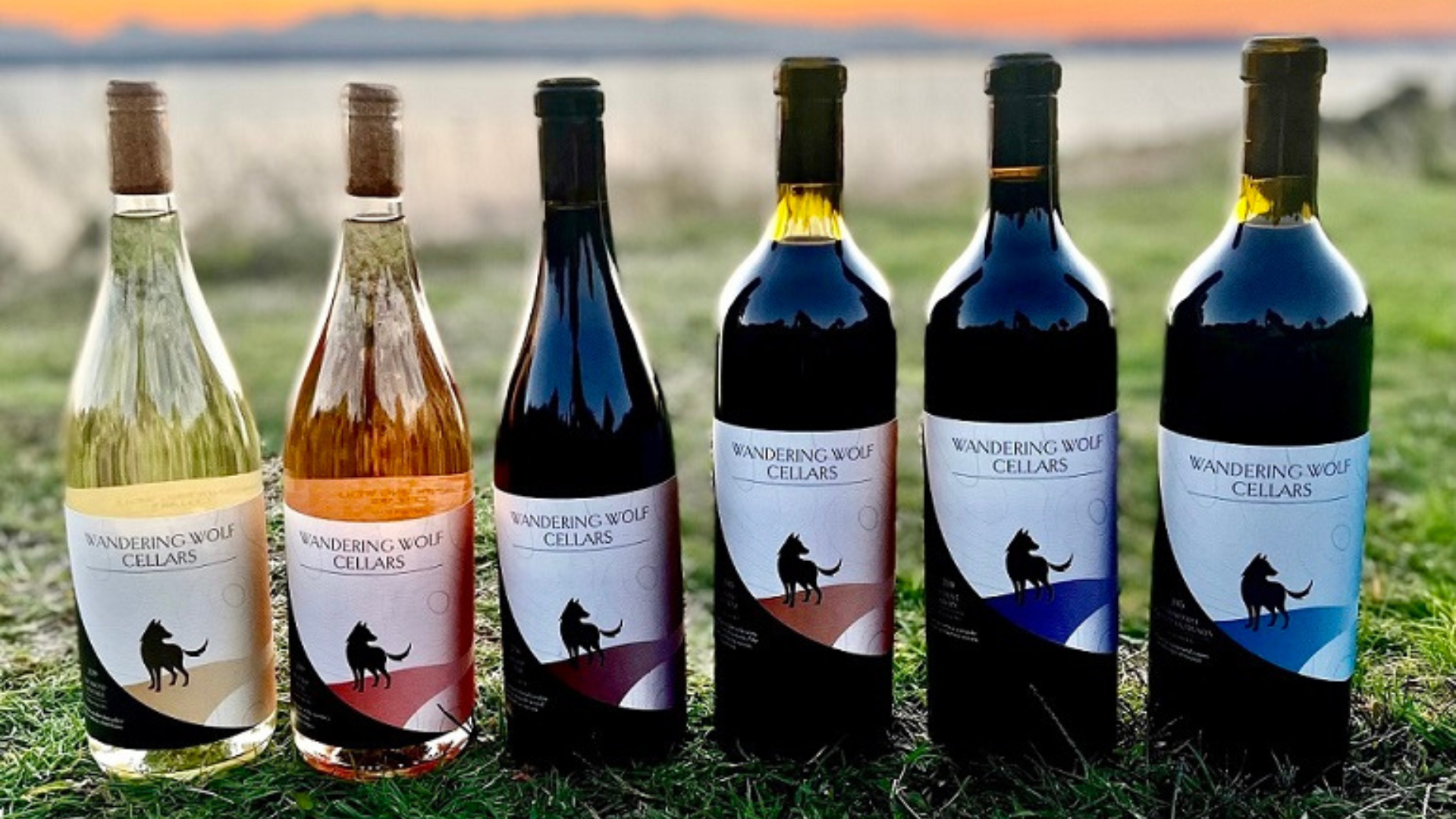
Wandering Wolf Cellars: For Alex Wolf of Wandering Wolf Cellars, the road to the incubator was filled with twists and turns. COVID-19 hindered his business plan and, subsequently, he had to wait an additional four years for an incubator slot to open. After years of small-batch production and pop-up events in Seattle, Wolf opened in April to initially showcase his Bordeaux and Rhône red wines from the 2018-2020 vintages.
Wolf plans to lead the tastings as often as feasible. “I believe that is what people want in a tasting experience. The winemaker or owner will be able to answer questions more effectively than anybody else. They want to hear your story straight from you,” he says.