True to Oregon’s blueprint, Trisaetum and Brixeur’s creative and sustainable farming practices are enabling them to better reflect the Willamette Valley across both wine and spirits
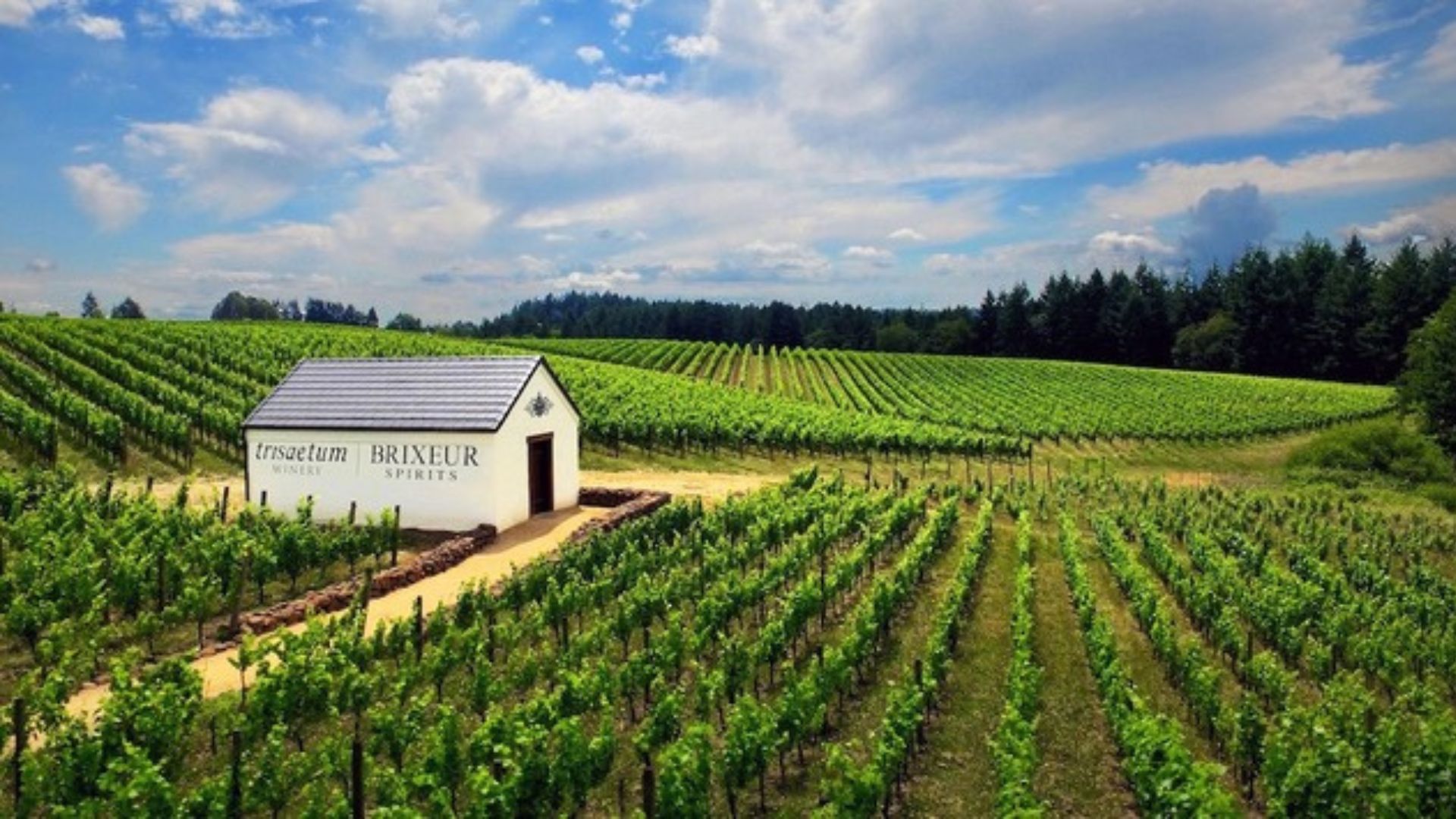
Newberg, OR, April 9, 2026— Springtime is the best time to see the land around Trisaetum Winery come alive, as its three estate vineyards burst with wildflowers and sustainability efforts are in full swing. Visitors to the newly designed tasting room are immersed in viewing both the abstract artwork of its winemaker in the gallery tasting room and the natural beauty of the Willamette Valley from the vineyard patio. Trisaetum has taken great care from the start to preserve the natural habitat surrounding its estate vineyards, and is excited to see the results of recent efforts to improve the vineyard environment.
Of the 137 acres across Trisaetum’s three estate vineyards, only 47 are under vine. The remaining 90 acres, or 66%, is dedicated to native wildflowers, Oregon forest, and gardens planted with herbs like lemon balm, coriander, rosemary, sage, and verbena. Everything is supported by 44 native species of bees pollinating the ecosystem, but that wasn’t always the case.
From 2020-24, Trisaetum partnered with Bee Regenerative, whose mission is to educate and inspire communities to conserve bees and their habitats. The collaboration worked to support bee species by increasing wildflower populations and reducing mowing and tillage throughout the vineyards, resulting in an increase in native bee species from seven bee species in 2020 to 44 in 2026 across Trisaetum.
The bees aren’t just good for the ecosystem – they also play a starring role in Trisaetum’s winemaking. Acting as vehicles that carry wild yeasts between flowers, bees help spread native yeast to grape skins throughout the vineyard. Every ferment at Trisaetum starts with the native yeast, which helps ensure the wines express a true sense of place – with more bees, Trisaetum’s wines can more effectively showcase all of the natural habitat they work so hard to preserve.
Trisaetum’s distillery brand, Brixeur Spirits, has ushered in another chapter of sustainability and incorporating the land into the final product. Founded in 2020 by Trisaetum’s winemaker James Frey and his daughter, Tatum Harloff-Frey, Brixeur Spirits reflects the same philosophies of stewardship and expressing the Willamette Valley as Trisaetum.
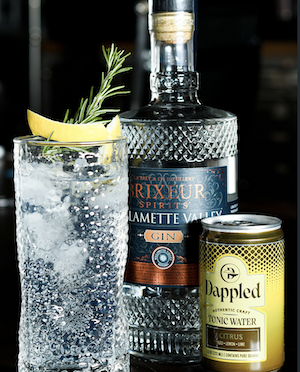
Take Brixeur’s Willamette Valley Gin, for example, which combines 17 botanicals that reflect the flavors of Trisaetum’s vineyards and Brixeur’s botanical farm. Distilled ingredients include fir needles and sage from Trisaetum’s Coast Range vineyard, Ribbon Ridge blackberries from Trisaetum’s winery forests, and Western juniper. Farmed local ingredients include Opal Rain lavender from Chehalem Flats and locally grown hazelnuts.
Brixeur also utilizes sustainable practices to enhance its distilling — whiskey produced by Brixeur is aged in Pinot Noir, Cabernet Sauvignon, and Riesling barrels that were used by Trisaetum, an approach that both reuses materials and imparts unique flavor characteristics to the finished spirits.
Together, Trisaetum Winery and Brixeur Spirits demonstrate how thoughtful farming, habitat preservation, intentional winemaking, and creative distilling can coexist—producing distinctive wines and spirits while supporting bees, biodiversity, and the landscapes that make Oregon wine country unique.
Follow @trisaetum_winery