An overlooked corner of Idaho and Washington is reestablishing itself as one of the Northwest’s most intriguing wine regions
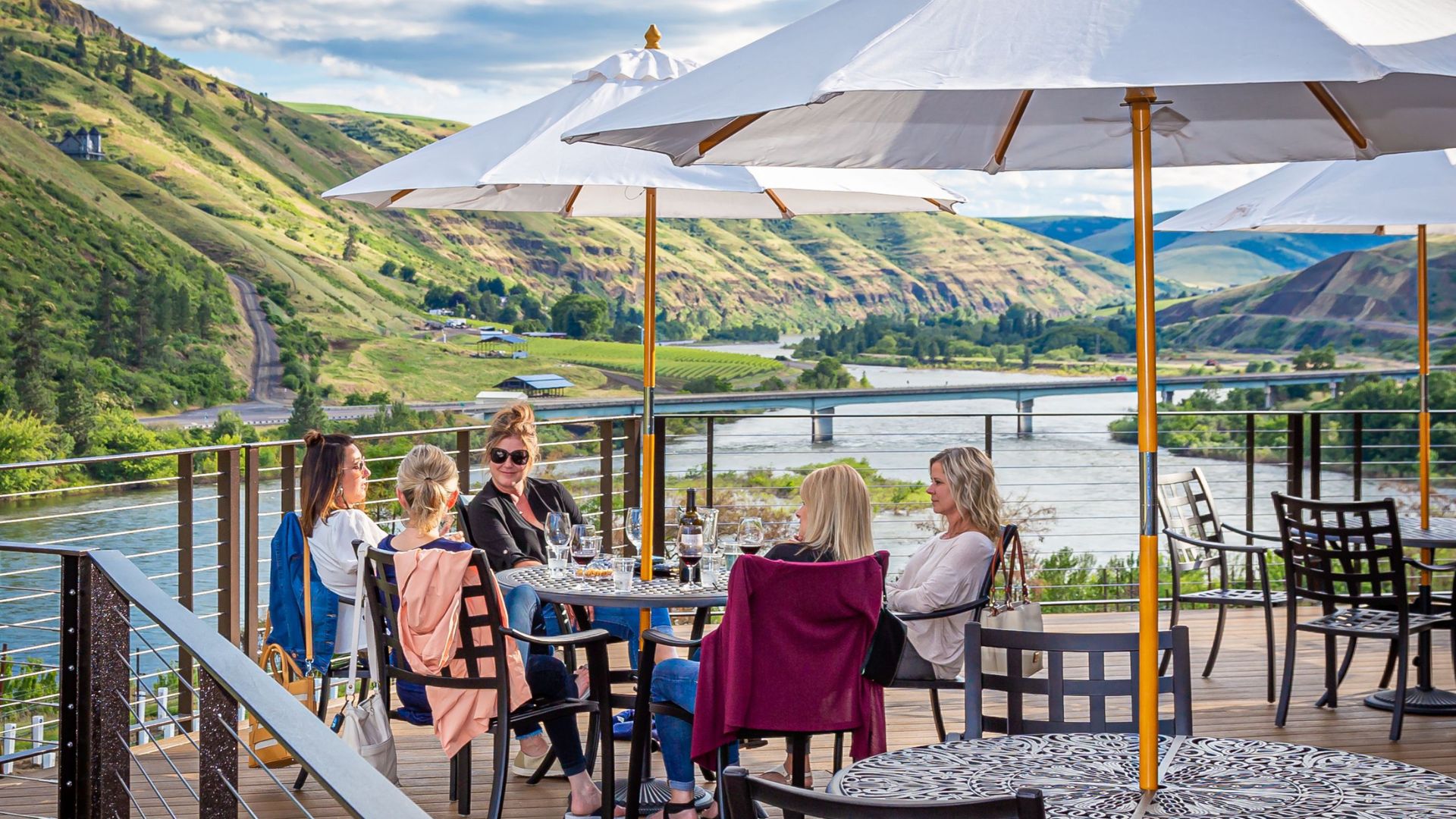
From the canyon rim, a dramatic landscape opens up to basalt outcrops, wind-shaped slopes, and, far below, the Snake and Clearwater rivers pulling through the valley. It is not the bucolic picture you’d instinctively expect from wine country. And yet, this is the Lewis-Clark Valley AVA, a small, cross-border appellation where vines have deeper roots than its recent recognition might suggest.
According to Lane Hewett of Rivaura Estate Vineyards and Winery, the region is only now being rediscovered after a long interruption. Before Prohibition, he notes, the Lewis-Clark Valley was one of the Northwest’s more active grape-growing areas, a legacy that largely disappeared for nearly a century.
“Not a lot of people know this, but before Prohibition, the Lewis-Clark Valley was one of the biggest grape-growing regions in the Northwest,” says Hewett. “It’s kind of being rediscovered now.”
Hewett describes a growing environment where the Snake and Clearwater rivers create significant day-to-night temperature swings, allowing fruit to reach ripeness without losing its edge. That natural tension, he explains, becomes the foundation of the wines, reducing the need for heavy intervention later.
“And in the cellar, we’re not trying to overdo it, just let the fruit speak for itself while applying the best oak program we can, and focusing on balance,” Hewett says.
The goal at Rivaura, year after year, is consistency not in flavor profile but in equilibrium. “So the wines end up being layered, but not heavy,” Hewett says. “There’s structure, but they’re still easy to drink. That balance is kind of the goal every year.”
Grapes were planted in this valley as early as the 1860s or 1870s, depending on the source, and by the early 20th century the valley supported a range of varieties. Prohibition erased that momentum almost entirely.
When the Alcohol and Tobacco Tax and Trade Bureau designated the Lewis-Clark Valley as an American Viticultural Area (AVA) on April 20, 2016, it marked a formal recognition. The region’s defining features, including its steep canyon walls, low plateaus, mollisol soils, relatively low elevations and persistent river-driven winds combine to create growing conditions that are difficult to replicate elsewhere.
Today, it remains one of only three federally designated AVAs in Idaho, spanning the border into Washington. This spring marks the AVA’s 10th anniversary, a milestone that underscores both how recent its official status is and how long the land has been proving itself.
The land’s story, however, began well before that designation, shaped by individuals willing to test the land without institutional support. Among them was Rick Wasem of Basalt Cellars, who began planting vines in the mid-1990s above the Snake River near Clarkston, Washington. At the time, there was no clear template for success. The work was incremental, shaped by observation rather than precedent. Over time, Basalt established a style grounded in structure and longevity, focusing on Bordeaux and Rhône varieties that could handle the valley’s heat and exposure.
The vineyard sits on loess-based sandy soils over basalt, a combination that drains readily while holding enough moisture to moderate growth. The effect is not excess, but balance. Manager Leisha Evangelho describes the wines as showing “clean, approachable fruit,” avoiding the weight that warmer sites can sometimes push toward.
At Lindsay Creek Vineyards, Art McIntosh came to grapes through farming rather than through wine. The soils, shaped by ancient Missoula flood deposits, are sandy loam, free-draining and workable.
“We’ve just got a nice sandy loam soil that drains nicely and works really well for grapes,” he says.
McIntosh does not dwell on technical descriptors. For him, the proof is in the glass. “Flavors come through really well because of the soil.”
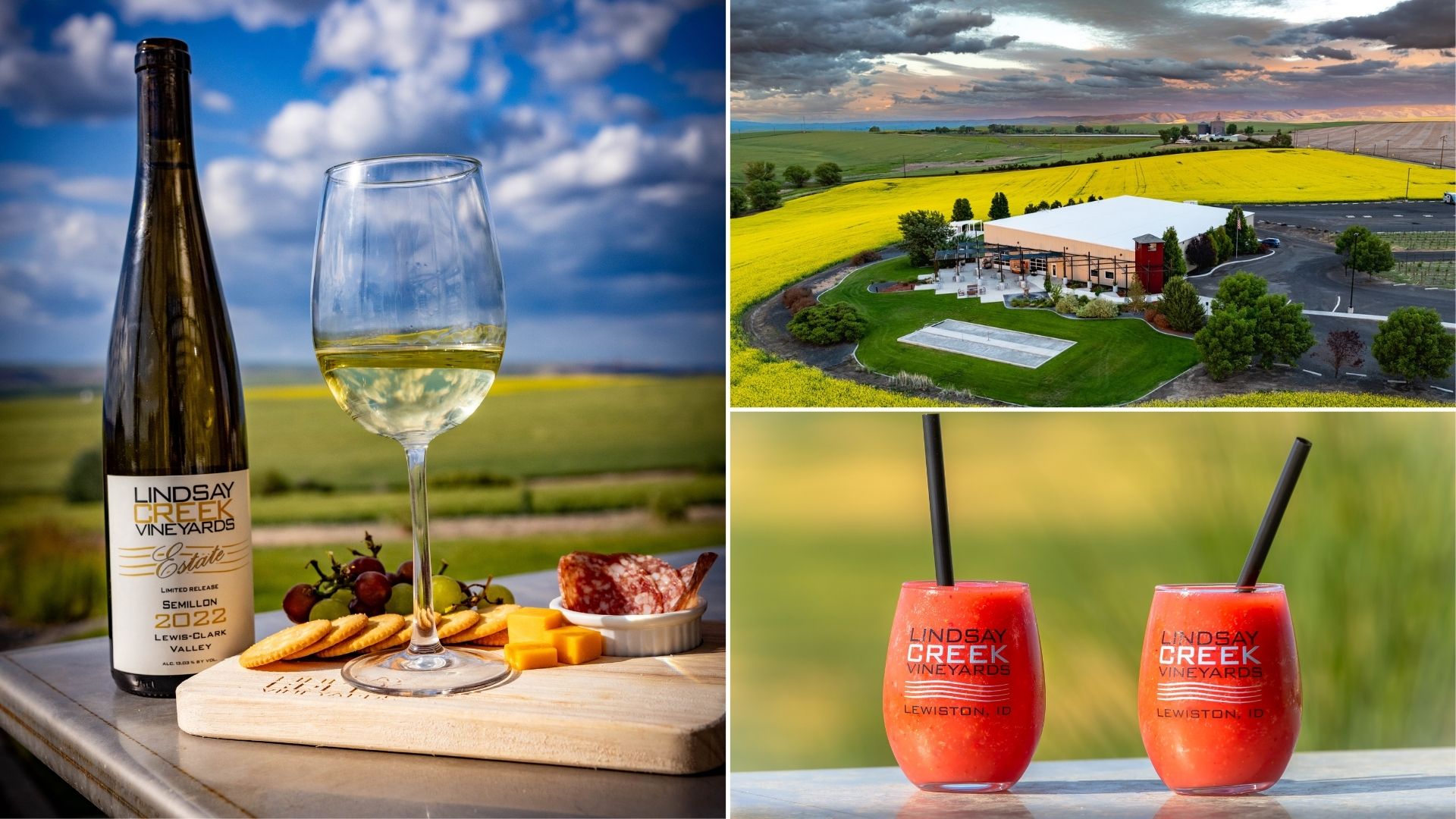
Lindsay Creek emerged just ahead of the AVA designation, part of a small group willing to test a region still better known for agriculture than wine. Cabernet Sauvignon proved reliable early, reinforcing the valley’s suitability for structured reds. But the site does not narrow itself to one style. Riesling and Chardonnay have also found a place here. “There’s a good wide variety of wines that you can enjoy from the area,” McIntosh says.
With more than 80 distinct soil types across the AVA, that range variation exists not just between vineyards but within them.
Lisa Grigg of Jovinea Cellars explains that the Lewis-Clark Valley is defined by steep canyon walls and shifting soil compositions that can change within short distances.
In the wines, that diversity often shows up as tension. Grigg points to a recurring thread of preserved acidity alongside a mineral edge. “The Lewis-Clark Valley soils help maintain beautiful acidity, but add an element of ‘wet stone’ to some of the varietals,” she says. “There always seems to be undertones of minerality.”
With dozens of soil types across the AVA, there is no single expression that defines the region. Variability is the constant, Grigg said. “We lean much heavier toward experimentation than consistency,” she says, explaining that the goal is not to replicate a varietal profile year after year, but to follow the chemistry and flavor of each vintage.
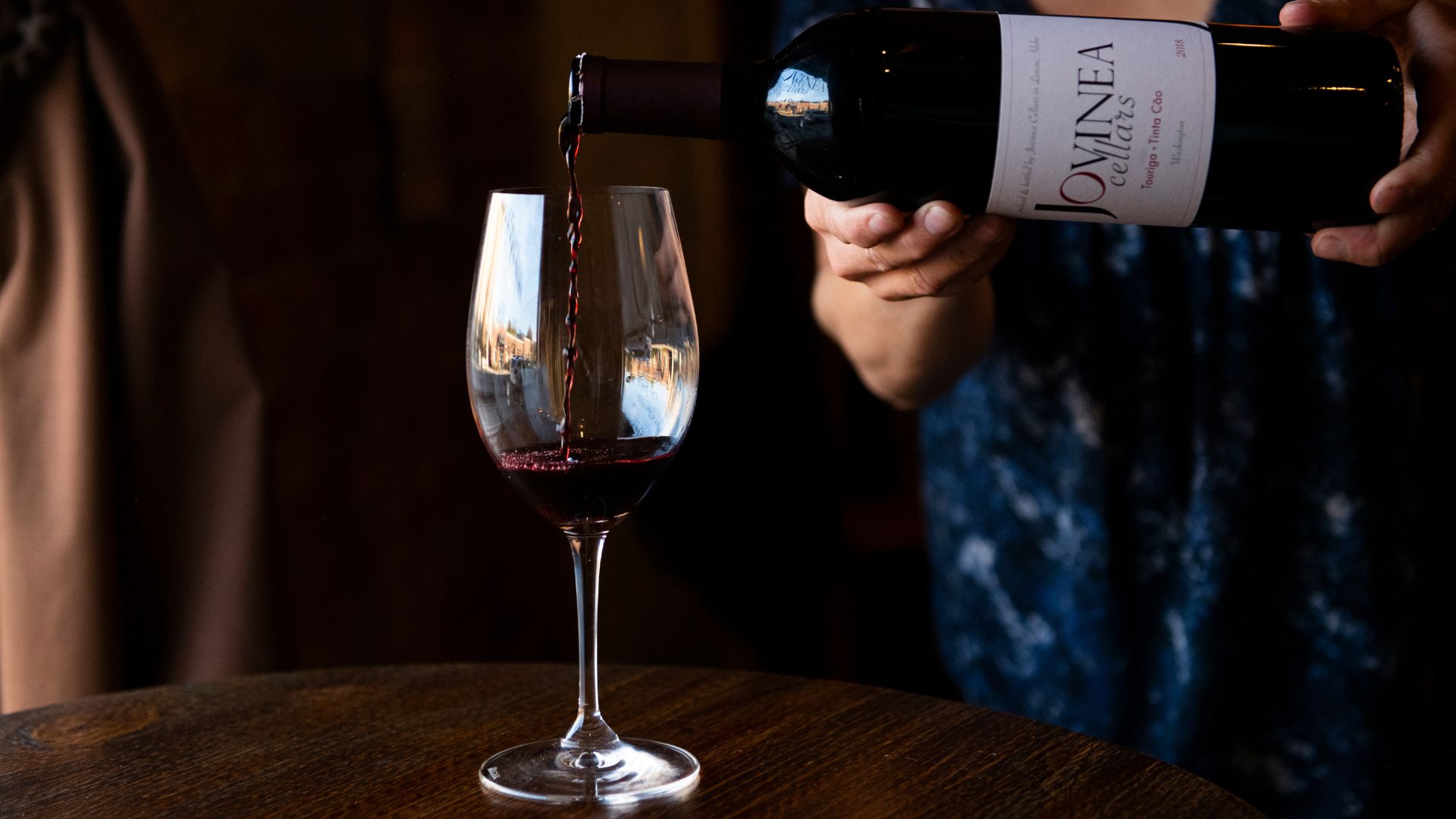
Working with very small lots, sometimes as little as 20 cases, reinforces that approach. Those volumes can create logistical challenges, from barrels that are too large for the fruit available to early blending decisions that shift the final wine. At the same time, they open up possibilities. Smaller lots allow for nontraditional blends and styles that would be impractical at a larger scale, giving the winery flexibility to respond to what the fruit offers rather than forcing it into a predefined structure.
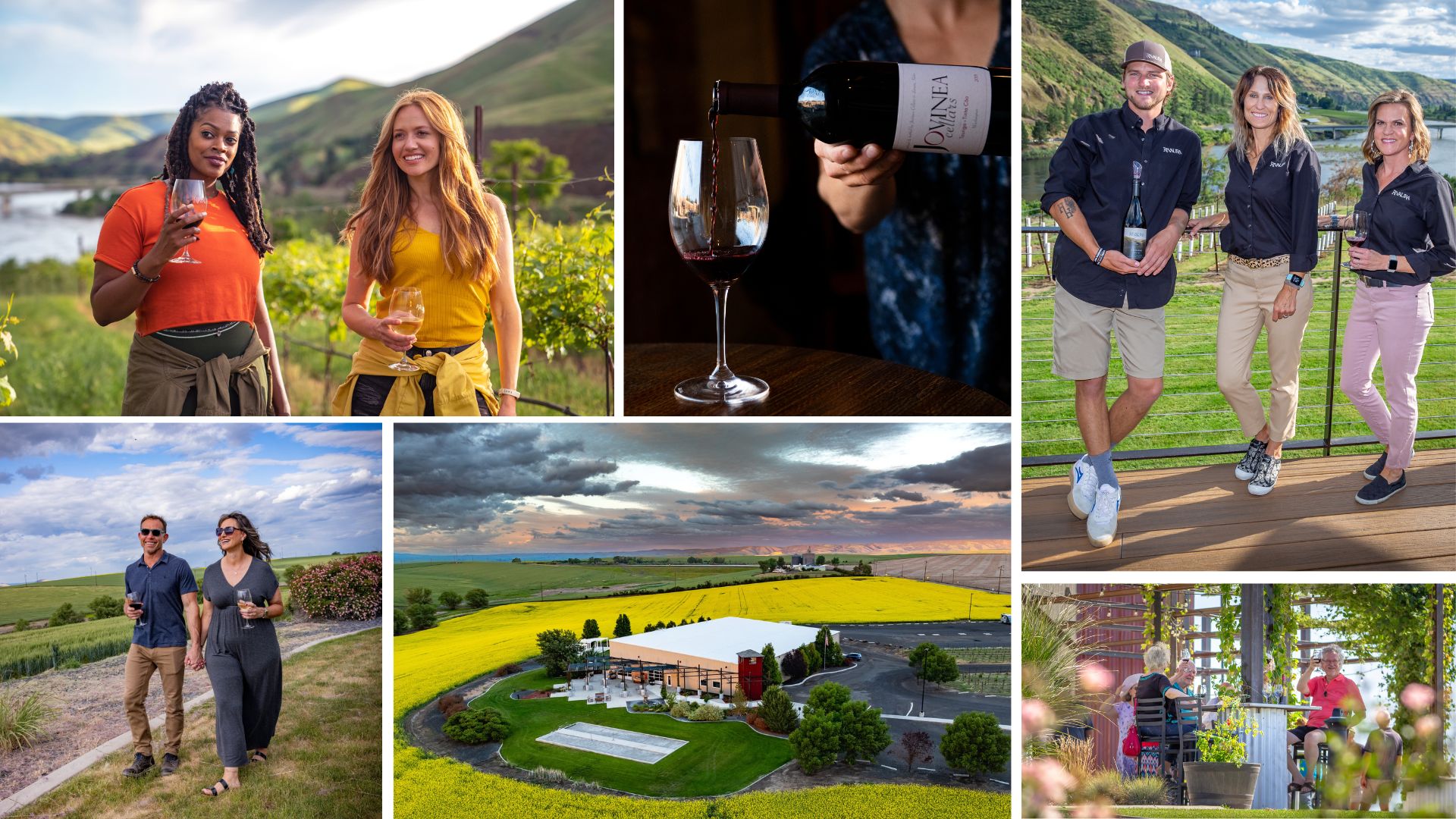
Grigg describes this as central to Jovinea’s identity, one that also extends into how the wines are experienced. Without third-party distribution, the winery operates almost entirely through its tasting room, creating direct interaction between winemaker and consumer. “Our wine experience is quaint, artisan and intimate,” Grigg says.
McIntosh points to the region’s scale as one of its strengths. “A person can come to the valley and enjoy all of the wineries virtually in one day or one weekend,” he says, emphasizing accessibility over sprawl.
The setting at Lindsay Creek reinforces that sense of openness. The winery sits about 1,800 feet above the valley floor, offering wide views and ample space for events. “People can come out here, have food, drink a number of different wines and enjoy the view,” he says.
Despite its deep history, the Lewis-Clark Valley remains small — roughly 16 vineyards and about 100 planted acres. “I think at first a lot of the public thought the viticulturists and winemakers were a bit off their rockers. Now the people are showing up, joining wine clubs, they’re returning again and again,” Grigg says.
Rivaura’s Hewett sees that shift as part of a broader reintroduction, one that extends beyond the vineyard to the experience of the place itself. “The Lewis-Clark Valley AVA is still relatively under the radar, which is part of what makes it so exciting,” Hewett says. “As a destination, it still feels authentic and undiscovered. You don’t have the crowds you see in more established regions, which means visitors can have a more personal experience — meeting winemakers, spending time in the vineyards, and really connecting with the landscape. There’s a strong sense of community here, and that comes through in the wines and the overall experience.”
In partnership with Visit Lewis Clark Valley, follow @visitlcvalley