Columbia Hills AVA is defined by southern slopes, proximity to the Columbia River, low elevations, shallow soils
SEATTLE (August 17, 2026)—Columbia Hills is Washington’s newest American Viticultural Area (AVA). On August 17, 2026, the Alcohol and Tobacco Tax and Trade Bureau (TTB) published the final rule to officially define the Columbia Hills AVA as a designated wine grape-growing region.
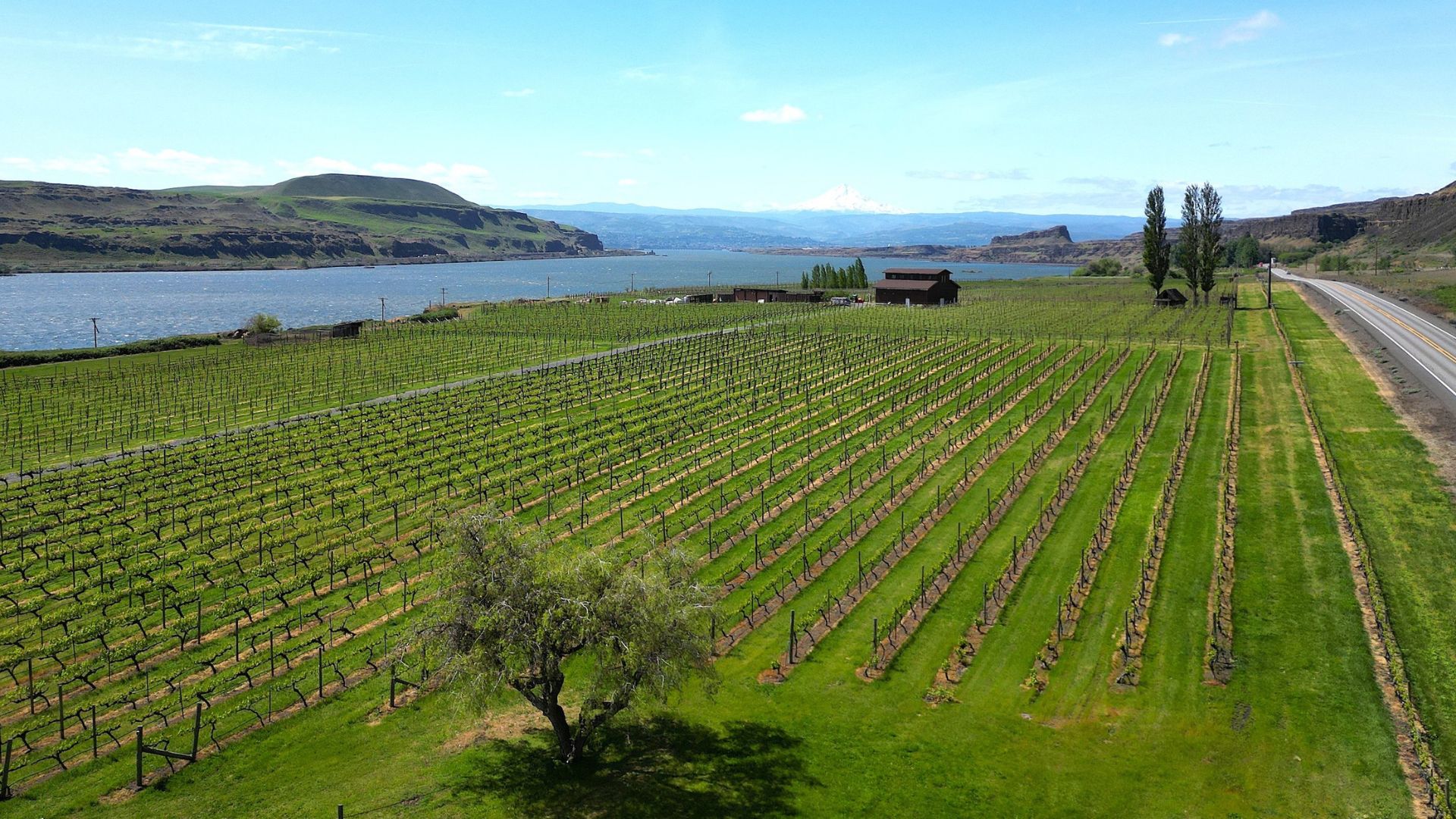
Columbia Hills is located in south-central Washington between the Columbia Gorge to the west and The Burn of Columbia Valley to the east. It is wholly contained within the larger Columbia Valley. The appellation gets its name from a 35-mile-long ridgeline that parallels the north side of the Columbia River, which serves as the AVA’s southern boundary. It is bounded to the north by the 1,050-foot elevation line.
“The north boundary of Columbia Hills marks the highest elevation reached by the Missoula Floods in this region, resulting in soil made up of thin wind-deposited silt and sand that overlies flood-eroded basalt bedrock,” explained Kevin Pogue, Professor of Geology at Whitman College, who wrote the AVA petition for Columbia Hills. “It is a very scenic area that features vineyards perched above the river on flood-eroded terraces.”
“Our region is made up of small, intimate, micro-climate terroirs defined by their closeness to the water,” added Robert Lorkowski, owner at Cascade Cliffs Vineyard and Winery, which is located within the appellation. “A great quote I remember is, ‘All the great grapes see the river.’ Whether that’s quantifiable, I honestly couldn’t say, but there is a deep spiritual or intangible feeling of having the vines see the river.”
A wine grape-growing region must have distinguishing features to qualify as an AVA. In Columbia Hills, these include:
- Southern Slopes. The appellation is entirely situated on southern slopes, which provide ideal sun exposure for growing wine grapes. Erosion by the Missoula Floods created a series of stepped terraces on these slopes, which are widely considered prime locations for vineyards.
- Proximity to the Columbia River. Columbia Hills sees warmer temperatures during the growing season, particularly in early morning hours, relative to nearby areas. As much of the appellation lies within a mile or less of the Columbia River, temperatures are moderated, which also extends the growing season.
- Lower elevations. Elevations in the Columbia Hills range from 74 feet to 1,050-feet above sea level. This is lower than most other regions of the Columbia Valley.
- Shallow soils. The soils in the Columbia Hills are often shallow. This allows vines to interact with the basalt bedrock, which is unusual compared to many regions in the Columbia Valley. The soils in the Columbia Hills appellation are also coarser than elsewhere in the Columbia Valley. As a result, the soils are extremely well-drained.
At 29,387 total acres, the Columbia Hills is a relatively small appellation that is currently home to about 300 acres of wine grapes.
Beginning September 16, 2026, wineries may submit a Certificate of Label Approval (COLA) request to the TTB for a label using Columbia Hills AVA as the appellation of origin.
Resources for Media:
- Final Rule: Columbia Hills AVA, TTB
- Columbia Hills AVA Profile, Washington State Wine Commission
- Photos of Columbia Hills AVA, courtesy Andrea Johnson Photography and Cascade Cliffs Vineyard and Winery.
- Washington AVA Map, Washington State Wine Commission
About the Washington State Wine Commission:
The Washington State Wine Commission (WSWC) represents every licensed winery and wine grape grower in Washington State. Guided by an appointed board, WSWC provides a marketing platform to raise positive awareness about the Washington wine industry and generate greater demand for its wines. Funded almost entirely by the industry through assessments based on grape and wine sales, WSWC is a state government agency, established by the legislature in 1987. To learn more, visit www.washingtonwine.org.