Noun
[sip-floo-uhn-ser]
An individual that has influence in the beverage industry
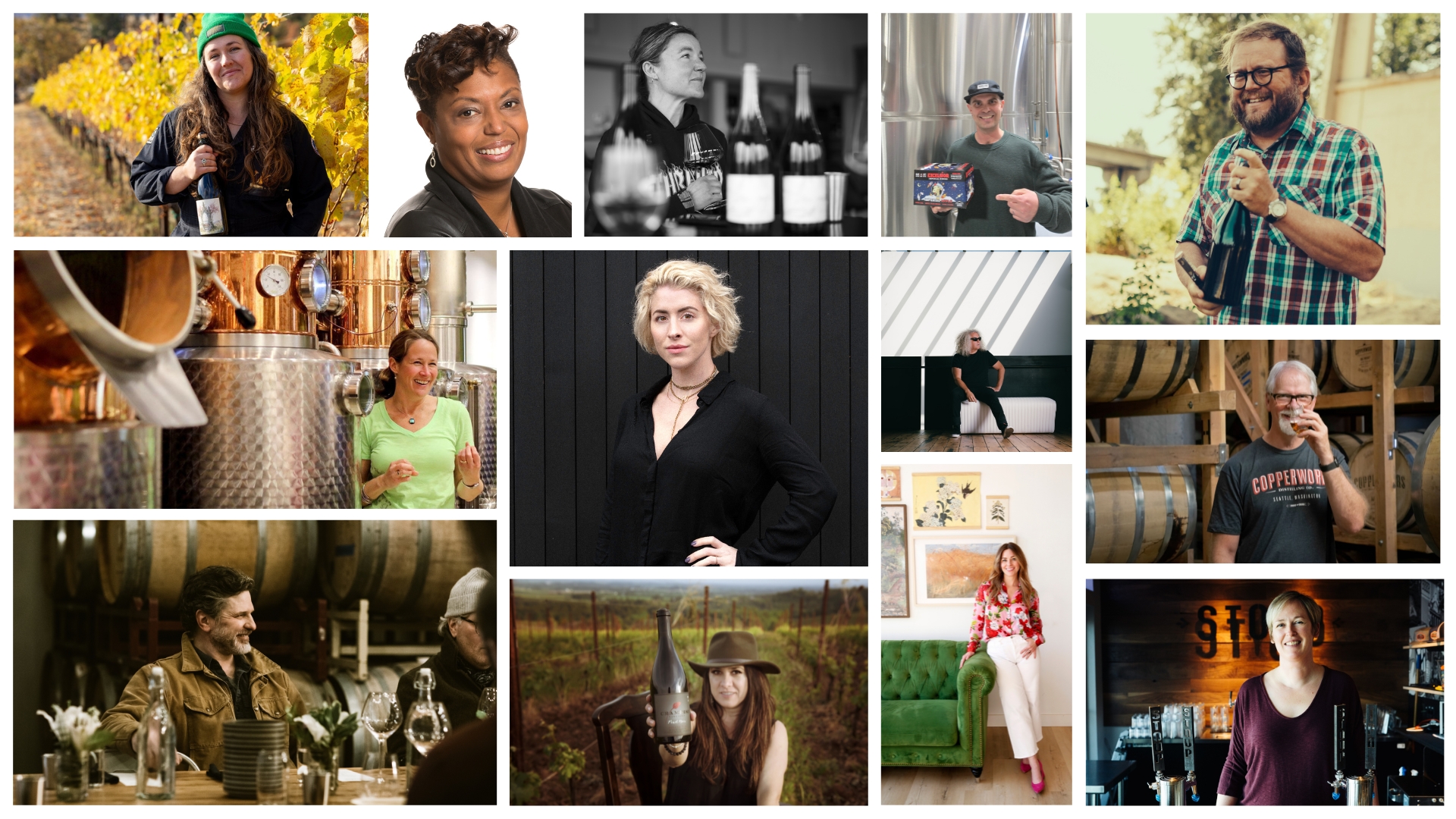
Innovators. Trailblazer. Educators. Changemakers. You may have your own descriptors for the 32 names contained in this feature – but there’s no debating that each one is reshaping their respective beverage industry through innovative techniques, refusal of the status quo and a genuine respect and love of the land. They’re Thought Leaders. Tastemakers. One more phrase to describe this exemplary crowd?
Proudly Northwest.
Nominate someone for our 2026 SIPfluencer here.
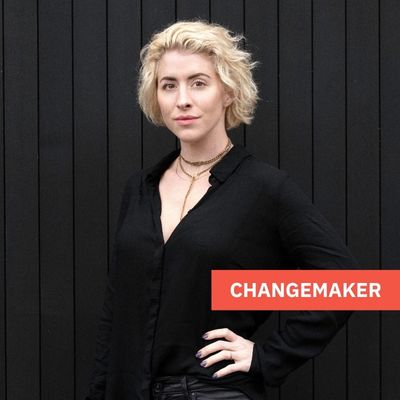
Anna Sweet
Founder | Artist Block
At Artist Block, Anna Sweet operates inside one of Oregon’s most respected wine regions, the Dundee Hills, while pushing against its social rigidity. Before she opened this unconventional winery and gallery space, she immersed herself in the local wine culture, visiting more than 70 tasting rooms and sampling impressive wines. “I kept thinking, why do I feel like I have to whisper right now?” she says.
Instead of dismissing tradition, she immersed herself in it. Sweet earned WSET and sommelier certifications, worked harvests every year since 2019, took a tasting room job and spent a year hand-farming a vineyard. Credibility, in her view, is the prerequisite for creative deviation.
“Wine carries so much formality,” she says. “Much of it is shaped by how our parents’ generation developed it.” Sweet believes younger drinkers are less interested in chasing a 100-point score and more interested in understanding “what’s actually in the bottle and how it makes them feel.”
Sweet calls her model “wine for creativity.” To her, wine is a creativity accelerator — something that “lowers the barrier to conversation and makes space for curiosity.” The tasting experience is intentionally disarming: education follows connection, not the other way around.
In Sweet’s model, credibility and accessibility reinforce each other. The craft remains serious. The atmosphere does not have to be. “Life is a bumpy road,” she says. “Wine will give us everything we need to roll down the windows and turn up the music — if we give ourselves permission.”
—Aakanksha Argawal

Ryan Harms
Founder | Union Wine Co.
When Ryan Harms arrived in Oregon from upstate New York to work harvest at Rex Hill in 1997, he discovered more than a vintage. He discovered a calling. After returning in 2001 to help launch Bergström Wines, Harms began to question why so much of Oregon’s celebrated wine remained financially and geographically out of reach.
“There were so many wines I loved that I couldn’t share when I went home,” he says. “They just weren’t in people’s budgets.”
In 2005, he founded Union Wine Company in Tualatin, Oregon, to change that equation. The watershed moment came with Underwood in a can, a move that helped legitimize premium still wine in an alternative format. What began as an accessibility play became a category shift, normalizing canned Pinot Noir and Pinot Gris nationwide.
Now Harms is pushing into nonalcoholic wine, refining de-alcoholized rosé bubbles in collaboration with local partners. “To be part of innovating within a centuries-old industry,” he says, “that’s something we’ll always be proud of.”
—Aakanksha Argawal
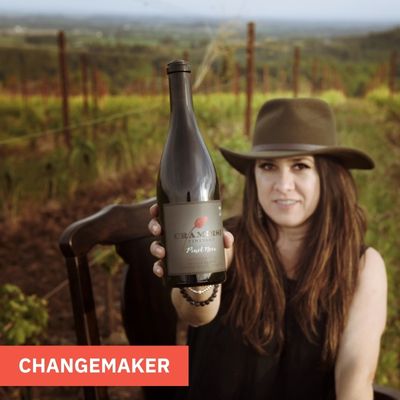
Sofía Torres-McKay
Proprietor and Winegrower | Cramoisi Vineyard and Cofounder of AHIVOY (Asociación Hispana de la Industria del Vino en Oregon y Comunidad)
Born and raised in Mexico City, Sofía Torres-McKay never imagined she’d one day call Oregon’s rolling vineyards home. After moving to the United States in 2002, she built a fast-paced, nearly 20-year career in tech. But then came the pivot. In 2011, Sofía and her husband, Ryan McKay, took a chance and bought 10 acres in the storied Dundee Hills — planting Pinot Noir and Chardonnay vines two years later.
By 2017, Sofía was running the show at Cramoisi Vineyard — happily trading boardroom meetings for nurturing biodynamic vineyards. She quickly realized that wine was about far more than terroir, tasting and scores — it’s also a call for equity. In 2018, she co-founded AHIVOY (Asociación Hispana de la Industria del Vino en Oregon y Comunidad), a nonprofit dedicated to bilingual education, career advancement and leadership opportunities for vineyard workers. Eight years on, AHIVOY represents what Sofía considers her most meaningful harvest yet: uplifting an entire community, not just vines.
—Kerry Newberry
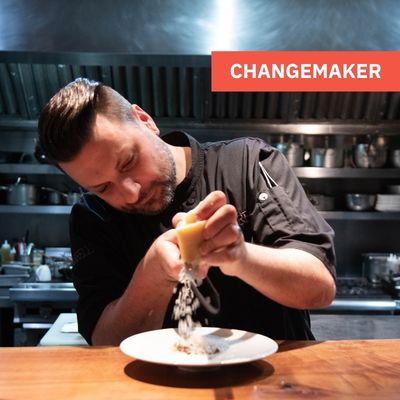
Aaron Tekulve
Chef | Surrell
“If we care about sustainability, we need to go to the people in our backyard,” says Chef Aaron Tekulve of Surrell. “If restaurants are telling the stories of the farmers, ranchers, foragers and fishermen, then we need to tell the stories of winemakers.”
Opened in late 2021, Surrell was the first restaurant in the Seattle area to feature exclusively Washington wines in its wine program. Restaurants, Tekulve says, have a unique platform to build up the value of Washington wine.
Since Surrell’s inception, Tekulve has formed strong relationships with winemakers and promoted collaborative events, hosting wine dinners and special tastings where guests can hear stories of history, harvest and winemaking directly from the producers, many of whom have small to very small businesses.
“Being supportive of others in the industry has made me happier,” he says, noting that many winemakers have become good friends. “Feeling connected will lead to long-term success for all of us.”
—Dana Van Nest
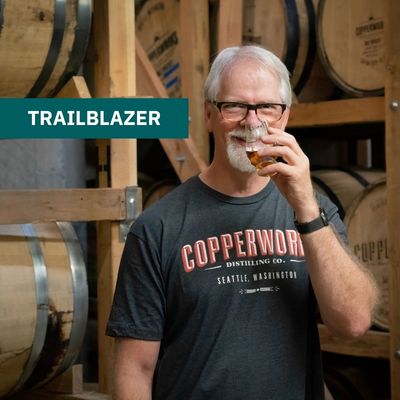
Jason Parker
Cofounder/President | Copperworks Distilling Co.
Since being appointed head brewer at Pike Brewing Company when it launched in 1989, Jason Parker has been at the forefront of Pacific Northwest craft culture. In 2013, Parker and Micah Nutt cofounded Copperworks Distilling Co., now located on Seattle’s newly renovated waterfront. A leader of the American Single Malt Whiskey Commission, Parker pioneered producing whiskey from a brewer’s perspective with a focus on flavor and not yield.
In 2018, Copperworks was named distillery of the year by the American Distilling Institute. Later, in 2022, Parker had the distinction of producing the first Salmon-Safe certified whiskey made in the United States. In October 2023, Copperworks opened a second tasting room in nearby Kenmore, Washington. This community hub offers music nights, maker nights and other community ventures along with the full-service, award-winning restaurant, De La Soil.
—Becky Garrison

Bryan Lewis
Hospitality Manager, Wine Educator | Wine Talks with Bryan
At Björnson Vineyard in Oregon’s Eola-Amity Hills, Bryan Lewis manages a 50-seat tasting room, curates monthly flights and leads a hospitality team. But his larger classroom lives online.
A Wine and Spirit Education Trust (WSET) Level 3 graduate currently pursuing Level 4, Lewis launched the website Wine Talks with Bryan after reading reports that younger consumers were drifting from wine. “I wanted to break down high-level wine information into something fun and easy to digest,” he says. What began as an experiment quickly grew into a community of more than 25,000 Instagram followers drawn to his colorful graphics and clean, study-friendly templates.
What surprised him was the audience. While he aimed for beginners, sommeliers and WSET candidates began sharing and using his materials. His first book, Wine Memory Log, extends his ethos beyond analysis. “Wine is about people and place. No one remembers the high acidity or high tannin of a wine from years ago,” he says. “But you remember who you were with. You remember the vibe.”
—Aakanksha Argawal

Jamila Conley
Founder |WeRise Wines
After 25 years in executive leadership roles across tech companies including T-Mobile, Amazon and F5, Jamila Conley understands power and access intimately. “Power is about how you influence outcomes,” she says. “Access is about who is willing to put skin in the game so you can succeed.” As a Black woman rising to the VP level, she learned early that sponsorship and allyship were not buzzwords but survival tools.
Conley sought to apply those lessons to wine in late 2024, when she launched WeRise Wines in downtown Seattle. This inclusive tasting room features bottles and pours exclusively from female and BIPOC winemakers.
The idea coalesced at a dinner celebrating Black women in wine. Many of the winemakers had left corporate careers, just as she was contemplating her own transition. Research revealed that Black winemakers represent roughly 1% of the U.S. industry. Women remain significantly underrepresented. “Why don’t I know these producers?” she recalls thinking.
WeRise answers that question by pairing storytelling with accessibility. “You don’t have to be a wine nerd to love wine,” she says. Guests can explore without intimidation, starting wherever they are. For Conley, change is not about lowering standards. “You don’t have to lower the bar to bring in more people,” she says. “When you bring in different perspectives, you bring in different flavors.”
—Aakanksha Argawal
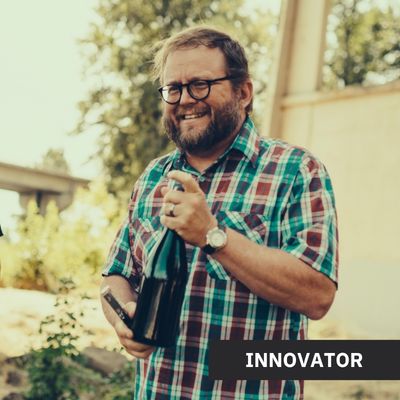
Brad Ford
President, Owner, Winemaker, Vineyard Manager | Illahe Vineyards
Brad Ford’s most disruptive project at Illahe Vineyards in Dallas, Oregon, did not begin with a flaw to fix or a market to capture. “It developed out of pure curiosity,” he says of the 1899 Project, named for the pre-electric era it evokes rather than a specific vintage. In essence, the 1899 Project attempts to make wine the way it would have been made before electricity, using horses, hand tools and gravity instead of modern mechanization.
In 2010 Ford began experimenting with native yeast fermentation. The results were not seamless. Early ferments carried more volatile acidity than he preferred. Adjustments followed. Native yeast is now standard across his red wines.
That experiment shifted Ford’s thinking beyond fermentation. If native yeast worked without intervention, what else could be removed? Draft horses began hauling fruit. A wooden fermenter replaced stainless steel. When pressing time came, Ford paused. “We’ve made it this far without electricity,” he remembers thinking. “Why turn it on now?” Pressing evolved from come-alongs to a house jack. A 60-foot Roman-style beam press, powered by gravity, is in development.
“We’re bringing a new type of history based on an old type of history to our region,” Ford says.
—Aakanksha Argawal
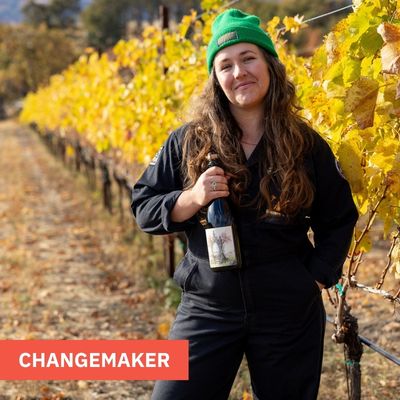
Anaïs Mera
Winemaker | AniChe Cellars
Influence in wine circles often looks like scores, scale or distribution. Anaïs Mera uses hers differently.
Over the past three years, Mera’s family-run winery, AniChe Cellars in Washington’s Columbia Gorge, has raised and donated more than $123,000 to equity-focused programs, including $36,000 in a single evening for the Skamania County Food Bank.
“Community involvement is inextricable from how my family lives and does business,” she says. In 2016, AniChe made a deliberate decision to align its commercial identity with its values. The winery openly acknowledges wine’s historical ties to class hierarchy and exclusion, choosing instead to operate as what Mera describes as a vehicle for redistribution, “while still making a profit, mind you.”
Food access became central for personal and philosophical reasons. Having relied on assistance programs herself, Mera frames nourishment as a sovereign right. AniChe is currently building a free pantry outside its production facility, extending advocacy beyond fundraising into daily practice. At their annual fundraiser, Mera emcees what she calls the “Robin Hood Hour,” encouraging guests who have enough to redirect their resources in real time.
Inside the tasting room, the influence looks equally intentional. Staff are trained to dismantle intimidation, meeting guests at any knowledge level and offering tastings in multiple languages. “Regardless of wine knowledge, we meet people where they are,” she says.
Mera’s definition of success departs from industry norms. “Am I contributing and not taking?” she asks. “That is my success.”
—Aakanksha Argawal
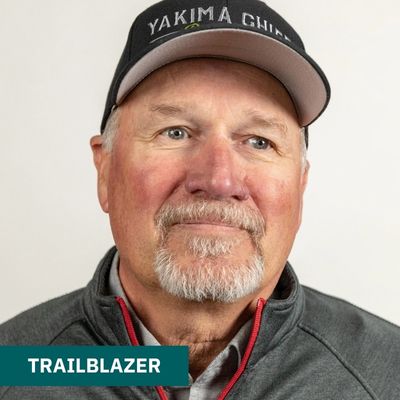
Steve Carpenter
Author, Consultant and Hopgrower | Yakima Chief Hops
Hailing from a family that planted the first hops in the Yakima Valley more than 150 years ago, it’s safe to say that Steve Carpenter has deep roots in Washington agriculture. He began his career as a hop grower after college and played a pivotal part in shaping today’s hop industry by deciding on a business strategy that connected his growing operation directly with his ultimate customers: brewers. Partnering with the Smith and Perrault families in the late ’80s eventually led to the creation of Yakima Chief Hops, where he served in various leadership roles including CEO. Carpenter retired in 2022, but remains active both as the co-owner of a consulting company and as an author. “I completed one book, Our Relentless Pursuit of Hoppiness,” he says, “and am starting research on a history of hops in the Pacific Northwest, emphasizing the contributions of local indigenous tribes throughout the region.”
—Ben Keene
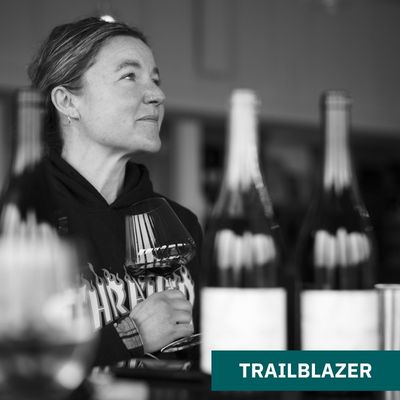
Mimi Casteel
Founder | Hope Well
Long before Mimi Casteel became one of Oregon wine’s most articulate advocates for regenerative agriculture, she trained as a forest ecologist. That foundation reframed how she would eventually farm vines at Hope Well near Sheridan, Oregon, in the Willamette Valley. “Ecology studies relationships rather than individual organisms,” she says. “There is no greater teacher than a forest or wild system for learning that the true strength of a system is in its connections, not its components.”
When it comes to wine, Casteel finds the language of sustainability insufficient. According to her, regeneration is more powerful as a concept, rather than as a set of practices. “We have passed critical points already when sustainability would be achievable,” Casteel says. “Regeneration implies an investment of effort and intention, to recover lost function and process.”
At Hope Well, that philosophy is structural. A permanent living floor grows year-round. Oregon white oak, a keystone species, is actively restored. Biodiversity is not decorative — it is functional. “Living soil, as a reservoir for both carbon and water, is the most obvious place to begin,” she says. “There is no molecule that compares to water as a thermal buffer.”
Her influence extends beyond her own rows of vines. Casteel expands what wine leadership can look like: urging the industry to think in decades and reminding it that the future of wine begins below the surface.
—Aakanksha Argawal

Brett Carlile and Orlin Sorensen
Cofounders | Woodinville Whiskey Co.
For a chunk of U.S. history, bourbon or rye equaled Kentucky. But that sentiment is changing, with Brett Carlile and Orlin Sorensen leading the way. Once Central Washington University roommates bonding over whiskey, after graduating they first followed mainstream careers. Until Carlile emailed Sorensen a small-batch distillery article — turned out, Sorensen was researching the subject, too.
Soon, Woodinville Whiskey was born.
Trekking a tougher road, the two decided not to release any whiskey before aging it 5 years. They made two additional consequential decisions. Convincing former Maker’s Mark Master Distiller Dave Pickerell (who sadly passed away in 2018) to become their “Kentucky godfather” was one. Partnering with Omlin Family Farm in Quincy, Washington, was the other. Family-run since the early 1900s, the farm provides all the corn and rye for the distillery; barreling, aging and bottling happen there, too.
With Woodinville’s craft whiskies perhaps the most awarded in the U.S., the pair marked a route for other Pacific Northwest distilleries via countrywide distribution. Washington as whiskey country? Decades ago, it might have sounded strange. Thanks to Sorensen and Carlile’s passion and willingness to take the road less traveled, it now goes down smooth.
—AJ Rathbun
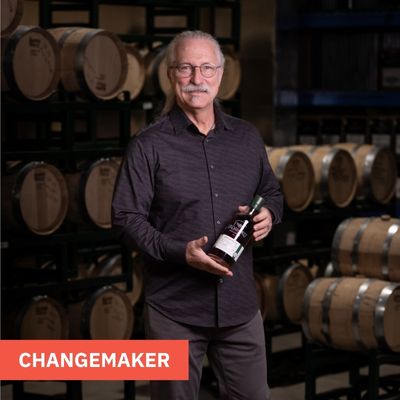
Allen Hodges
Founder | Undammed Distilling Co.
The idea of distillery as community steward doesn’t drive many makers. But for Undammed’s Allen Hodges, it’s a natural path. After retiring from 40 years in church ministry, he decided to follow his love of single malts and appreciation for “the distilled arts.” He opened Undammed in 2020, with two different sources providing inspiration: the poet Wendell Berry’s ethos, “do unto those downstream as you would have those upstream do unto you,” and the Yellowstone River.
Running through Billings, Montana, the Yellowstone River provides the clean, accessible water inhabitants need to live and is used in making Undammed products. Protecting that resource means proceeds from every Undammed bottle sold go to Yellowstone River conservation partners. Moreover, the distillery hosts and participates in the annual Yellowstone River Cleanup, and it fundraises for the Yellowstone River Research Center.
When the distillery was expanding, Hodges intentionally picked an area to support revitalization in Billings’ East Billings Urban Renewal District. Through Hodges’ devotion to place, the distillery isn’t just crafting delicious whiskey, gin and vodka — it is making positive change by lifting up and protecting the environment and community in which it is based.
—AJ Rathbun
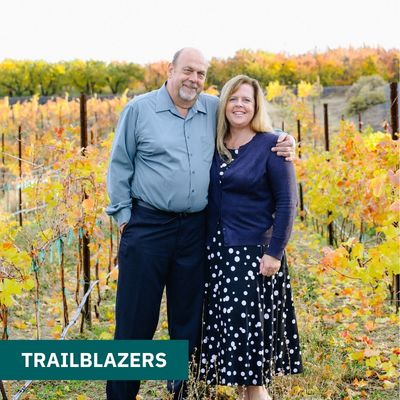
Julie & Juergen Grieb
Cofounders | Treveri Cellars
In 2008, Juergen Grieb, then head winemaker for a bulk wine facility, made a few cases of sparkling wine for himself, for fun. He hadn’t made bubbles since wine school in Germany, but suspected that the Yakima Valley grapes might be a “goldmine” for sparkling wine.
When Julie, then working as a banker, tasted the wines, she was blown away. A year later, they founded Treveri Cellars, Washington’s first sparkling wine house, planning to run a small shop and make a couple of hundred cases.
A chance encounter in 2011 with a chef passing through Yakima catapulted Treveri into a new echelon — the chef worked in the U.S. State Department and wanted to serve their wines in Washington, D.C. Treveri went from 200 cases to nearly 15,000 cases in two years.
Today, this popular and highly respected multigenerational, family-owned and operated sparkling wine house produces more than 50,000 cases a year.
—Dana Van Nest
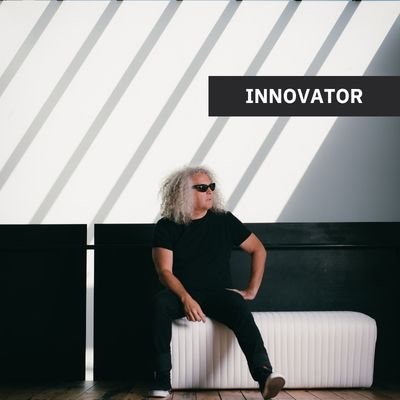
Charles Smith
Winemaker and Founder |House of Smith
“I move things forward,” says Charles Smith, winemaker and founder of the legendary House of Smith.
With his latest brand, REAL Wine, made with sustainably farmed grapes, minimal sulfites and nothing else, Smith emphasizes label transparency so that his customers (and the industry) are clear about what his wines contain and how they are made.
“I’m not trying to take on anybody,” he says. “Consumers should know what kind of shit commercial producers are putting into their beverages. I work for the people who buy my wine. The people deserve [transparency].”
Now that House of Smith has reached the quarter century mark, what’s next?
“The idea meets the moment and the moment continually changes,” Smith says. “I don’t want to be an imitation of myself. I want to strike a balance between tradition and innovation, not just hit the reset button.”
—Dana Van Nest
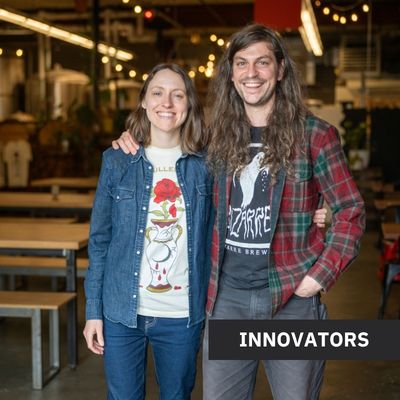
Derek Brown & Colette Boilini
Cofounders | Bizarre Brewing
In recent years, breweries around the country have responded to changing tastes and consumer trends by releasing everything from hop waters and nonalcoholic beers to high octane beers and CBD beverages. In Seattle, Derek Brown and Colette Boilini of Bizarre Brewing took a different approach when they opened their doors in 2022. They saw opportunity and the potential to differentiate Bizarre with sessionable, mid-strength beers that combined personality and drinkability in creative ways. “We had a vision of making our taproom a community space and we felt that sessionable styles [were] more conducive to gathering,” says Boilini. “Plus, it’s an exciting challenge to brew characterful lower-ABV beer across this wide range of styles.” Beers like Whistle in the Catacomb, a 3.9% honey oat mild, or Ghosts of Goslar, an award-winning 5.4% fruited sour fermented in oak, are a testament to their success with this somewhat unconventional approach.
—Ben Keene

Lee Larsen & Aaron Sarnoff-Wood
Cofounders | 2 Towns Ciderhouse
2 Towns Ciderhouse was born when two friends, Lee Larsen and Aaron Sarnoff-Wood, were living in Corvallis and Eugene, Oregon, respectively. The cidery began as their passion project in a 900-square-foot garage in Corvallis, and has evolved into one of the nation’s largest independent craft cider producers — driven by a commitment to bold flavor, thoughtful innovation and deep roots in the Pacific Northwest.
2 Towns was the first cidery to introduce the term “Imperial” to cider and now crafts everything from traditional styles to inventive new expressions, including nonalcoholic offerings and emerging beverage formats. The company continues to shape the cider category, earning more than 600 national and international awards to date, while consistently pushing the boundaries of what craft cider can be.
—Emily Hutto

Dru Ernst & Sara Giuffrida
Cofounders | Dru Bru
When it comes to breweries that live and breathe the Pacific Northwest, it’s tough to beat Washington’s Dru Bru, located at the summit of Snoqualmie Pass near dozens of hiking, biking and skiing trails. Which is exactly what founders and married partners Dru Ernst and Sara Giuffrida intended when they started the business. “Our goal has always been to create a mountain-born, community-first brewery that is approachable, rooted in place and genuinely connected to the people and landscape around it,” Giuffrida explains. More than 10 years later their commitment to community, environmental stewardship and sustainability continues to serve as a guide, showing up in things like the Teanaway Trail Fest fundraiser and Bru Ski Patrol Dark Lager, a beer that supports local snow safety organizations with some of its proceeds. In 2025, the Kittitas County Chamber of Commerce recognized their vision and dedication with a Business of the Year award.
—Ben Keene
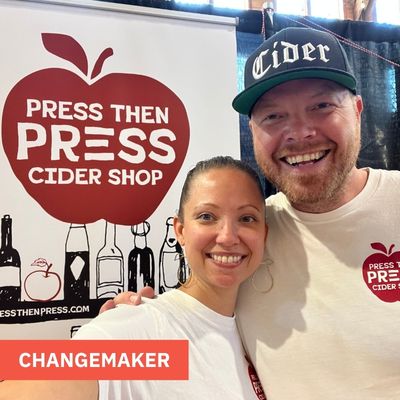
Storie & Erik Madrid
Co-owners| Press Then Press
Storie and Erik Madrid are a wife-and-husband duo of Certified Pommeliers who co-own Press Then Press Cider Shop. They travel near and far to select the most unique ciders possible for their e-commerce bottle shop that carries the largest selection of cider anywhere in the U.S., with more than 500 ciders from across the globe.
The best part: The inventory at Press Then Press is almost exclusively made from apple varieties grown specifically for cider. The Madrids are passionate advocates for how the fruit is grown and seek to highlight ciders with depth and complexity courtesy of the unique varieties used, the terroir where they are grown, and the skill and techniques used by the cider maker.
Storie and Erik’s customers love them for their curated selection, cider prowess and personal touch that they add to the digital ordering process.
—Emily Hutto
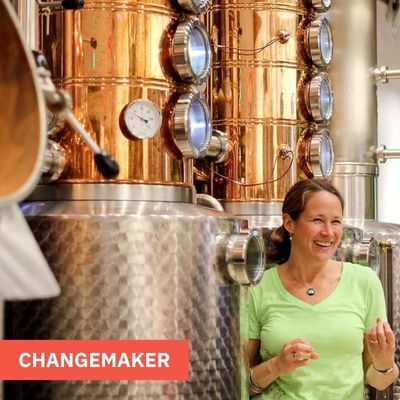
Kim Karrick
Cofounder and Distiller | Scratch Distillery
Kim Karrick did not create the world’s first gin. But she did change how many in the Pacific Northwest think about it. (Other spirits, too.) Scratch’s story starts with Kim and Bryan, who would later become her husband and business partner. It was gin and tonics that stirred their love. That shared love (and combined inquisitive palate) led to the creation of the distillery and, specifically, its knack for crafting different gins specifically for different drinks (Scratch’s Martini-style gin, for example).
In 2015, Karrick began their unique GINiology™ classes, too. In them, attendees learn gin history, why different gins taste different, then under Kim’s expert tutelage design a bottle of gin crafted for each person’s individual palate.
One of the region’s first female distillers, she’s had to deal with everything from unhelpful distributors to visitors routinely asking Bryan technical questions instead of her. This hasn’t slowed her, however. Kim’s currently created over 30 different products, including 2025 SIP platinum winners: Rum, Amo Pocio Amaro, and Liquor Verte.
—AJ Rathbun

Maria Ponzi
Director of the Center for Wine Education | Endowed Chair of Wine Studies
In Oregon wine country, few names carry the weight and warmth of Ponzi, one of the Willamette Valley’s pioneering families. Raised surrounded by some of the state’s first vineyards, Maria Ponzi grew up immersed in the family business — from helping plant its original vines to eventually managing production and sales. Together with her sister, she transformed Ponzi Vineyards into one of the nation’s premier wineries, cementing the Willamette Valley as a destination wine region. In 2021, the sisters sold the estate to the prestigious French house Société Jacques Bollinger, closing a remarkable family chapter.
Today, Ponzi is shaping the future of the industry and cultivating the next generation of wine leaders. As director of the Center for Wine Education and endowed chair of Wine Studies at Linfield University, she leads the university’s innovative Masters of Science program in wine business leadership. The curriculum blends real-world rigor with classroom learning, covering wine law, strategic production, finance, sales and hospitality, and even takes students abroad for immersive capstone experiences. Through a recent partnership with the nonprofit Unidos Bridging Community, she is also creating pathways for young adults in Yamhill County to access educational and workforce opportunities in the local wine industry.
—Kerry Newberry

Erich Berg
Founder and Winemaker | Ricochet Wine
In 2004, Erich Berg left Chicago’s fine dining scene with a clear goal: to learn everything he could about wine. His first harvest at Domaine Serene exceeded expectations. Three great years followed — until life threw a curveball and a major surgery forced him off the crush pad. Berg redirected to graduate studies followed by six meaningful years teaching high school English.
But his winemaking dreams never faded. Eventually, a longtime friendship opened the door to pivotal roles as associate winemaker at Illahe Vineyards and Day Wines. In 2018, on a whim, he launched Ricochet Wine Company with two tons of Pinot Noir and Grüner Veltliner, mostly for friends. Word traveled fast through his restaurant circle. Labels followed and practically overnight, a winery was born.
Berg’s wines are beloved, but it’s his commitment to community that sets him apart. Ricochet isn’t just a clever moniker, it’s a philosophy that embraces life’s ups and downs, no matter how unexpected. In that spirit, Berg donates five percent of sales to local and regional nonprofit partners supporting individuals navigating hardship. In 2022, he further championed small producers by founding the Indie Wine Mixer, now a buzzworthy gathering spotlighting rising talent. On social media, Berg shares triumphs and turbulence with equal candor, showing a creative life defined not by setbacks, but by momentum — and inspiring others to do the same.
—Kerry Newberry

Leeann Froese
Cofounder | Town Hall Brands
The British Columbian wine industry has grown by leaps and bounds since the late ’90s. As the industry has grown, so has the quality of product and the community surrounding it. A key catalyst of this growth has been Vancouver-based marketer extraordinaire, Leeann Froese. She started work with the BC Wine Institute in 1997 — when the VQA quality designation was really starting to take hold — helping to navigate wineries and regional associations through a period of unprecedented growth. She’s known for not just championing her winery clients, but the industry as a whole to international trade and media visitors.
Froese’s current work at Town Hall Brands, the company she cofounded with her partner, Andrew von Rosen, encompasses design, marketing, events and beyond — keeping her busy as a key connector in the industry. However, she has always made sure to carve out time for charitable ventures with the likes of Les Dames D’Escoffier and the BC Hospitality Foundation. A one-woman cheering squad, Leeann Froese’s influence continues to make waves.
—Kurtis Kolt

Steve Luke
Founder and Headbrewer | Cloudburst Brewing
When the story broke a decade ago that Steve Luke was opening Cloudburst Brewing in Seattle, the local and even national beer community took notice. During his time at Elysian Brewing (before the Anheuser-Busch acquisition), he was responsible for some remarkable beers, including one sprinkled with a bit of magic space dust.
Luke and Cloudburst Brewing did not disappoint; many fabulous, hop-forward beers have poured from the brewery. Perhaps more impactful, he’s forged relationships with the hop growing industry. Today, he serves unofficially as an emissary between the hop industry and the brewers who rely on it. Quite literally, he is helping shape what hops will taste like tomorrow. Among many other things, he is part of an exclusive cohort, the Hop Quality Group, which works with the U.S. Department of Agriculture to develop new hop varieties. Because brewers recognize his exceptional hop prowess and growers value his insight, he is recognized as a Changemaker.
—Kendall Jones
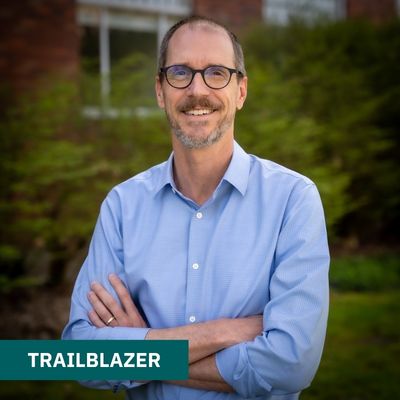
Thomas Shellhammer
Professor | Oregon State University
In addition to fostering the next generation of brewers, farmers and fermentation specialists as the head of Oregon State University’s world-renowned Fermentation Science program, Thomas Shellhammer is at the forefront of innovation and advancement in hops and malt. The Nor’Wester Endowed Professor of Fermentation Science, self-described beer geek, and observer of beer culture is also a past president of both the Northwest chapter of the Master Brewers Association, as well as the American Society of Brewing Chemists.
In 2020, Shellhammer coauthored a game-changing study exploring the regional identity of hops and finally proving definitively that terroir is just as much a factor in hops as in wine grapes. The impacts of the findings from studying Oregon- and Washington-grown Cascade and Mosaic hops show vastly different oils and alpha acids impacting sensory evaluations. Furthermore, the study revealed how a single hop from a single region — such as Cascade — can throw off vastly different flavors and aromas when harvested much later in the season. These results signal potential shifts in how hops are selected and used in the brewing process. Those are real-world implications for the taste of beer.
For his next study, Shellhammer will do the same for fresh wet hops versus kiln-dried hops.
—Ezra Johnson-Greenough

Chris Nemlowill
Cofounder | Fort George Brewery
Chris Nemlowill became Astoria, Oregon’s, own homegrown hero when he opened Fort George Brewery with Jack Harris in 2007. Nemlowill, or Nimz for short, was born and raised in sleepy Clatsop County, where the Columbia River flows into the Pacific Ocean. After attending business school he returned to Astoria and spurned a boring desk career in favor of becoming a barista and brewer.
Though it wasn’t Astoria’s first brewery, Fort George has been the most transformative. Currently ranking as one of Oregon’s five largest breweries, it employs nearly 200 people and is mainly responsible for the revival of tourism and industry in the area, drawing thousands of people annually for events like Stout Month and Festival of the Dark Arts.
As the brewery has grown, Nimz has made huge investments in the environment and sustainability that protects Astoria’s natural resources — chiefly the water. In 2020, Fort George installed the largest private single-building solar array in Oregon, and is currently in the process of implementing a carbon dioxide recapture system that could potentially fill other local business C02 needs as well as benefiting the environment.
—Ezra Johnson-Greenough
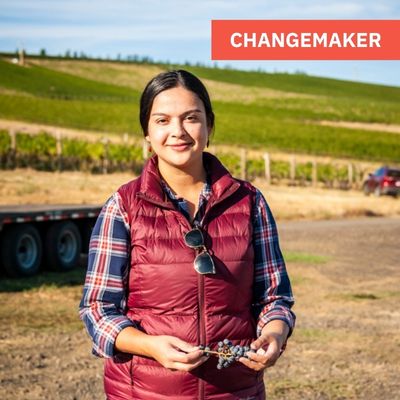
Devyani Isabel Gupta
Head Winemaker | Valdemar Estates
At Valdemar Estates, Devyani Isabel Gupta oversees both vineyard strategy and cellar execution, a dual role that shapes the Walla Walla, Washington, estate’s voice from soil to bottle. Appointed head winemaker at just 28, Gupta approaches the work with a systems-level mindset: farming decisions inform fermentation choices, and structural balance begins long before fruit reaches the crush pad.
“Wine is all about legacy,” Gupta says. “Yes, someone might open that bottle decades from now. But it’s also about the people you train and the standards you set.”
That philosophy was forged under scrutiny. In early interviews for industry boards, she recalls questions framed with skeptical “actuallys,” probing whether she actually ran vineyard operations. “I pretty much had to block out all the ‘actuallys,’” she says. Rather than retreat, she expanded her reach.
Gupta’s wines reflect disciplined farming and calibrated extraction, but her broader impact lies in widening access to decision-making spaces. Mentored by senior figures who urged her to “answer the call when it’s your turn,” Gupta began pursuing board and advisory roles as soon as she stepped into the head winemaker title. “I didn’t come to be on a board just for the glory,” she says. “I came to serve.” —Aakanksha Argawal
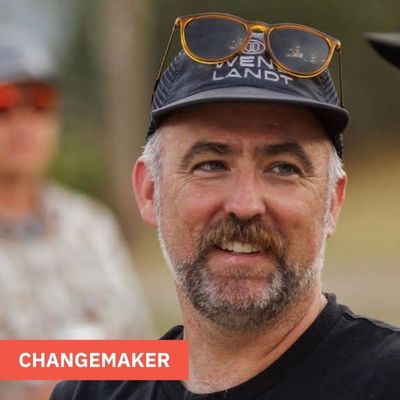
Brian Estes
Partnerships | LINC Malt
As partnerships director for LINC Malt and vice president of the Craft Maltsters Guild, Brian Estes spends a lot of time with grain farmers and independent brewers and distillers, fostering relationships over flavorful beverages and events like the Grainmaker Fest. He has also played the important role of community builder since focusing on LINC’s malting business in 2019. A native of eastern Washington with a background in regional agriculture, Estes says he takes particular pride in championing the social, environmental and economic benefits of connecting drinkers with growers across the Pacific Northwest. “A sense of place, a bias towards human connection, an attention to ingredients and an emphasis on quality and enjoyment have all long been part of craft beer, and it has been satisfying to play a role in showing how the grain supply chain is something that can compellingly reflect those values for beer and beer drinkers.”
—Ben Keene

Danielle Leavell
Founder and Master Distiller | Astraea Spirits
A former advertising photographer specializing in food and beverages, Danielle Leavell’s time documenting West Coast producers evolved into hands-on experimentation making bitters, vermouth and amaro at home. “I would find something I liked and reverse engineer it,” Leavell said — an early expression of the technical curiosity that now defines Astraea Spirits.
Seeking a level of depth unavailable in the United States, Leavell trained in Scotland, where rigorous distilling study shaped her flagship Ocean Gin and sharpened a core innovation: applying terroir to American gin.
“If you look at liquid in Scotland, it all has a terroir story,” Leavell says. “You can really evoke that sense of place in a bottle.”
At Astraea, that philosophy becomes product design. Pacific Northwest botanicals anchor a terroir-driven model, while Leavell’s single malt gin, Desert, a structural hybrid of whiskey and gin, challenges how gin is defined.
Her next phase moves deeper into technical R&D. Leavell is developing low-proof spirits through flavor molecular science, work aimed at what she describes as “rebuilding the architecture of spirit.”
One of the few Americans inducted into the Gin Guild, Leavell approaches innovation as both liquid and systems change. “What it’s really made me focus on is building a female-led brand,” she said, “and opening doors along the way.”
—Aakanksha Argawal
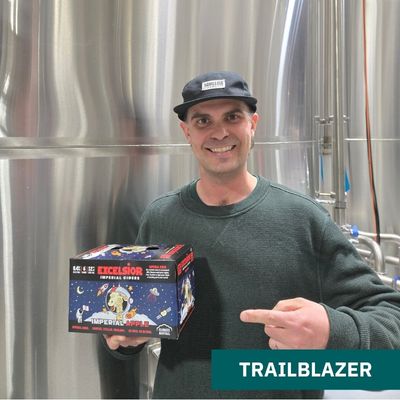
Colin Schilling
CEO and Cofounder | Schilling Cider
Colin Schilling is the CEO and cofounder of Schilling Cider. What began in a garage in Seattle 14 years ago has become an internationally recognized leader in the cider industry — one of the earliest cidery adopters of aluminum cans in the Pacific Northwest, with plans to become carbon neutral this year.
Schilling’s sustainability ethic was established much earlier, in rural Idaho where he grew up crafting home batches from apples grown on his family’s orchard. Schilling is guided, in his words, by the pursuit of higher quality cider that reduces impact as much as possible, prioritizes a work culture where employees can thrive, and puts pressure on the whole industry to do right by people and the planet.
—Emily Hutto
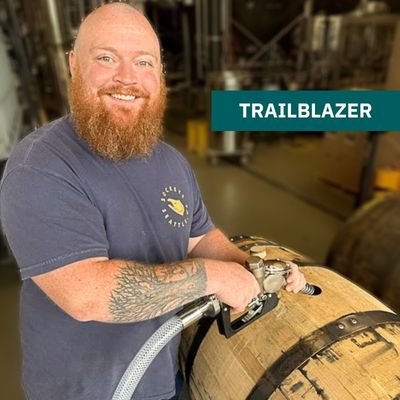
Matt Hoffman
General Manager | Talking Cedar Brewery and Distillery
From his start in the industry, Matt Hoffman has been making whiskey waves. After studying brewing and distilling in Scotland, he cofounded Seattle’s Westland Distillery in 2010, a launch that helped redefine single malt whiskey.
Long associated with Scotland, single malt wasn’t made much in the United States. Hoffman and Westland changed that, crafting regionally inspired single malts that could stand glass-to-glass with those made worldwide. This single malt mastery led to many whiskey awards, plus Hoffman being named to Forbes’ 30 Under 30 Food and Drink list, as well as being Whisky Magazine’s Craft Producer of the Year, StarChefs Seattle Rising Star, and more. He was also a key figure in establishing a legal definition for “American Single Malt” whiskey.
In 2023, Hoffman left Westland to become general manager of Talking Cedar in Rochester, Washington, the first distillery built on tribal land following the repeal of an 1834 federal law prohibiting alcohol production on tribal lands. During his time there, he helped expand its whiskey program. With so much accomplished already, it will be interesting to see where his career takes him next and how he continues to influence the Pacific Northwest beverage industry and beyond.
—AJ Rathbun

Robyn Schumacher
Cofounder | Stoup Brewing
Although she describes herself as a “functional introvert,” Robyn Schumacher, co-owner of Seattle’s Stoup Brewing and current president of the Washington Brewers Guild, was first attracted to the beer industry by its strong sense of community.
With time however, she noticed that the industry could be isolating for certain groups, particularly women, people of color and the LGBTQ+ community. So she set out to change things for the better, both at the brewery with her business partners, hosting inclusive events like a weekly meetup for the Gaymers, a community of gamers of all orientations, and beers with names like Everybody Love Everybody IPA, and at the guild, where the recent introduction of monthly happy hours is one of her proudest accomplishments to date.
“We travel around the state each month and gather with anyone who wants to share space with us,” she says. “It’s immensely powerful to see people gathering together with a shared purpose. We all crave community.”
— Ben Keene
Featured in Sip Magazine’s 2026 Print Edition
Editor’s Note: Since the original publication of this article, Hoffman has left his position at Talking Cedar.