A light-filled tasting room at Harvest Woodinville opens a new chapter for the Washington winery, where a growing estate program and the acquisition of Gramercy Cellars build on a partnership that began over a business plan
Marty Taucher wants people to get comfortable.
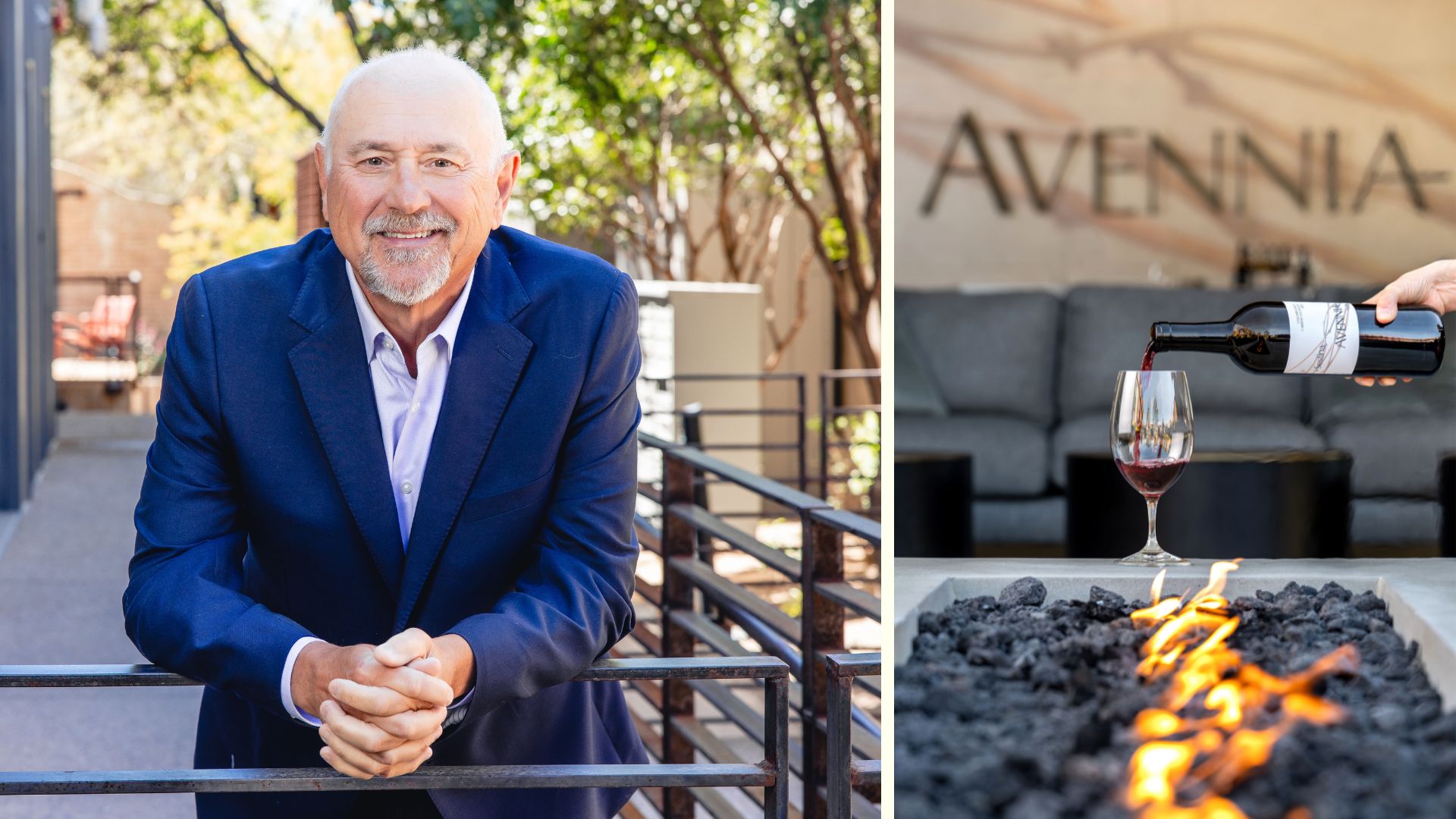
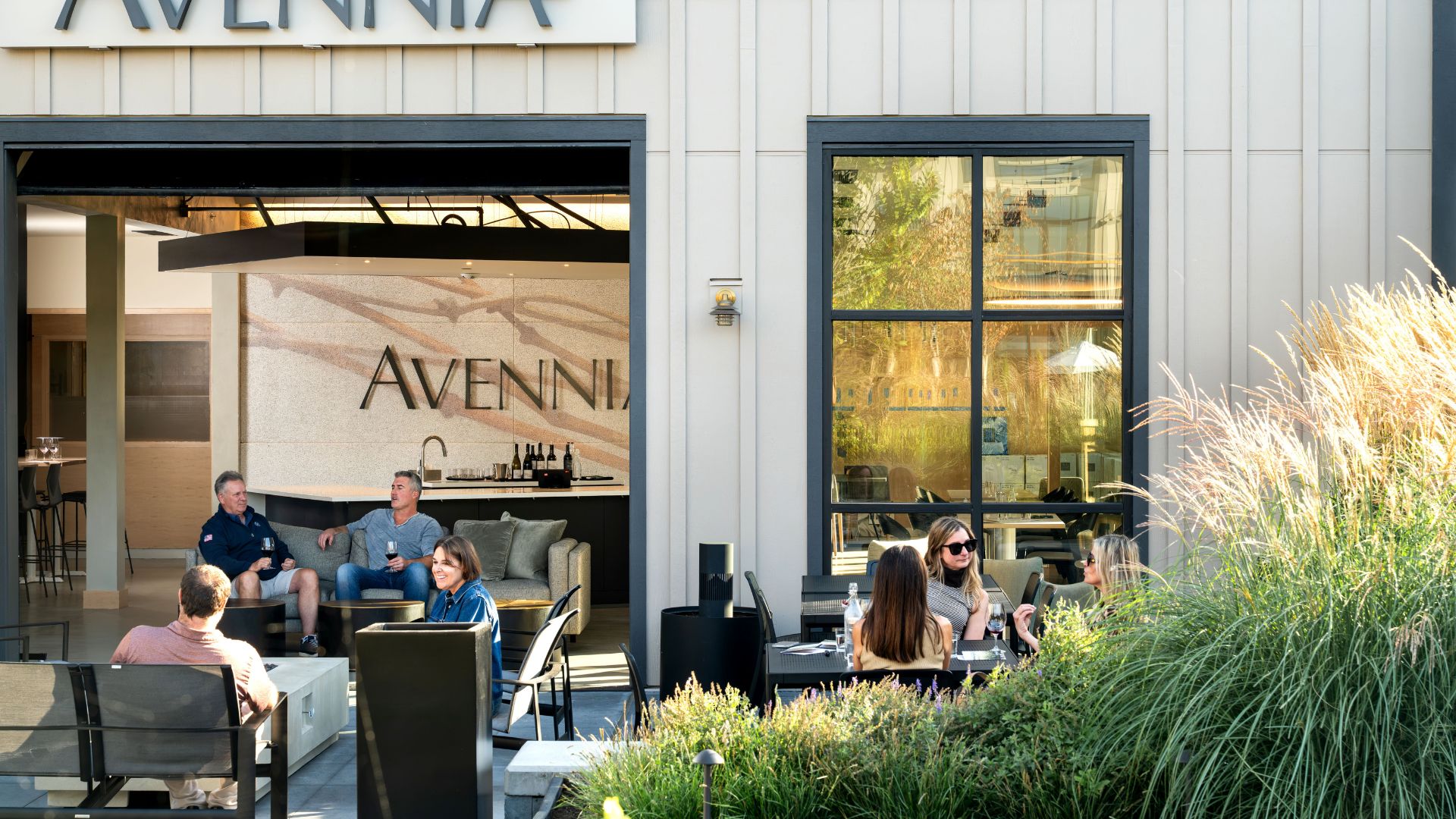
At Avennia’s new tasting room in Woodinville, Washington, that might mean gathering friends for a flight, settling near the patio firepit or letting a conversation about Cabernet carry on longer than planned. A roll-up garage door opens to the outdoors, while windows and doors on three sides bring light into the room.
Taucher, who cofounded Avennia with winemaker Chris Peterson, says the move to Harvest Woodinville is a chance to make an afternoon tasting more inviting.
“Our original tasting room was small and slightly removed from Woodinville’s main tourist flow,” he says. “When you walk in, you truly see our brand identity fully realized.”
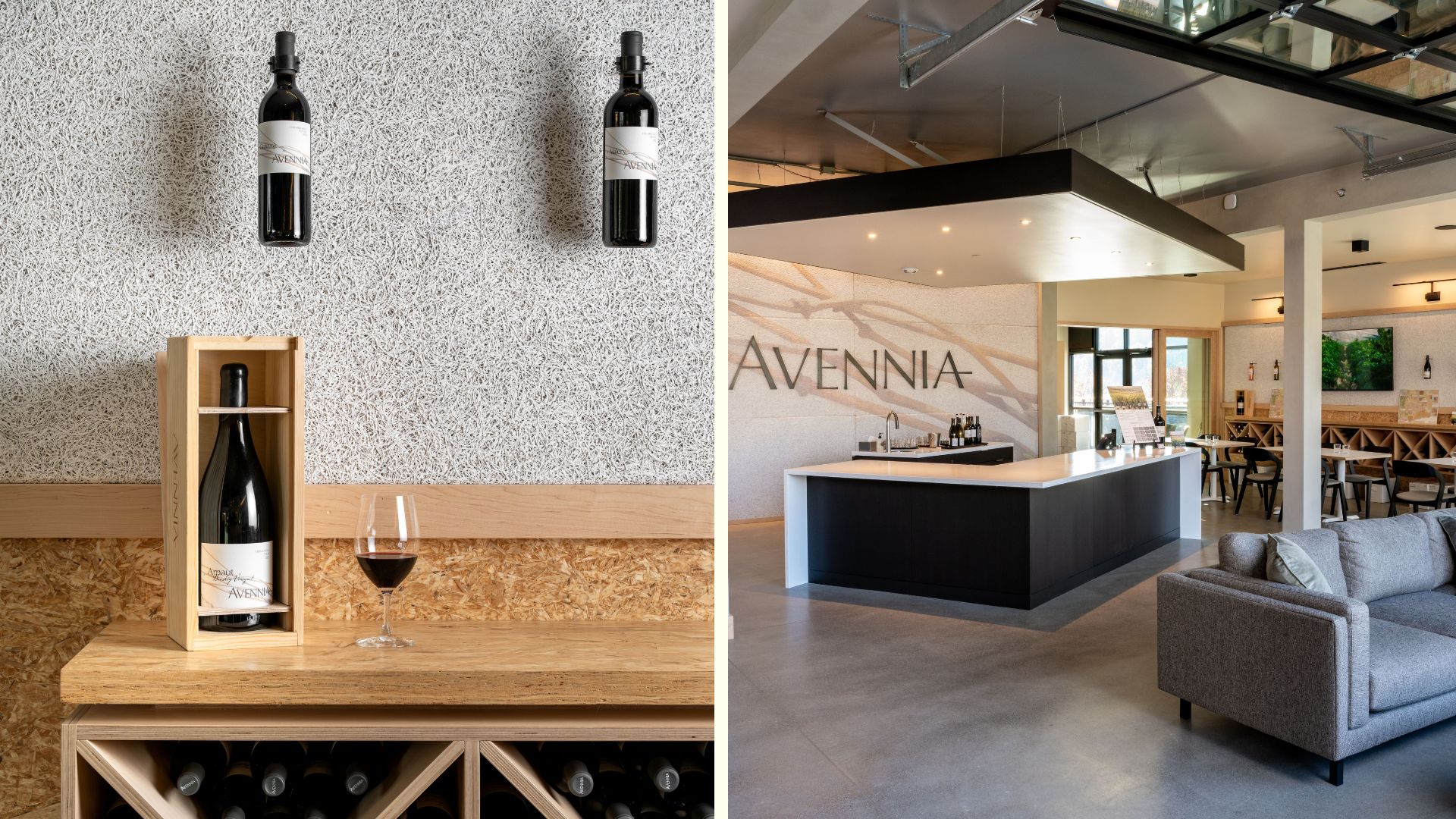
The new location opened in September, with a grand-opening celebration taking place in early October. Harvest gives Avennia more space for private events and educational seminars, as well as a comfortable setting for tasting with friends. Natural wood and textured panels echo the former room in a design developed with Boxwood, the winery’s brand partner since 2010.
The opening comes during an expansive chapter for the winery. Its Red Mountain estate is giving Peterson new possibilities to explore, while the acquisition of Gramercy Cellars brings a bigger presence in Walla Walla. Sixteen years after their first vintage, the partners have plenty to talk about over a glass of wine.
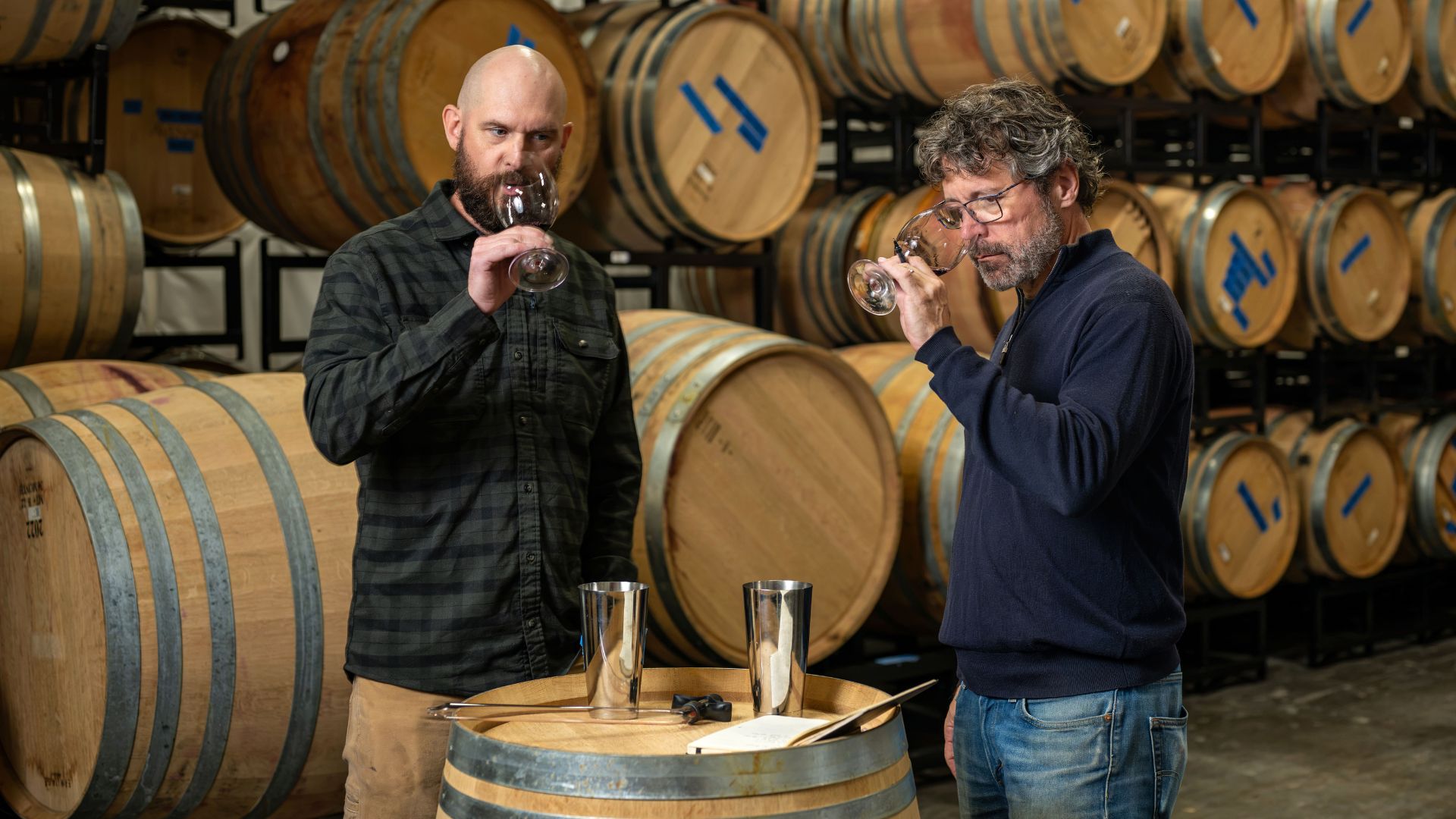
The partnership itself began with a school assignment. In early 2010, Taucher, a former Microsoft executive, was taking a winery business class at South Seattle College. His final project was a startup plan, and he asked Peterson, then at DeLille Cellars, for advice. Peterson had suggestions. He also had a question: Was Taucher serious about the time and money this would take? Once Taucher confirmed that he was, Peterson expressed interest in joining him.
Their plans took shape through conversations at Seattle’s Fiddler’s Inn, which Taucher remembers fondly as their “corporate HQ.” The two had met at DeLille, where Taucher worked as a harvest intern. Peterson knew the growers and vineyards he wanted to work with, and Taucher understood the business side. They shared an ambition to build a winery that could earn its place among Washington’s best.
Peterson, who had begun wondering what might come after DeLille, says the partnership offered a generous opportunity.
“Marty gave me the chance to create a style and vision that would define what would eventually become Avennia,” he says. “That was a pretty compelling and generous gift, so I jumped at the chance.”
Some of his inspiration came from Andrew Jefford’s The New France. Peterson was drawn to its portraits of producers whose convictions gave their wines a particular character. He recognized the same quality in Washington wineries he admired and wanted to develop something equally individual.
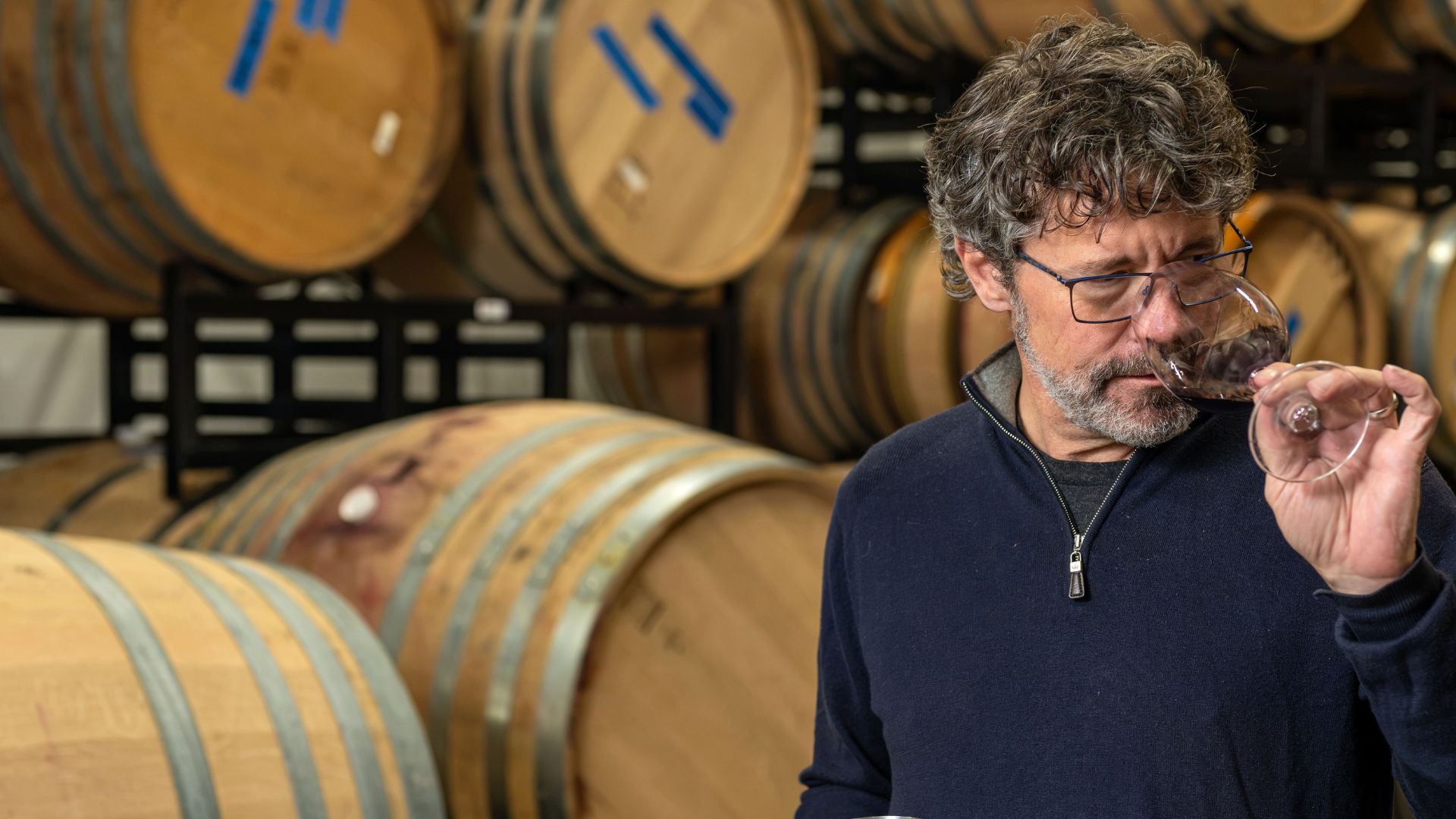
For Avennia, that meant older vines, close relationships with growers and a light hand in the cellar. Many of those early vineyard sources still supply the core wines, Peterson says.
A familiar wine, though, can still have something new to say. Peterson points to the hot, low-yielding 2021 season and the cooler, later-picked 2022 vintage as two years he finds exciting for different reasons. He wants those differences to reach the glass.
“The advantage to being a smaller, artisan winery, is that we can celebrate those differences, instead of trying to mitigate them or homogenize the wines for a grocery store shelf,” he says.
Sestina, Avennia’s flagship Cabernet-based blend, is worth getting to know over several vintages. It draws on established Washington vineyards, including Cabernet planted at Bacchus in 1972 and Dionysus in 1973, alongside fruit from Red Willow.
Peterson describes each vineyard’s contribution with the familiarity of someone assembling a dinner party. Red Willow brings dark fruit and structure. Dionysus adds savory herbs and a supple texture. Bacchus supplies elegance and lift. Merlot fills out the blend, while Cabernet Franc adds fragrance.
The proportions change as he works toward a wine that feels complete from beginning to end.
“It’s a great joy to unlock the Sestina through a series of blending trials, when it finally reveals itself,” he says.
Peterson describes black currant, plum and blueberry alongside herbs, earth and graphite. Sestina is also the core Avennia wine he builds for the longest life in the cellar. Buying a bottle to revisit later is very much part of its appeal.
Arnaut, the flagship Syrah, offers another side of the house. Sourced entirely from Boushey Vineyard, it combines two of the site’s oldest Syrah plantings.
“This wine changes slightly each year with the caprices of the vintage, but always expresses the specific character of these blocks,” he says.
Both feature in the room’s $25 flagship tasting. The current lineup starts with Oliane Sauvignon Blanc, moves through Justine, a Southern Rhône-style blend, and Arnaut, then finishes with the Merlot-led Valery and Sestina.
Wine selections rotate every one to two months, giving return visitors a reason to try something different. Marcona almonds and Castelvetrano olives make easy accompaniments, while a $30 charcuterie board for two comes from neighboring Olive Branch.
There is seating for more than 35 indoors and about 24 more outside. Taucher hopes members treat the room as “a home base: the perfect place to bring friends and family, or simply to enjoy a leisurely tasting while engaging in conversation with our incredible staff.”
For another $15, the estate tasting add-on introduces the Estate Red and Estate Cabernet Sauvignon from Avennia’s estate vineyard on Red Mountain.
Owning the vineyard has given Peterson plenty to be curious about. He is getting to know its older vines and newer plantings, discovering how differently even neighboring blocks can behave.
“It’s always interesting to see how different the blocks can be, even from the same variety planted in adjacent blocks,” he says.
The Estate Cabernet Sauvignon draws entirely from an original 1985 planting. The Estate Red gives Peterson room to follow what the vineyard suggests, and Cabernet Franc has proved a welcome surprise. The wine “doesn’t need to conform to an established Bordeaux template,” he says.
The Gramercy acquisition brings a different sort of possibility: trading ideas with founder Greg Harrington, whose personal vision Peterson admires. Gramercy’s emphasis on Walla Walla complements Avennia’s longstanding focus on the Yakima Valley and Red Mountain, he says.
Peterson is enthusiastic about learning from each other while protecting what makes the wines distinct. “The original and unique commitment and vision of Greg and Gramercy Cellars is what carries its intrinsic value, and we want to do everything possible to preserve and continue that,” he says.
Taucher stresses that the acquisition and the tasting room were separate projects. Harvest had been in development for three years; Gramercy came together more quickly. Both broaden the business’s reach, bringing more Washington vineyards into the portfolio and the wines to a wider audience.
“Ultimately, our vision remains the same: to continue delivering vineyard-driven wines of balance and elegance that are a welcome guest at any table.”