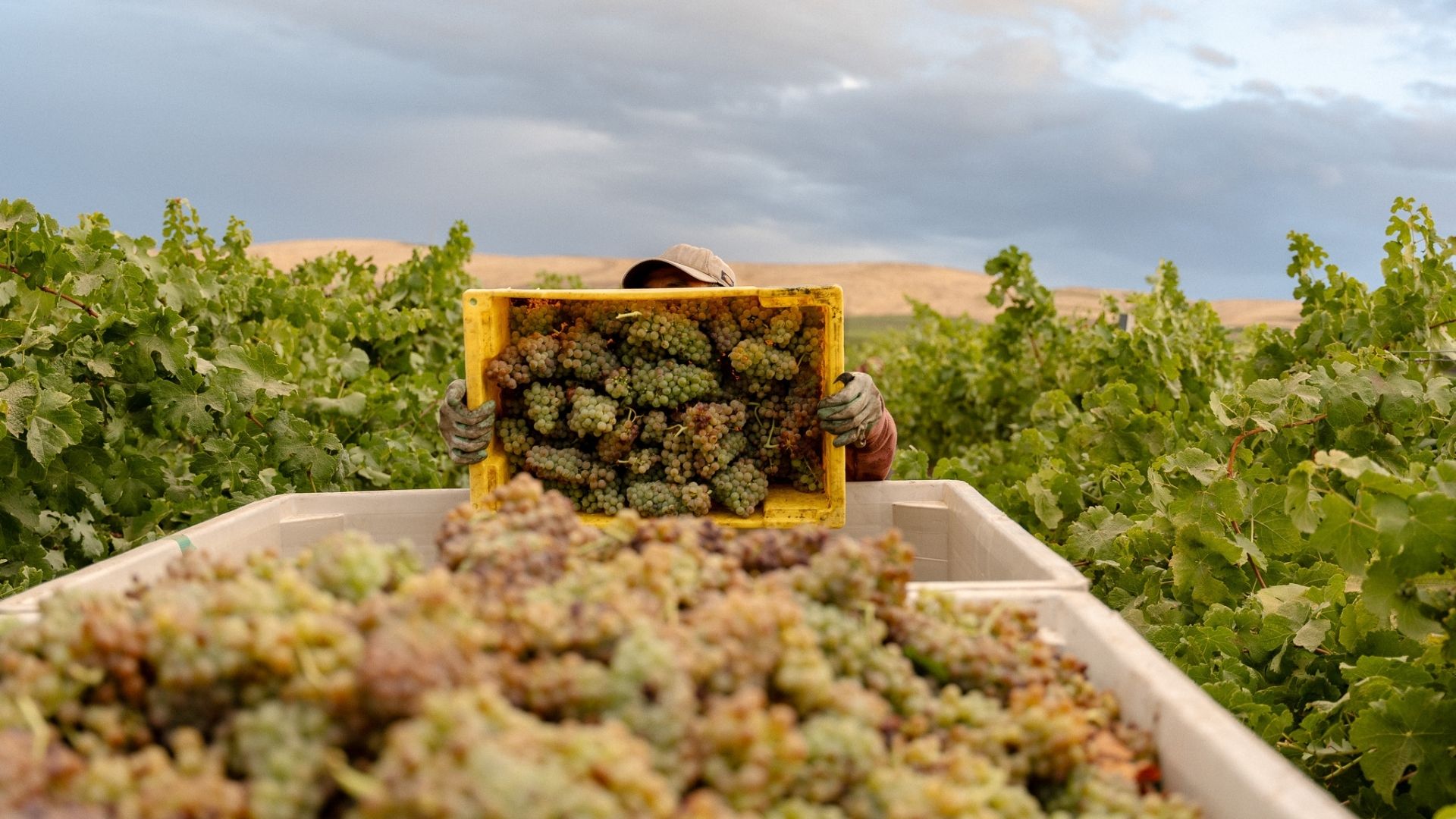
Ciel du Cheval provides fruit to more than 20 Washington wineries, each of which seek out the impeccably consistent profile for which the legendary vineyard is known.
The name doesn’t have a fitting translation.
“Ciel du Cheval” was meant to reflect Horse Heaven Hills, a nearby geographic landmark in Washington wine country. Instead, it means “sky of the horse,” a linguistic accident, attributed to a rough translation attempt in the vineyard’s early days. French speakers still find it amusing, says Richard Holmes, second-generation steward of Ciel du Cheval.
It still fits the vineyard perfectly well, though. The vineyard itself wasn’t the resolution of a meticulous blueprint. It is the making of decades of plantings, experiments and a long accumulation of decisions, sometimes in the dark. Jim Holmes and John Williams were engineers when they bought property on Red Mountain in 1972. Planted in 1975, it is one of the region’s oldest vineyards and helped establish Red Mountain as a serious site for structured red wines.
Ciel du Cheval works primarily as a source vineyard, supplying grapes to some of Washington’s most important wineries, including Andrew Will Winery, DeLille Cellars, Fidelitas Wines, Long Shadows Vintners, Januik Winery and Mark Ryan Winery, among many others across the state.
If you have had wine from any of these producers, you have likely already tasted fruit grown here.

The vineyard itself grows an unusually wide range of varieties. Cabernet Sauvignon remains central, alongside Merlot and Cabernet Franc, but the plantings extend well beyond Bordeaux. Rhône grapes like Syrah, Grenache, Mourvèdre and Counoise sit alongside Italian varieties such as Sangiovese, Nebbiolo and Barbera. Smaller blocks of whites thrive, as well, including Roussanne, Viognier, Arneis and Albariño.
Those whites aren’t an afterthought. DeLille makes a single-vineyard Roussanne from Ciel du Cheval, that Jason Gorski, vice president of winemaking and viticulture, raves about. He says the fruit combines weight and substance with bright acidity and a lively herbal character, an unexpected expression from an AVA better known for powerful reds.
Holmes wants people to know what happens when a wine labeled Ciel du Cheval reaches the palate. How it enters, how it builds, how it finishes. “What should people expect?” he asks. “What is that experience going to be?”
“When you first taste it, you’ll perceive the beginning of structure,” he says.
From there, the wine develops. You feel the impeccable structure, and a backbone of minerality.
“It builds across the palate,” Holmes says.
Toward the finish, acidity carries the wine forward.
“The finish is long,” he says. “And gradual.”
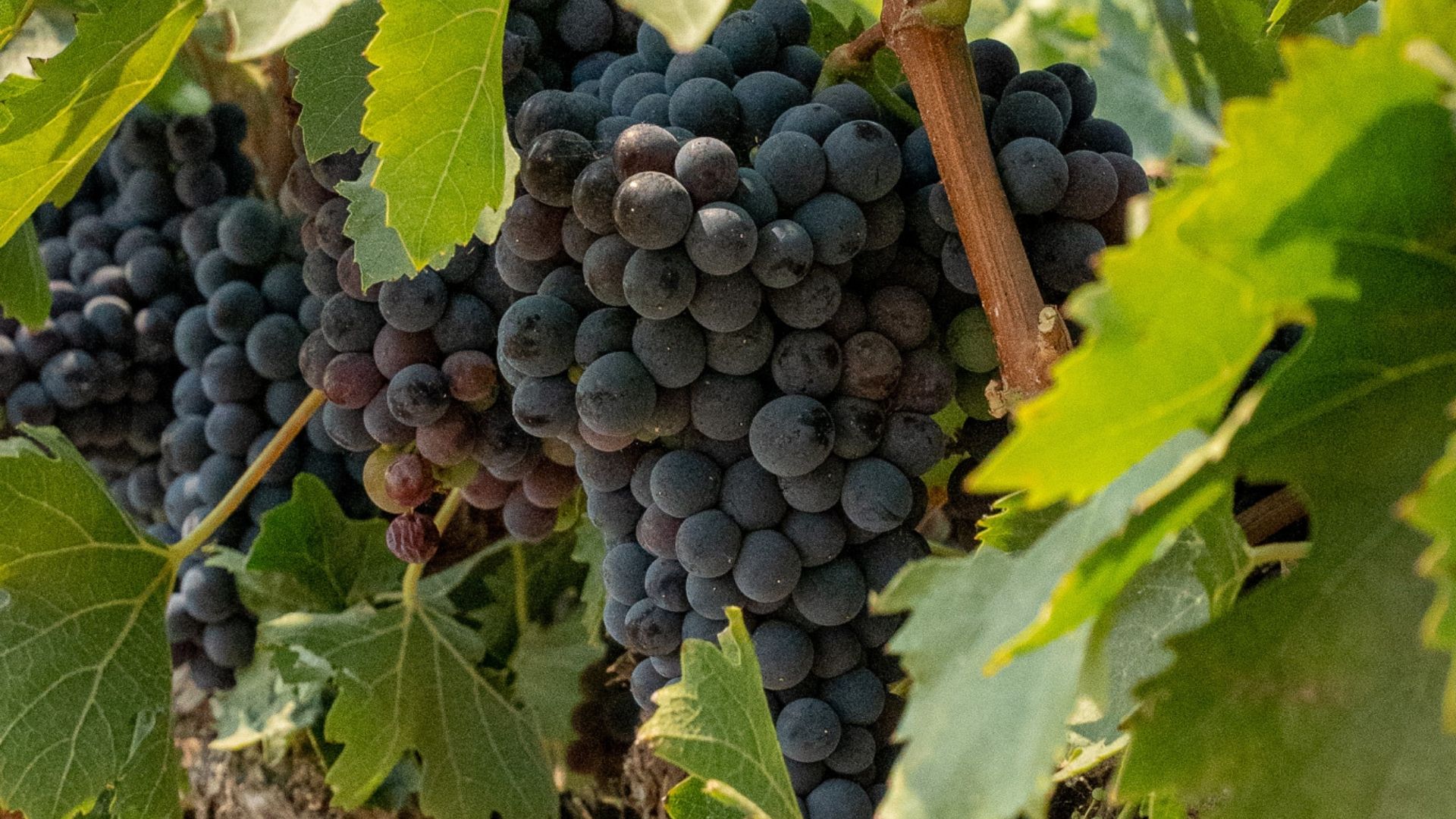
That balance is something winemakers notice, too. Mike Januik, head winemaker at Novelty Hill-Januik, says Ciel du Cheval gives reds “great texture and mouthfeel” without becoming overdone — a distinction he finds especially important on Red Mountain. “It’s the perfect combination: really mouth-filling phenolics, without ever going too far.”
Certain descriptors appear again and again in wines made from the vineyard’s fruit. Holmes lists them out. Chalky but not drying. Cocoa powder. Bright acidity. Minerality.
Those essential descriptors are not imposed by any one winemaker. They show up across producers, across vintages.
When the first vines were planted at Ciel du Cheval in 1975, the Red Mountain AVA did not yet exist as a federally recognized appellation, and Holmes was all of 11. He grew up working on the vineyard and later returned after a career outside wine. Today, he helps oversee farming decisions and works with the wineries that source fruit from the site.
“I was there at the time of the planting. I was labor,” he quips.
The site itself was a wild bet. Development across the region was slow in part because water was scarce, and the vineyard’s early years were navigated without the resources and infrastructure that have come to define it. The learning happened in tandem with the vineyard’s growth, Holmes says.
“When you first plant grapes, you really have no idea what you’re going to get,” Holmes says. “You make guesses. It’s like dancing with a partner you’re not allowed to see. You learn by experimenting.”
Early experimentation led to a great understanding of varietal fit. Cabernet Sauvignon became the most visible grape, but Holmes says that hierarchy is a bit complicated. “Merlot and Cabernet Franc are probably our best two varieties,” he says.
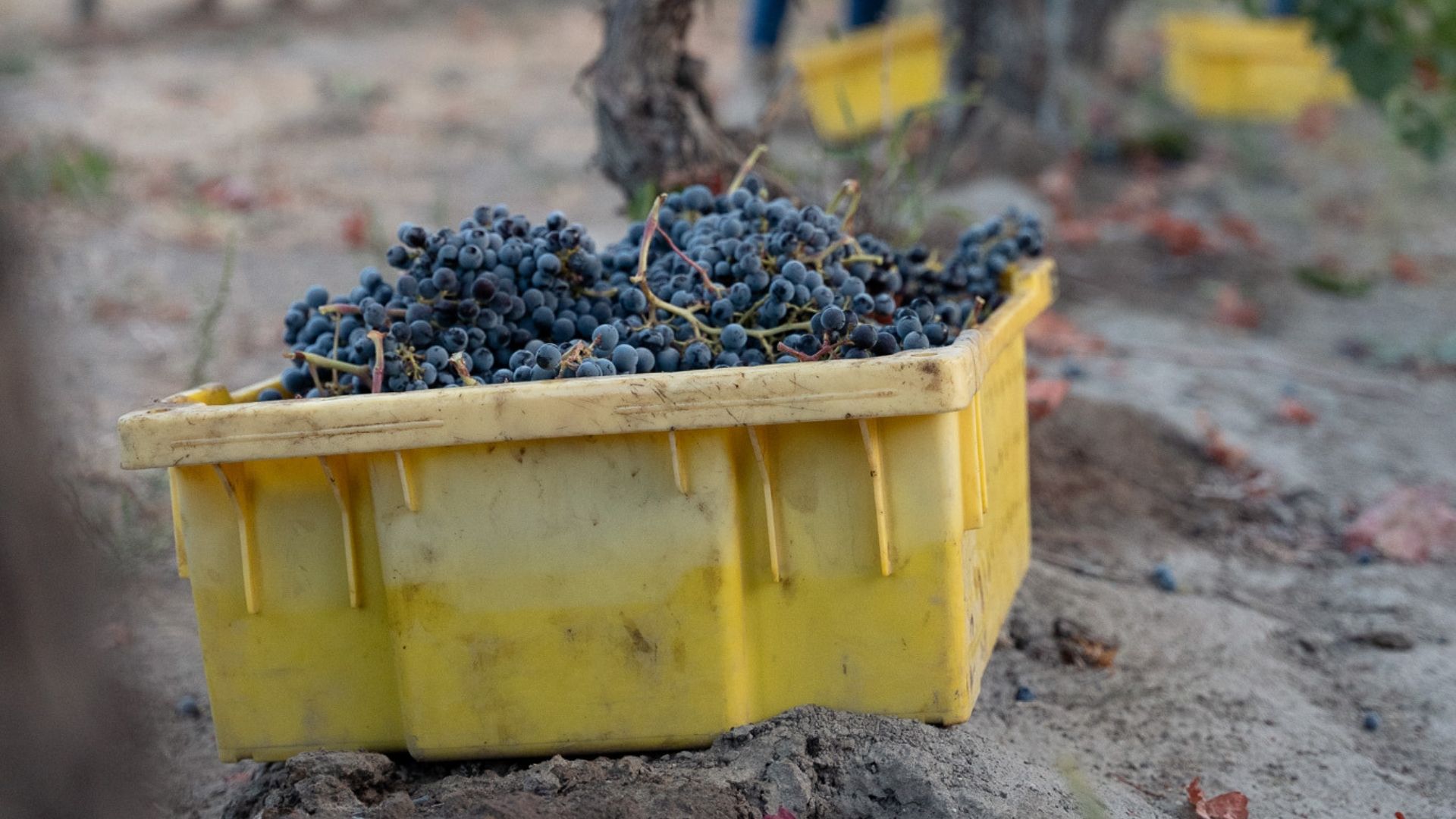
The most important decision, Holmes says, is not how to farm or when to pick, but what to plant.
“Putting the right grape in the right place is probably 90 percent of the outcome.”
Red Mountain gets plenty of attention for its heat, but Holmes says the real story starts underground. Calcium carbonate in the soil naturally slows the vines down. “It limits how fast it can grow,” he says. Add blazing days, windy slopes and nights that can cool by 40 degrees, and the grapes get a long, steady ripening period that builds structure without sacrificing balance. IWith little rain, irrigation is carefully managed through about 25 monitoring stations. “We don’t want to over-stress the vine,” he says. “It’s already being controlled by the soil.”
Ciel du Cheval supplies fruit to as many as 20 to 25 wineries in a given year, including Andrew Will Winery. Andrew Will has sourced fruit from the vineyard since its first vintage in 1989, and wines built on that fruit helped establish early critical attention for the site.
Each winery brings its own approach. Fermentation methods, oak usage, and blending decisions vary widely. The wines can taste very different from one producer to the next. What remains consistent, Holmes says, is not style but structure.
“Each winery has its own style,” Holmes says, “on top of the structure that our fruit provides.”
In any given vintage, fruit from the vineyard is spread across dozens of bottlings.

At DeLille Cellars, that structure has been part of the blueprint for Chaleur Estate for more than 30 years. Gorski describes Ciel du Cheval Cabernet as the wine’s “expressive, nuanced, beautifully structured backbone,” around which DeLille builds the rest of the blend.
The relationship between vineyard and winery is collaborative. Holmes explains that while winemakers may offer input, the vineyard maintains control over how it is farmed. At the same time, harvest decisions are shared. Wineries decide when they want to pick, but the vineyard continuously monitors what is happening in the field.
Holmes describes moments when a look at the texture of the berries warrants a call to the producer, “We’ll tell them, ‘You need to come look at this now,’” he says.
Januik says that the vineyard’s impeccable structure also translates into longevity. He says the winery regularly revisits Ciel du Cheval wines approaching 20 years old and finds them remarkably youthful, retaining both aromatic freshness and texture. “In more than 40 years of making Washington red wines, I’ve seen how well the best of them hold their freshness over the long haul — I still taste wines I made in the ’80s and ’90s and am almost a little shocked at how good they are — and everything about Ciel du Cheval tells me these wines will age just as gracefully,” Januik says.
Just as importantly, Januik says, the wines don’t demand decades of patience: they can be approachable soon after bottling and continue developing for years.
For all the measurable variables, Holmes returns to what remains unresolved. “There are things we know,” Holmes says. “And things we don’t.”
Fifty years later, Holmes still describes the vineyard as an invisible force.
“We’ve learned a lot over five decades,” he says. “We found a spot, we got lucky. But we’re not done. We probably have another 100 years of learning.”