The husband-and-wife team behind this Walla Walla micro-winery spent years experimenting with vineyards before discovering that intimacy, individuality and a sense of place were worth preserving.
Few grapes make the pleasure of place quite as vivid as Cabernet Sauvignon. Sometimes all it takes is moving a few hundred feet higher, onto another slope or into different soil, Robert Bailey says.
Bailey would know. Bailey and his wife and co-founder, Su Matemanosak have spent the better part of a decade evaluating those nuances.
“We don’t want a lineup of Cabernet Sauvignon that tastes the same,” says Bailey, owner and winemaker of Arenness Cellars in Walla Walla, Washington. “Bordeaux does not taste like Napa Valley or Paso Robles or Chile or Argentina. Washington state alone allows us to showcase how different Cabernet Sauvignon can be.”
In 2017, the couple started their journey with what Bailey calls “test-driving vineyards.” One ton of fruit, two barrels of wine, one vineyard at a time. Whenever possible, they chose Cabernet blocks of approximately the same age, around 20 years, planted to the same grape clone, Clone 8. By limiting some of the variables in the cellar and vineyard, Bailey hoped another variable would become louder: place. “Our goal in all of this was to find sites that produced grapes possessing unique or distinct flavors, aromas and texture,” he says.
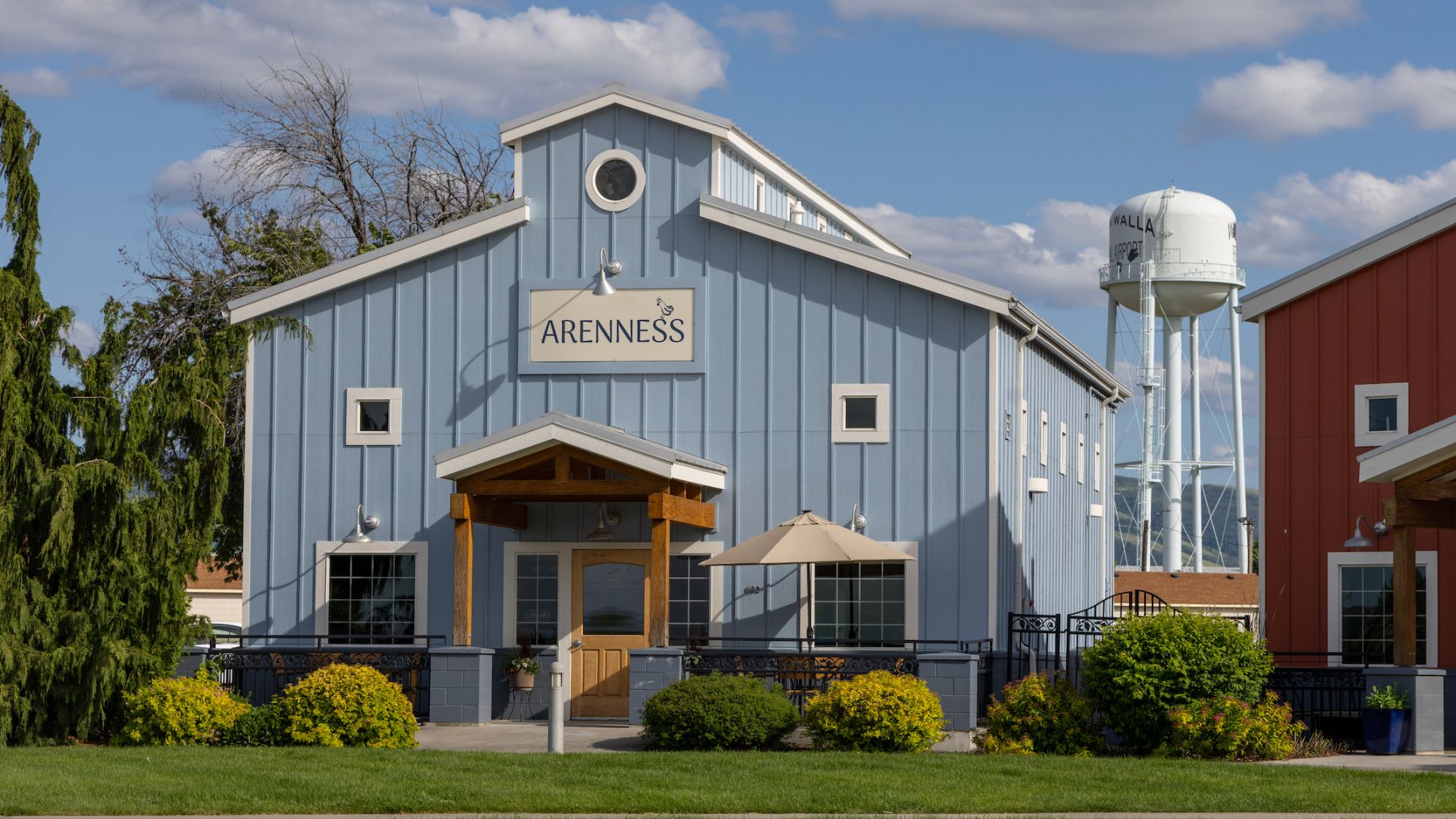
Eight years after that first ton of Cabernet, Arenness has finally put down roots of its own. The winery moved production from Oregon to Walla Walla and into one of the Port of Walla Walla’s five winery incubator buildings, where Bailey and Matemanosak now pour those different expressions of Washington side by side.
Arenness makes only about 300 to 500 cases annually. But within that minuscule production is something much bigger: an ongoing attempt to map Washington Cabernet through the glass.
Test-driving Washington
Bailey spent nearly 20 years practicing business and commercial real estate law in the San Francisco Bay Area. Wine had fascinated him since his early 20s, but drinking it eventually ceased to be enough. He bought a vineyard in Paso Robles, became absorbed by farming and, after moving to Oregon in 2006, planted a small Pinot Noir vineyard there in 2007.
Then, in 2012, between jobs, he decided to work a harvest at Mark Ryan Winery. “I was hooked by the end of harvest,” Bailey says.
Someone he calls a “sensei” advised him to work for as many winemakers as possible, and Bailey took the advice to heart.
At Alexana, winemaker Bryan Weil “took me under his wing,” Bailey says, giving him increasingly challenging responsibilities and “kicking my ass if I wasn’t getting it right.” Later, working at Etude exposed him to the laboratory and chemistry side of a large Napa operation. At Cakebread Cellars, he learned how a seasoned winery and cellar team function at scale.
His first production manager position came at Owen Roe. Then Bailey spent nearly five years as assistant winemaker at Seven Bridges Winery in Portland, with responsibility for cellar operations.
Seven Bridges owner and winemaker Bob Switzer ultimately gave Bailey and Matemanosak the opening they needed. He allowed them to use his facility and equipment to launch Arenness.
The winery’s name is a phonetic invention. Matemanosak first suggested R + S Cellars, for Robert and Su. They eventually stretched the sound into a word of their own: Arenness.
But they still needed to determine what Arenness would mean in the bottle. So Bailey went vineyard shopping. Golden Ridge came first in 2017, after a grower Bailey knew through Seven Bridges agreed to sell him a ton of Cabernet. Then came an opportunity he could barely believe: DuBrul. “Woo hoo!” Bailey recalls.
That 2018 Cabernet, sourced from the acclaimed Yakima Valley vineyard, eventually landed on The Seattle Times’ Top 20 Wines of the Year list.
Two opportunities arrived in 2019. Arenness made Cabernet from Dionysus Vineyard, now within the White Bluffs AVA, and Les Collines Vineyard in Walla Walla. Klipsun followed in 2020, and Phinny Hill in 2021. Sure enough, the test drive had begun to look like a road map.
Bailey is passionate about the expressions the vineyards bring. Les Collines is dark-fruited and floral, with bright acidity and fine mineral tannins, he says. DuBrul moves toward cassis, earth, tobacco, mint and sage. Phinny Hill brings black cherry and creamy texture. Klipsun is darker and more muscular, a Red Mountain wine that Bailey says starts out “huge” before becoming graceful with age.
Arenness Cabernets carry “a bit less alcohol, a bit more acidity, a bit more subtlety and elegance. Balance, elegance and a respectful nod to the vineyard are our overriding principles,” says Bailey. In the cellar, that means intervention isn’t absent. Bailey makes choices about cultivated yeast, barrel aging, new oak and blending with other Bordeaux varieties. But he sees those tools as supporting actors. “The base goal is always to showcase the fruit,” he adds.
The Cabernet Su wants to drink
Matemanosak grew up in Bangkok and arrived in the United States as a high-school exchange student in 1990. She stayed for college, earned an MBA and eventually built a career in commercial real estate. She met Bailey at work in Oregon.
“I didn’t know much about wine until I met Bob,” she says.
Her palate began with sweeter wines and expanded from there. But even as she became more knowledgeable, Matemanosak retained an instinct: she doesn’t particularly enjoy aggressive tannin. “If I feel like a glass of wine at the end of the day, I just want something that’s easy to enjoy.”
In 2019, with naturally tannic Les Collines Cabernet in the cellar, Bailey began experimenting with a softer, more fruit-driven expression designed around Matemanosak’s preferences. The wine eventually became su_m.
The current approach includes neutral French oak, allowing the grape’s natural tannin rather than new wood to set much of the wine’s structure.
A tasting-room customer recently gave the couple perhaps the best validation of the experiment. After tasting the 2022 su_m, she told them it was the first Cabernet she’d encountered that made her want to pour a large glass and simply relax, no steak necessary. “That made me happy,” Bailey says, “because that’s how Su likes to enjoy her Cabernet Sauvignon.”
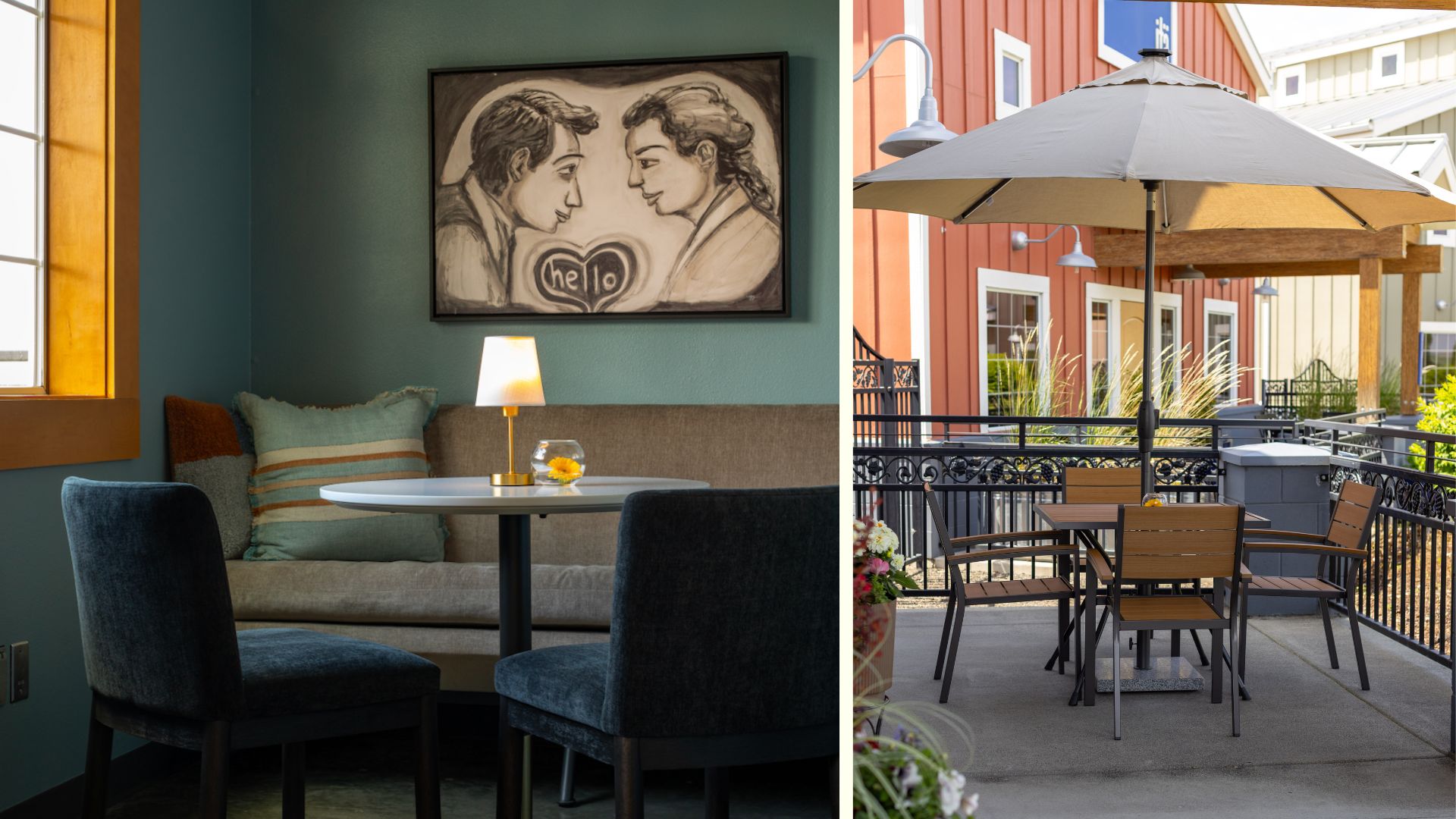
Matemanosak’s influence also extends beyond the cellar. Beyond furnishing the tasting room, she is also heavily involved in marketing, events and hospitality. Before owning a winery, she spent years visiting them. She remembers what she wanted from the other side of the bar. “I don’t want to go somewhere and just taste wine,” she says. “I want to learn about the wine in a comfortable and engaging environment.”
A laboratory with a tasting room
That makes Arenness’s new home particularly apt. The Port of Walla Walla winery incubator program gives emerging producers their own small winery buildings for a maximum of six years before they must graduate and make room for another startup.
Bailey and Matemanosak waited roughly three years for a space. They had hoped to move their production from Oregon to Walla Walla earlier, but COVID-19 disrupted the plan. They considered making wine in one facility and operating a tasting room downtown, but Bailey feared a 300-to-500-case brand could disappear amid the competition. “We felt like we would get drowned out,” he says.
Instead, the incubator turns smallness into an advantage. Five fledgling wineries sit together. Visitors can walk among them, and the person pouring the wine is often the person who made it. “Where else can you try five up-and-coming wineries and most certainly talk to the winemakers while you are tasting?” Bailey says.
For Arenness, it also completes a geographic circle.The winery was born in Oregon making Cabernet from Washington vineyards. Now it makes wine in Washington while continuing to pour Willamette Valley Pinot Noir alongside its Cabernet and Viognier.
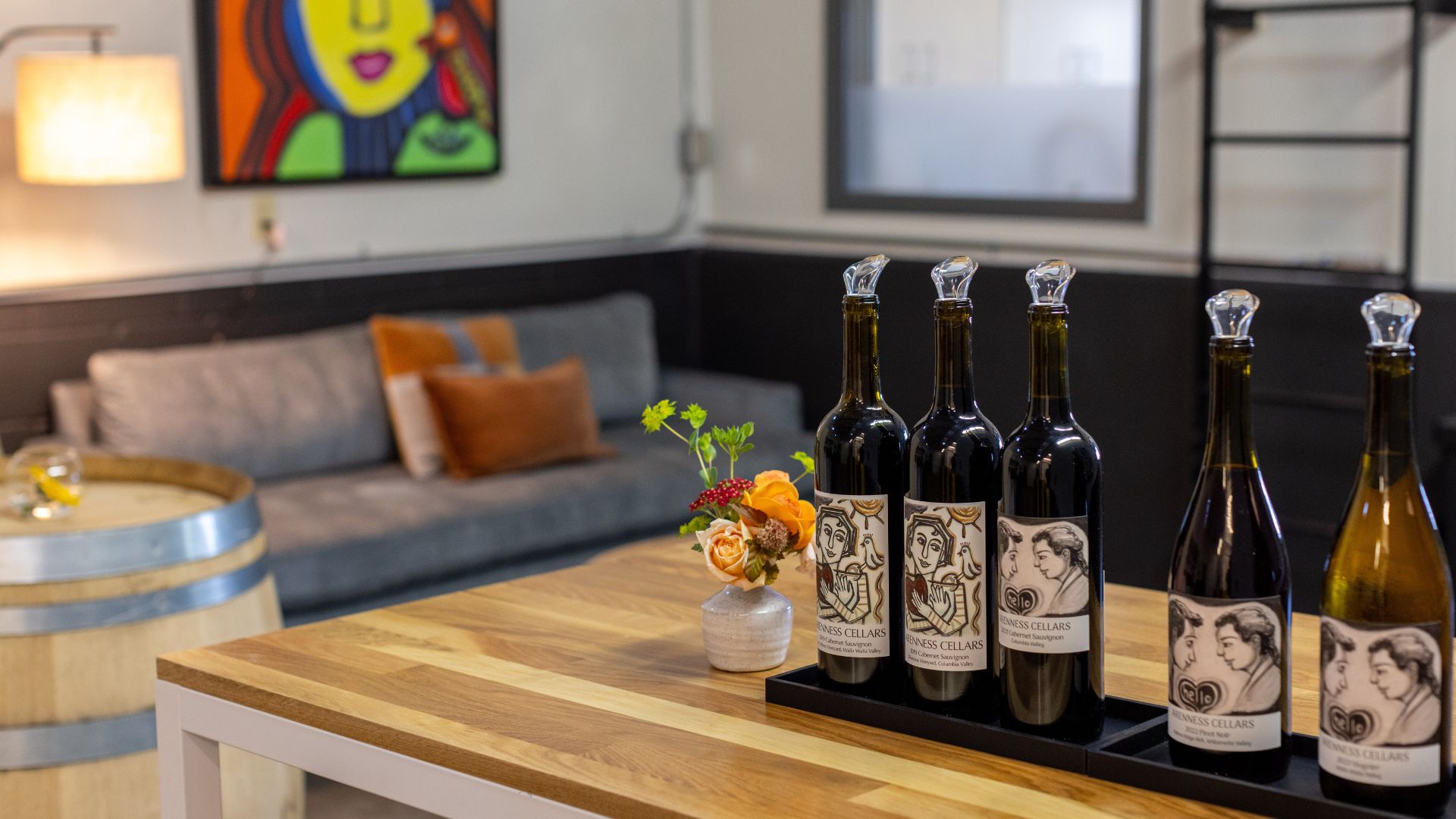
Those other wines are intentional, Bailey says. “Very few people want to drink Cabernet Sauvignon all the time.”
A Cabernet Sauvignon-Zinfandel blend with a splash of Petite Sirah is coming to the portfolio, and the couple is considering Grenache.That would mean, naturally, another round of test-driving vineyards. Cabernet, however, isn’t relinquishing the driver’s seat. Arenness is now experimenting with Clone 338 ENTAV. Bailey also expects occasional new Cabernet sites could appear as limited or wine-club bottlings.
The experiment that started Arenness, in other words, isn’t finished. Neither is the winery. Bailey and Matemanosak have several lease years to watch the brand evolve, and they will use that time to plan next steps for the winery. One thing is certain though — they expect to stay in Walla Walla, keeping production limited and the tasting room experience intimate.
That intimacy means things like taking cues from guests to see how deeply they want to go. “Some people want to geek out,” Bailey says. “Some don’t.” If someone wants to discuss Cabernet clones, vineyard elevations and tannin, he’ll happily oblige. If friends have reunited for a weekend and would rather talk among themselves, he’ll pour the wine and give them room.
Matemanosak has an even simpler metric. She looks around the tasting room to see whether people are smiling. “Smiling faces and relaxed people mean everything to me. That’s why we do this.”