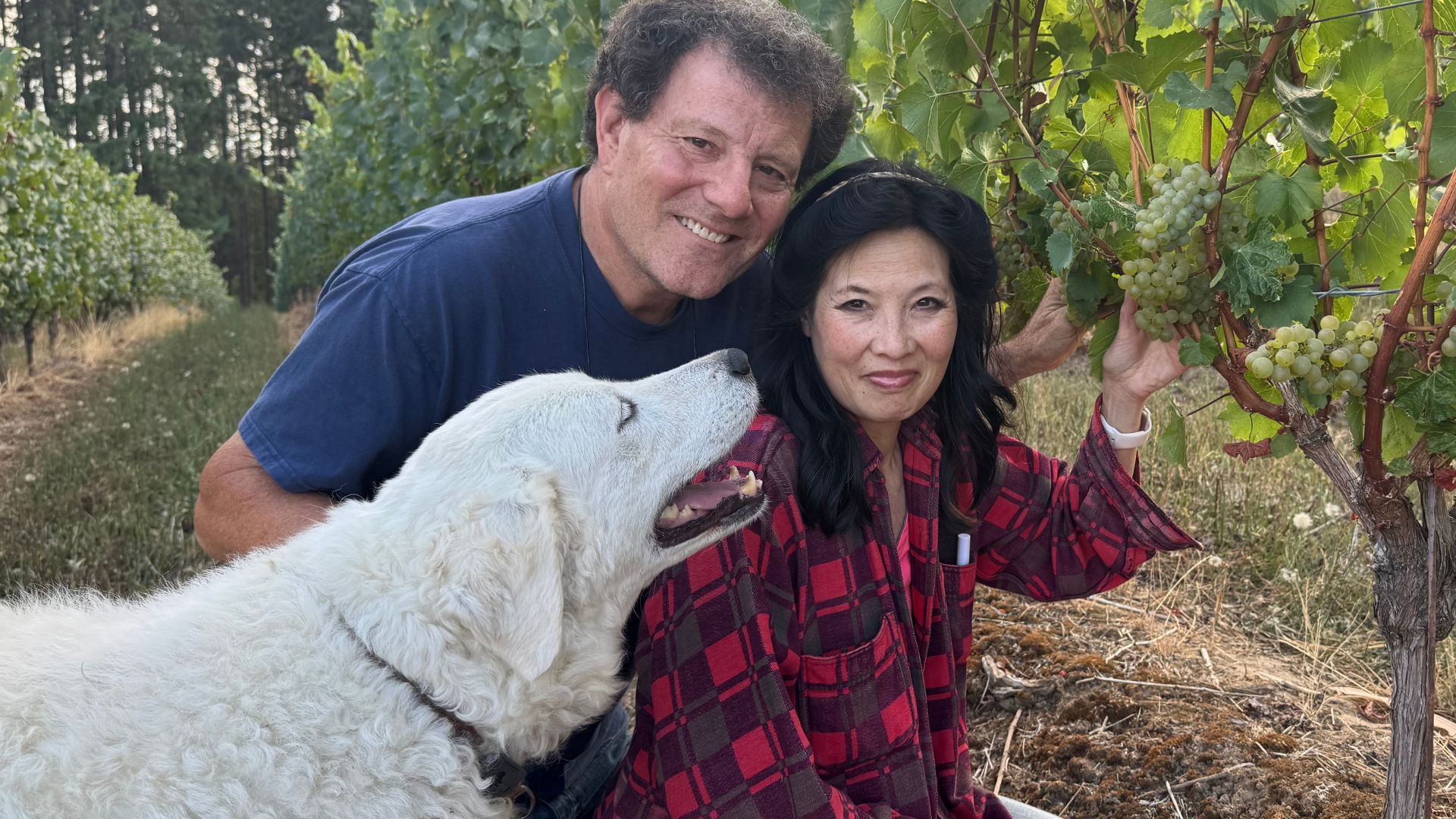
In Idaho’s Lewis-Clark Valley, families are growing world-class wine on the same land their ancestors once farmed.
The vines at Rivaura descend toward the edge of the Clearwater River. A few miles away at Clearwater Canyon Cellars, Coco Umiker walks the same fields her great-grandparents farmed in 1916. At Lindsay Creek Vineyards, wheat farmers-turned-vintners mill their own grain for the pizza dough served in the tasting room.
Few realize that the Lewis-Clark Valley was producing world-class wine long before regions like Napa or Walla Walla made headlines. In 1872, Frenchman Louis Delsol imported the first grape cuttings to his farm along the Clearwater River. Other pioneers, including Robert Schleicher and Jacob Schaefer, followed. By the early 1900s, Lewiston, Idaho, had become a recognized winemaking center, with more than 80 acres of grapes and international accolades. One 1908 Lewiston Tribune article noted that local grapes had beaten California’s in global competition.
But this momentum came to a sudden halt. In 1909, local counties voted to go dry. By 1916, Idaho enacted statewide prohibition, a full four years before national prohibition. The region’s vineyards were ripped out and the industry vanished. A legacy that had taken decades to build was quietly erased.
More than a century later, the Lewis-Clark Valley is beginning to reclaim its place in American viticulture. Multi-generational farming families, science-driven winemakers, and a renewed respect for the land are bringing the region’s wine story back to life.
Clearwater Canyon Cellars: A Century Farm Reimagined
Clearwater Canyon Cellars sits on a Century Farm in Lewiston, Idaho. Coco Umiker’s great-grandparents, George and Irene Nichols, purchased the land from homesteaders in 1916, just as statewide Prohibition took hold. Four years later, George died of a ruptured appendix, leaving Irene to raise four children and run the farm through the Depression. She was determined to see all four graduate from Lewiston High School and then Lewiston State Normal School, now Lewis-Clark State College.
Coco grew up in Boise but spent summers on the farm. Later, as a student at nearby University of Idaho and Washington State University, she returned to spend time with her grandfather, Ralph. When she and her husband Karl decided to plant an estate vineyard, Ralph didn’t hesitate. “My grandfather fully supported us in planting a relatively small, estate vineyard on the property and even got out his old tractor to help us plant the first acre in 2003,” she says. “He witnessed our early success in the years prior to his passing in 2011 at the age of 96.”
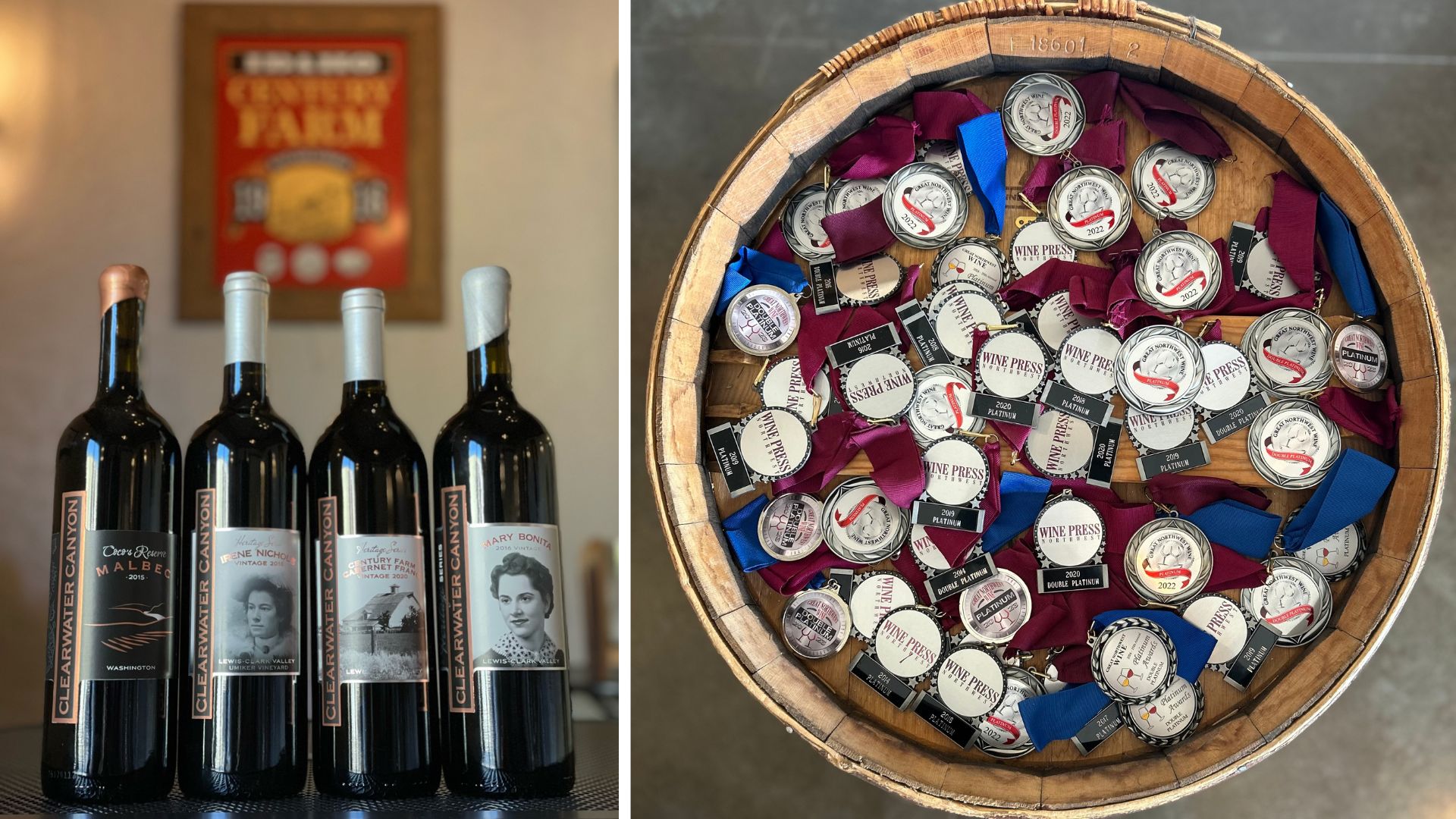
From those first rows came Clearwater Canyon Cellars, now one of the most awarded wineries in the Northwest. “Over the last 21 years, we have been slowly developing our craft,” Umiker says. “Although our team and our customer base are excited about our wine quality and how it continues to develop in the bottle, receiving an award is like a pat on the back.”
The winery has now earned 51 platinum awards. But for Umiker, the recognition carries deeper meaning. “Our platinum awards have also helped us gain the attention of many now ardent fans that might not have otherwise heard about us. Certainly winning awards, especially platinum awards on Lewis-Clark Valley wines, is extremely special given our historical significance and the relatively small number of producers currently here.”
What drives her is legacy and resilience. “Irene’s determination to persevere through seemingly insurmountable obstacles continues to be a source of great strength for us as life and vintages throw curveballs at us,” she says. “I like to say that when the wind blows, we lean into it and carry on.”

Rivaura: A Family Farm with a View
Near the small town of Juliaetta, Idaho, the Hewett family was farming long before they planted grapes. Their land, passed down since the 1950s, was used for traditional crops. But by 2014, a new generation was asking different questions.
“We are a farming family and the vineyards are planted on the property that has been in the family since the mid-50s,” says Lane Hewett, who co-founded Rivaura with his father and uncles. “We always knew we had a great location and wanted to make it something special.”
The family’s interest in wine came from personal enjoyment. “My dad, uncle and grandpa enjoy wine and started looking into what it would take, if it was possible, to grow wine grapes,” Hewett says. That research led them to the region’s forgotten legacy. “Little did we know that the Lewis-Clark Valley was the largest wine grape-growing region before Prohibition.”
They reached out to experienced growers from Walla Walla, broke ground on a vineyard in 2015, and planted 30 acres in 2016. The first harvest came in 2018. The tasting room opened in 2020. They even started brewing beer just below the tasting room with Lane’s cousin, Vince Hewett, the brewmaster.
The winery’s name, Rivaura, reflects its place. “Rivaura stands for ‘river’ and ‘aura,’ meaning sense of destination,” Hewett says. “The river plays a role not just for the beautiful view but also the benefits it contributes to the vineyards. Constant air movement is a big contributor thanks to the river.”
Visitors sit on a patio that hangs almost directly above the Clearwater, watching the light change on the water. “It is mesmerizing while sitting on the patio,” Hewett says. “Visitors get to learn this and enjoy the wines while they basically sit on top of the river.”
The site is more than scenic. Hewett believes it is ideal for growing bold red grapes. “The growing season is perfect. The soil is great and a big contribution to that is the Missoula floods that passed through thousands of years ago,” he says. “The hot river canyon allows us to get things nice and ripe while the river allows constant air flow to keep the canopy’s nice and dry. It also acts as a form of frost protection because the air is moving. Cold standing or sitting air can get you into more trouble.”
The results speak for themselves. “We really have the perfect climate and soil to make amazing wines,” Hewett says. “Especially your core Bordeaux and Rhône varietals.”

Lindsay Creek Vineyards: From Grain to Grapes
Downstream in Lewiston, Art McIntosh and his brother weren’t looking to become winemakers either. As fourth-generation dryland wheat farmers, their attention was on grain, not grapes. But they had long admired what was happening in Walla Walla and recognized similar soil and climate in their own backyard.
“We had watched how they learned to grow grapes in fields surrounded by wheat,” McIntosh says. “Some people in the Lewis-Clark Valley were starting to grow viniferous grapes to make wine with, so we decided to add grapes to what we grew.”
They started small. “We planted six rows of Bordeaux grapes and experimented with them. They did well.”
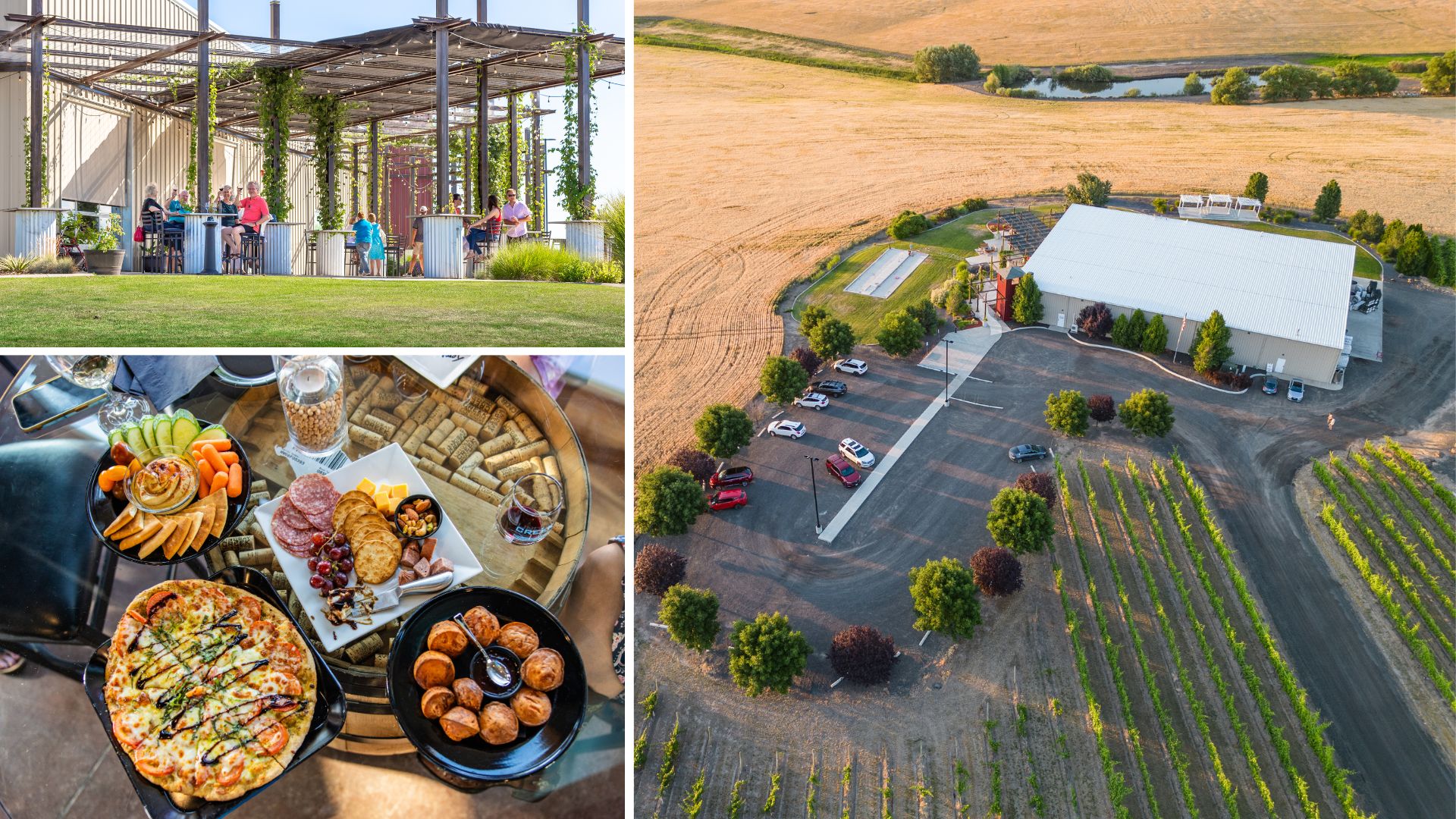
What began as a trial has grown into Lindsay Creek Vineyards, a winery with a full farm-to-fork menu. “We raise and mill our own organic wheat and oats at our farm near the winery,” McIntosh says. “We raise dark northern wheat, which we use in our bread products, and raise durum wheat which we use in our pizza dough and other flatbreads.”
Garbanzo beans grown on the farm are used in their hummus. They source Cougar Gold cheese and ice cream from Washington State University and meats from the University of Idaho. “We also grow our own herbs that we use on some of our items,” McIntosh says.
McIntosh sees Lindsay Creek as proof that the valley can support a diverse and thriving wine scene again. “The Lewis-Clark Valley is the original wine growing region in the Northwest,” he says. “We can make amazing big red wines and wonderful white wines because of our mild climate and unique terroir to grow viniferous grapes.”
He believes that with time and attention, the valley can reclaim its standing. “This area was making world-class wines that were winning big awards at world’s fairs in the late 1800s and early 1900s,” he says. “Because of this, I believe Lewis-Clark Valley grapes and wine could become a strong competitor to the more established wine regions around the world.”
A New Era with Old Roots
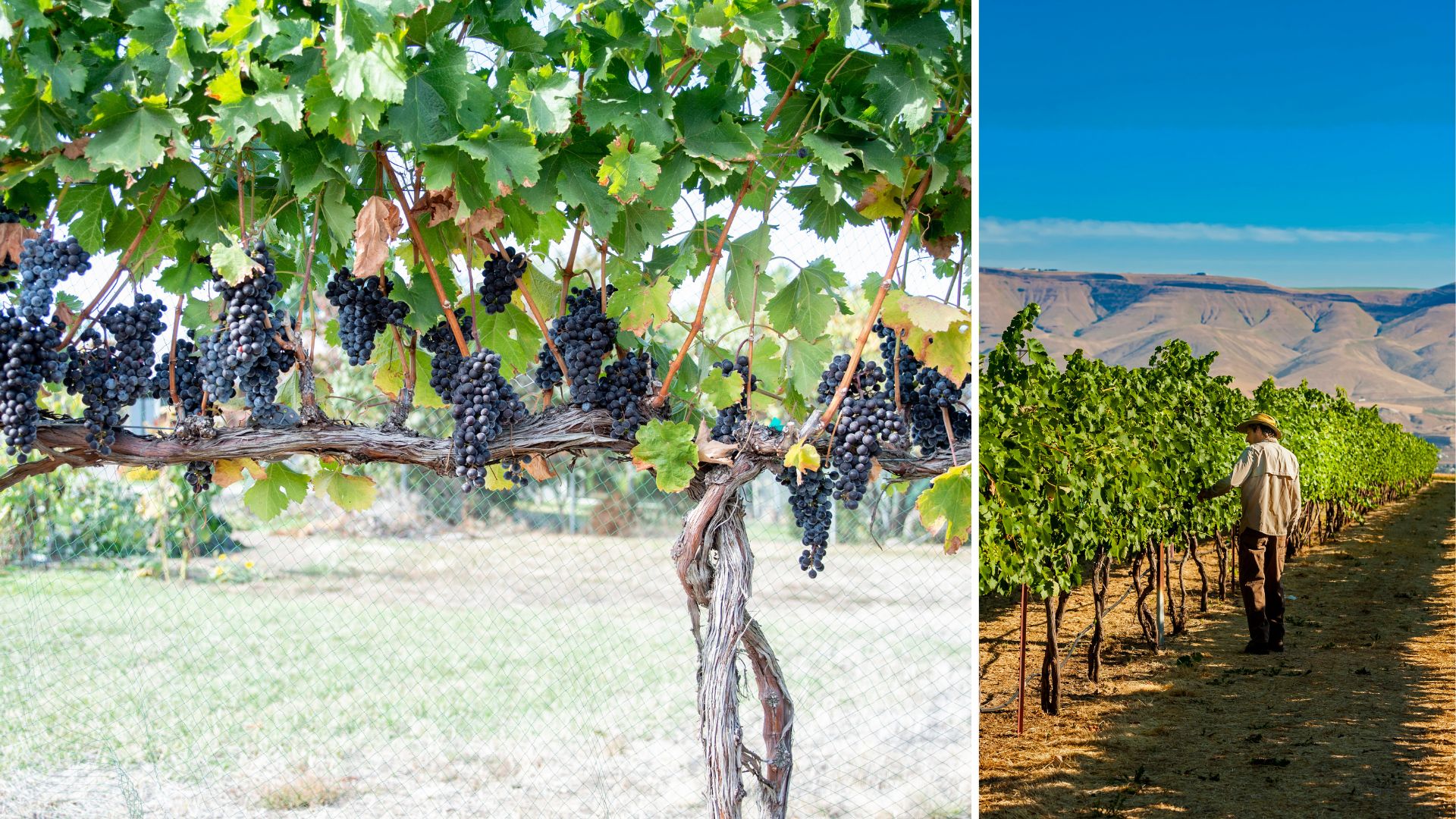
The Lewis-Clark Valley AVA, established in 2016, spans more than 300,000 acres, with about 72% in Idaho and 28% in Washington. It is the first cross-border AVA between the two states. The valley’s soils, formed by volcanic activity and ancient glacial floods, are rich in silt loam and loess, providing excellent drainage. The low elevation and hot canyon climate, tempered by steady river breezes, create ideal conditions for varieties like Cabernet Sauvignon, Merlot, Syrah, Viognier and Tempranillo.
Currently, the AVA is home to about 16 vineyards and six wineries, though that number is steadily growing as more producers recognize the valley’s potential.
What unites these producers is not just geography but mindset. Many are farmers-turned-vintners. Some are scientists, others entrepreneurs. But all share a sense that they are not starting from scratch, they are restoring something that was always here.
As Coco Umiker puts it, “the bottom line is that the best wines are made with hard work and love.”
In Partnership with Visit Lewis Clark Valley