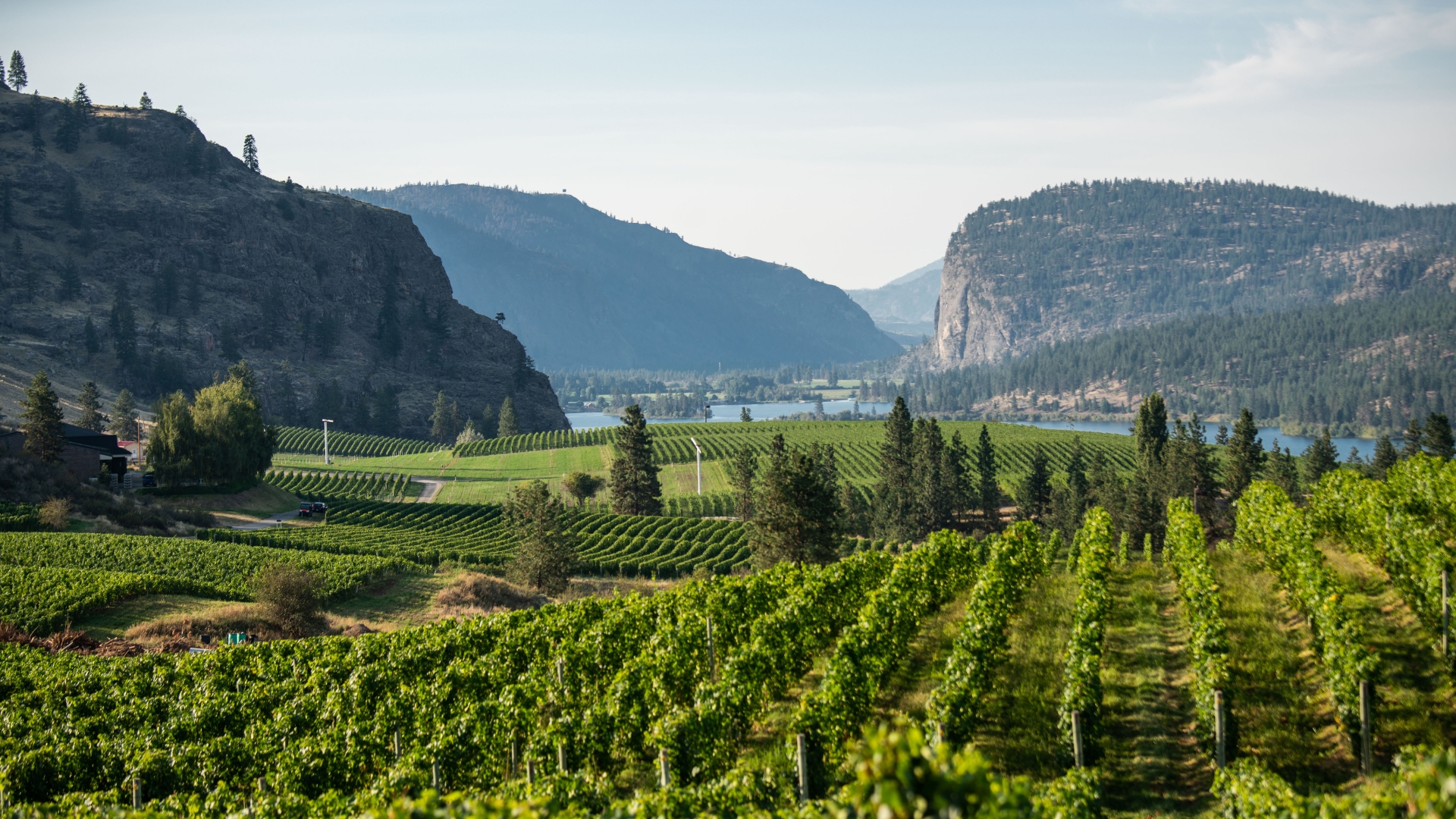
Two cool-climate wine-growing regions, Oregon and BC, are staking their own unique claims in the traditional-method sparkling movement.
The bottle has been aging in the dark for two years, sometimes three. Then comes disgorgement — the careful, labor-intensive removal of the yeast that did its slow work — and what was still becomes something alive. That process, unhurried and uncompromising, is what separates traditional-method sparkling wine from everything else in the glass. And right now, in two cool-climate Northwest wine regions, that process is happening on a scale neither has seen before.
Oregon and British Columbia share a climate and a foundation of Pinot Noir and Chardonnay — the same two grape varieties that anchor the world’s most celebrated sparkling wines. They share something else, too: a moment. During B.C. Wine Month (which took place in April) and Oregon Wine Month (in May), both regions have arrived simultaneously at the conclusion that their bubbles belong in the same conversation as the best sparkling wines on earth.
In Oregon, that conviction just became a nonprofit organization. In BC, it is being proved one vintage at a time.

Oregon: a movement formalizes
On March 17, 2026, a coalition of Oregon sparkling winemakers announced the launch of Method Oregon, a nonprofit organization uniting more than 45 wineries around a single mission to establish Oregon as a world-class destination for traditional-method sparkling wine. The organization follows a playbook that Oregon’s Pinot Noir pioneers helped write — combining individual voices into a regional identity powerful enough to carry the story.
At the center of the initiative is the Method Oregon mark, a symbol identifying wines that meet rigorous production requirements: 100 percent Oregon production using fruit from the Willamette Valley, Columbia Gorge or Southern Oregon AVAs; traditional-method production with second fermentation in bottle; and a minimum of 24 months of aging en tirage. Beginning in 2029, sustainable farming requirements take effect, requiring fruit to be farmed with Organic Materials Review Institute–approved organic inputs or in LIVE-certified vineyards without synthetic herbicides. Labels will be required to carry both the source AVA and the disgorgement date.
Jeanne Feldkamp, a founding board member of Method Oregon and co-owner and co-winemaker of Corollary Wines in the Eola-Amity Hills AVA, describes the launch as a solution to a fundamental problem for consumers.
“Sparkling wine can be very confusing for casual wine drinkers,” Feldkamp says. “There’s a huge range of styles, quality levels and aging regimes — not to mention prices. The Method Oregon mark is designed to help consumers quickly recognize high-quality sparkling wines from Oregon and understand why traditional-method wines typically cost more than other types of bubbles.”
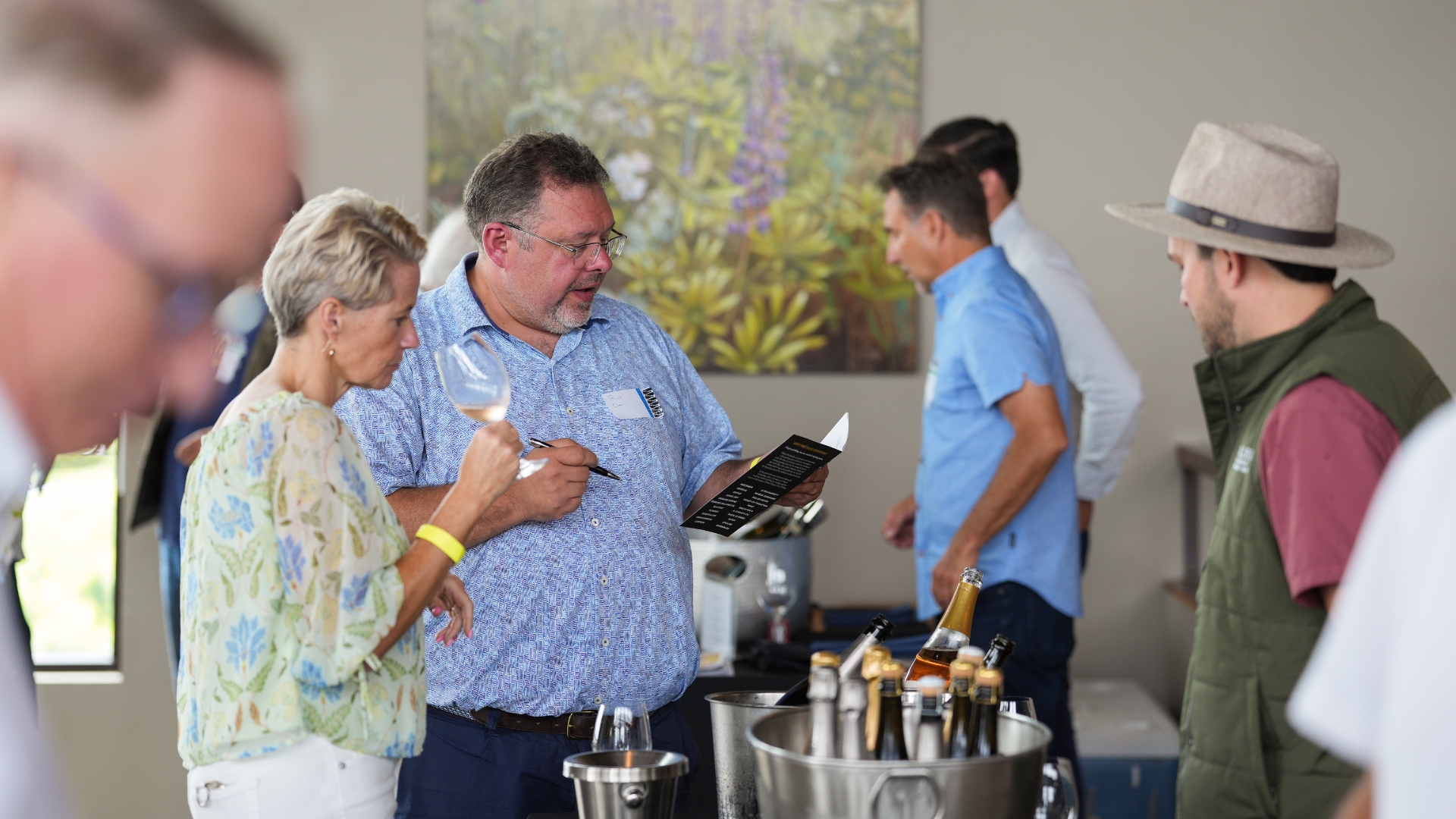
The 24-month tirage requirement was the subject of internal debate among the founding group’s member wineries. Feldkamp describes two inflection points the group discussed — an 18-month turning point, when traditional-method sparkling begins developing the toasty, yeasty secondary characteristics it is known for, and a second around 30 months, when those characteristics deepen. The 24-month standard splits the difference deliberately.
“It was important to us that our foundational standard be rigorous and meaningful, but also flexible enough to encourage the exploration and experimentation that makes Oregon sparkling so exciting,” Feldkamp says. “We want Oregon to be known as a place that embraces this spirit of continuous knowledge-building.”
In 2024 alone, five Oregon traditional-method wines were named to Wine Enthusiast’s Top 100 list, including the No. 1 wine overall. Publications including The New York Times, Food & Wine and Forbes have highlighted Oregon as among the most exciting emerging regions for sparkling wine. The moment felt right, Feldkamp says, in the same way the Pinot Noir moment once felt right.
“Method Oregon is very consciously modeled on the efforts of the Willamette Valley’s pioneering Pinot Noir producers,” Feldkamp says. “The critical insight they added was the idea of collaborating to create a regional identity. Giving consumers a regional identity to relate to, rather than dozens of different brands, makes it easier for them to understand what makes the winemaking community here tick.”
British Columbia: a different road, same destination
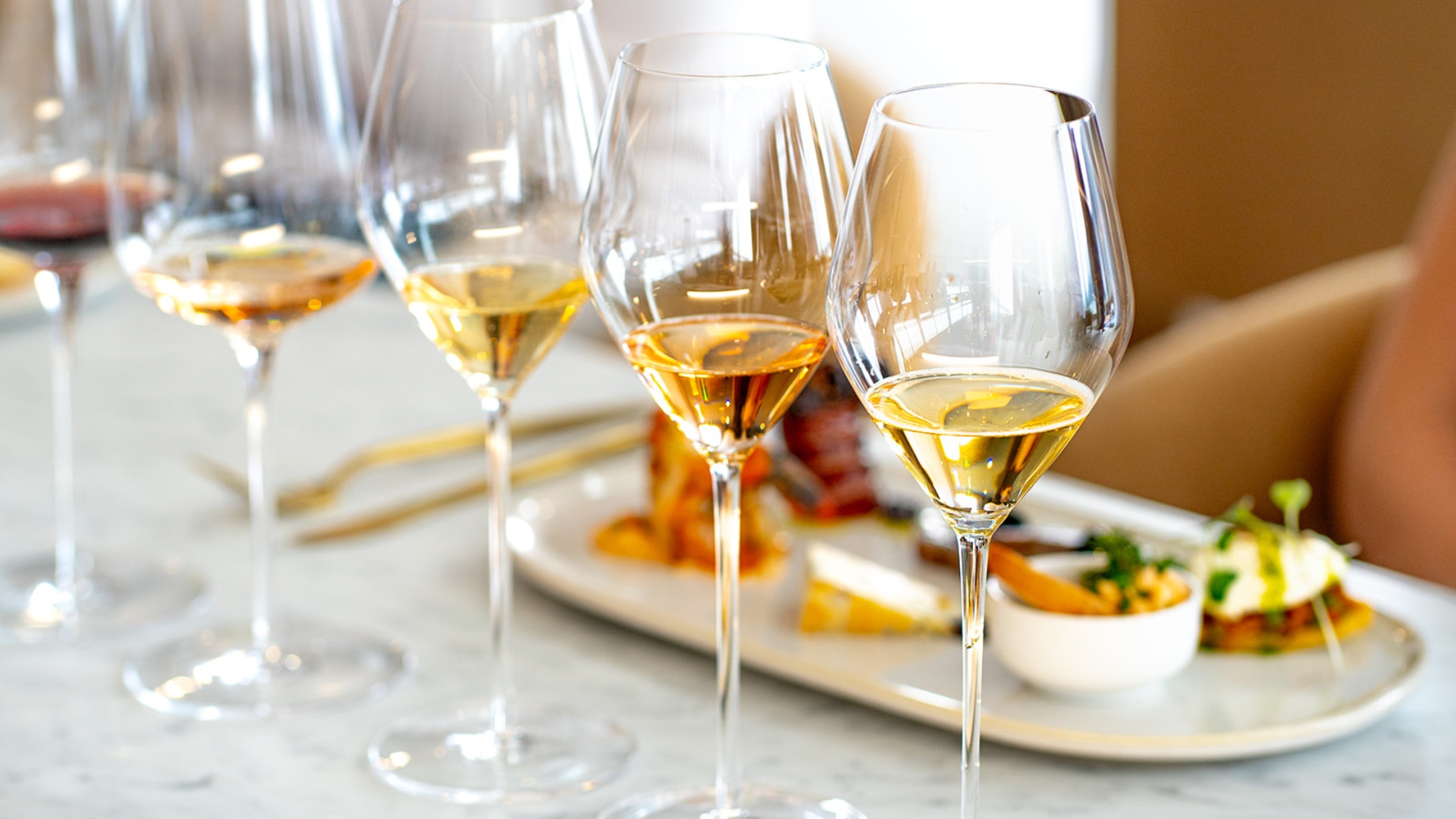
BC Wine Month in British Columbia — which celebrated its ninth year and has been proclaimed officially by the provincial government — has become one of the most compelling chapters in the sparkling category. Jeff Guignard, president and CEO of Wine Growers British Columbia, sees something shifting in how both consumers and the industry relate to BC wine.
“BC Wine Month has grown from a promotional moment into something more meaningful — a visible expression of pride, identity and momentum for our industry,” Guignard says. “What feels different in 2026 is that people are no longer simply discovering BC wine. Increasingly, they are claiming it.”
The growth of BC sparkling has been both organic and intentional, Guignard says. “The growth is organic in the sense that BC’s climate, topography and winemaking talent are naturally producing excellent sparkling wines,” he says. “Producers saw the potential [and] invested in quality, and consumers responded.” At the same time, Wine Growers BC has worked to elevate the profile of the category. “Sparkling has become one of the clearest examples” of what the province does exceptionally well, Guignard adds.
Lynzee Schatz, winemaker at Evolve Sparkling House in Penticton, BC, brings a perspective shaped by both sides of the equation. She spent five years making sparkling wine at Chandon in Australia’s Yarra Valley before returning to the Okanagan Valley. The shift in her thinking happened gradually.

“I don’t think it was a single moment so much as a shift over a few vintages,” Schatz says. “Coming back from Chandon Australia, I had a pretty clear benchmark in mind in terms of acid balance, phenolic ripeness and overall precision. What really changed my perspective was seeing how consistently we could achieve natural acidity at relatively low sugars in the Okanagan Valley, especially in cooler sites. When you start picking fruit that’s physiologically ripe but still sitting at ideal numbers for traditional method, that’s a big signal.
“The other piece was time on lees,” Schatz continues. “Once I started tasting wines that had spent extended time aging and seeing how well they held structure and developed complexity, it became clear the raw materials were there. For me, it was when the wines started to show the same balance, tension and aging potential I’d seen in Yarra. That’s when I knew BC could absolutely operate at that level.”
Evolve Sparkling House was named Canada’s Top Sparkling Producer at the 2025 All Canadian Wine Championships, with its 2018 Brut Nature awarded Best in Category. The recognition was not entirely unexpected. “I’d say it was more vindication than surprise,” Schatz says. “We knew the wine had the structure, balance and aging potential to compete — but until it’s evaluated alongside top international wines, you don’t really know how it will land. It was incredibly rewarding to see it perform at that level. Not just for that wine, but as a signal that the Okanagan Valley can produce traditional-method sparkling that stands up on an international stage.”
For Evolve, building the category also means thinking carefully about its audience. “We’re not trying to convert Champagne drinkers; we are welcoming them,” Schatz says. “For Evolve, it’s more about bringing people into sparkling in a way that feels approachable and versatile. That includes wine drinkers who may or may not reach for sparkling regularly, as well as consumers who are newer to wine altogether. If we do that well, some of those people will naturally start exploring higher-end traditional-method wines over time — but the first step is making sparkling feel accessible and part of everyday occasions.”
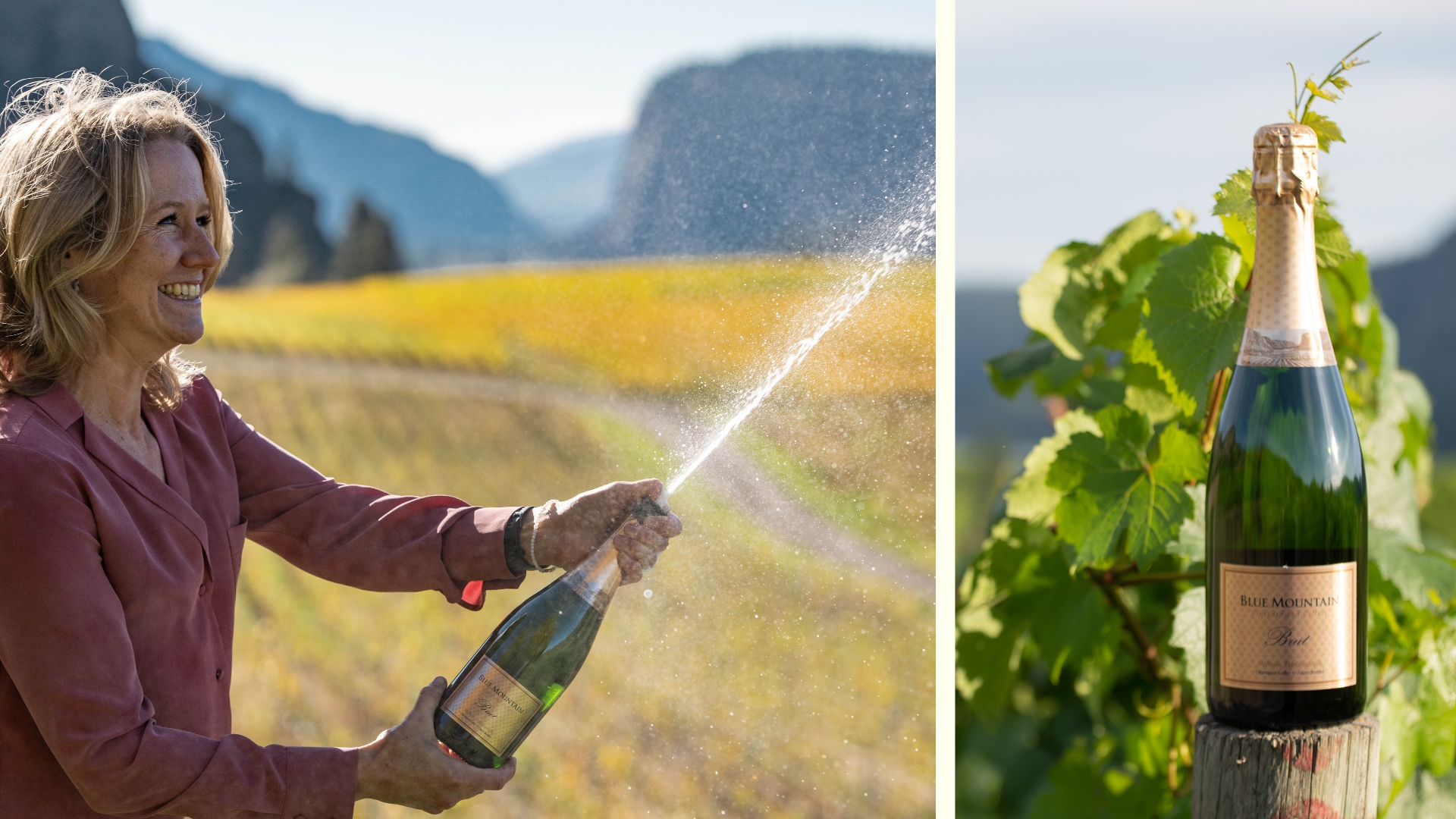
Matt Mavety, winemaker and co-owner of Blue Mountain Vineyard & Cellars in Okanagan Falls, has watched this expansion of the category from a vantage point few others share. Blue Mountain has been producing bottle-fermented sparkling wine from its estate since the winery’s founding in 1991, well before the category had a critical mass of producers in the province.
“Sparkling wine production in the Okanagan has exploded in the last 10 years with the establishment of contract services for the technical side of production,” Mavety says. “This allows wineries to make traditional method wine at a lower capital cost and in micro volumes.” That infrastructure shift mirrors what happened in Oregon, where Andrew Davis — a founding board member of Method Oregon and co-founder of Radiant Sparkling Wine Co. — helped open traditional-method production to a broader range of producers.
For Blue Mountain, making sparkling that reflects the Okanagan rather than imitating Champagne means beginning in the vineyard. “At Blue Mountain we are fortunate to harvest grapes that are solely grown on our estate in Okanagan Falls,” Mavety says. “This provides the first step in looking at producing wines that are driven by the terroir — the wines reflect the climate we are growing in.”
In the cellar, the approach to blending reflects the same philosophy. Mavety notes that the Champagne assemblage tradition blends current vintages with past reserve wines to elevate quality — but at Blue Mountain, the goal is different. “Our objective is not to harmonize the different vintages but rather to embrace the vintage and push the quality to the highest possible place,” he says.
The terroir argument
The parallel emergence of Oregon and BC as serious sparkling regions is not coincidental. Both share the cool climate, long growing seasons and high natural acidity that traditional-method production demands. Both built their identities on Pinot Noir and Chardonnay. And both are now discovering that the terroir that made those still wines great is equally well suited to sparkling.
For Schatz, the most important lesson of her Okanagan work has been understanding exactly where within the region those conditions are most consistently delivered. The South Okanagan, she notes, brings intensity, concentration and strong ripening potential — qualities that work well for big reds and certain whites. For traditional-method sparkling, her attention has shifted to a different geography.
“I actually see the most consistent expression coming from the Central Okanagan — the Kelowna to Penticton region — where Okanagan Lake has a moderating effect on the growing conditions,” Schatz says. “The lake helps reduce temperature extremes by taking the edge off daytime heat and allowing for naturally cool nights. This slows ripening slightly, helps preserve acidity and supports balanced flavor development. Those moderated sites tend to deliver stronger structural tension while maintaining the freshness and flavor clarity — which is what you’re really looking for in sparkling base wines.”

That emphasis on site selection over regional generalization resonates with how Method Oregon approaches the question on the Oregon side, where producers across the Willamette Valley, Columbia Gorge and Southern Oregon AVAs are still mapping which microclimates and elevations produce the best sparkling base wines as the climate evolves.
For Guignard, a single quality that distinguishes BC sparkling from every other cool-climate region — Oregon, Champagne, the Yarra Valley — can be expressed in one word.
“Precision,” Guignard says. “BC sparkling wines have a remarkable precision to them — a purity of fruit, freshness and natural acidity that comes from our climate and growing conditions, but also from a winemaking culture that is still hungry, ambitious and unafraid to define itself on its own terms. We are not trying to imitate Champagne or anyone else.”
Two regions, two paths to identity
One of the more interesting divergences between the two regions is how they are building their identities. Oregon has formalized the conversation with Method Oregon. BC is still in what Schatz describes as a phase of exploration.
“It’s a really interesting model, and it reflects a more mature stage of category development in Oregon,” Schatz says of Method Oregon. “In British Columbia, we’re still in a phase of exploration — different sites, styles and approaches are helping define what the region does best in sparkling. I don’t think we necessarily need a direct equivalent here as the category is still defining itself.”
Guignard is similarly measured on the topic of a BC-specific formal initiative, pointing to existing producer collaborations — including the Charme de l’Île brand of sparkling wines from Vancouver Island wineries — as evidence that collective storytelling is already happening. Whether it needs to formalize in the way Oregon has is a question he leaves with the producers themselves. “Any initiative that helps producers collaborate, define excellence and tell a clearer story to trade, media and consumers has value,” he says. “But it would need to emerge from the producers themselves and reflect BC’s own structure, scale and priorities.”
Guignard also raises a challenge with no parallel in Oregon — interprovincial wine trade barriers that limit BC sparkling wine’s ability to build national awareness even when consumer interest is high. “If a consumer in another province reads about BC sparkling, sees it featured in media or tastes it at an event, but then cannot readily access it at home, we lose momentum,” he says. “Interprovincial trade barriers don’t just restrict sales, they restrict the growth of national identity and reputation.”
Feldkamp’s view of BC’s parallel development is uncomplicated. “We love to see it,” she says. “Everyone involved in Method Oregon is passionate about translating our particular place into beautiful wines using the tools of traditional method winemaking, and continuously learning from each other. It’s always terrific to see winemakers in other regions doing the same.”
For Schatz, what is most exciting about this moment is the questions it raises rather than the answers it confirms. “When I look at physiological ripeness, terroir expression or how the category is evolving, I think more about what each region does well in its own context,” she says. “Champagne brings a long-established tradition of structure and aging capacity in traditional-method wines, while Oregon is defining a really dynamic and site-driven sparkling identity in its own right. In the Okanagan Valley, what’s exciting is understanding where our own strengths lie — particularly around freshness, structure and site expression. It’s about continuing to refine that understanding of site and letting the wines speak for themselves as the region develops.”
A story still being written

For Guignard, BC sparkling wine is a signal of something larger. “We are building a world-class wine region in real time,” he says. “Sparkling is helping lead that story, but what matters most is that it reflects the broader evolution of BC wine — more defined, more ambitious and more ready than ever to take its place on the world stage.”
Feldkamp’s ambitions for Method Oregon are equally far-reaching. In five years, she wants consumers, sommeliers and wholesale buyers across the country to regard Oregon sparkling on par with the best sparkling wine regions in the world. “We’re already starting to see an increase in visitors coming to Oregon specifically to seek out sparkling wines, and we’d love to see that trend continue to grow,” she says.
And for Mavety — who was making traditional-method sparkling in the Okanagan when almost nobody else was — the growth of the category simply confirms what the land has always been capable of. “Sparkling wine production has been a staple of Blue Mountain since the conception of the winery in 1991,” he says. “It expresses the uniqueness of the region — bright acidity and richness of fruit at lower alcohol levels.”
BC Wine Month took place in April. Oregon Wine Month began in May. From July 24-26, Method Oregon’s Grand Tasting Weekend will bring more than 40 producers together for three days in the Willamette Valley. For anyone who has followed these two regions build their Pinot Noir identities over the past generation, the parallel story now emerging in sparkling wine will feel familiar — two cool-climate regions, the same grapes, the same patient technique, arriving at the same moment. The bottles aging in the dark right now will tell the next chapter.
What to drink right now
Both regions are producing traditional-method sparkling across a range of styles and scales. These six bottles offer a map of where each is today.
Oregon
Corollary Wines Cuvée One | Eola-Amity Hills — From 57 acres of estate vineyard farmed exclusively for sparkling wine, this is a direct expression of what Method Oregon’s founding generation is building.
Argyle Brut | Willamette Valley — One of Oregon’s most established traditional-method producers and a founding Method Oregon member, with decades of tirage-aging expertise.
Lytle-Barnett | Willamette Valley — Co-founded by Andy Lytle, a Method Oregon board member, and Andrew Davis, a Method Oregon board member and co-founder of Radiant Sparkling Wine Co.
British Columbia
Evolve Sparkling House Brut Nature 2018 | Penticton — Canada’s Best Sparkling Wine of the Year at the 2025 All Canadian Wine Championships, and Lynzee Schatz’s flagship statement of what lake-moderated Central Okanagan sites can produce.
Blue Mountain Gold Label Brut | Okanagan Falls — BC’s founding-generation benchmark, produced from estate fruit since 1991 and the standard against which the province’s newer sparkling producers measure themselves.
Blue Mountain Blanc de Blancs | Okanagan Falls — A second expression from Blue Mountain’s estate, showcasing the Chardonnay-led style that Mavety says is driven by the terroir and climate of Okanagan Falls.methodoregon.com | winebc.com