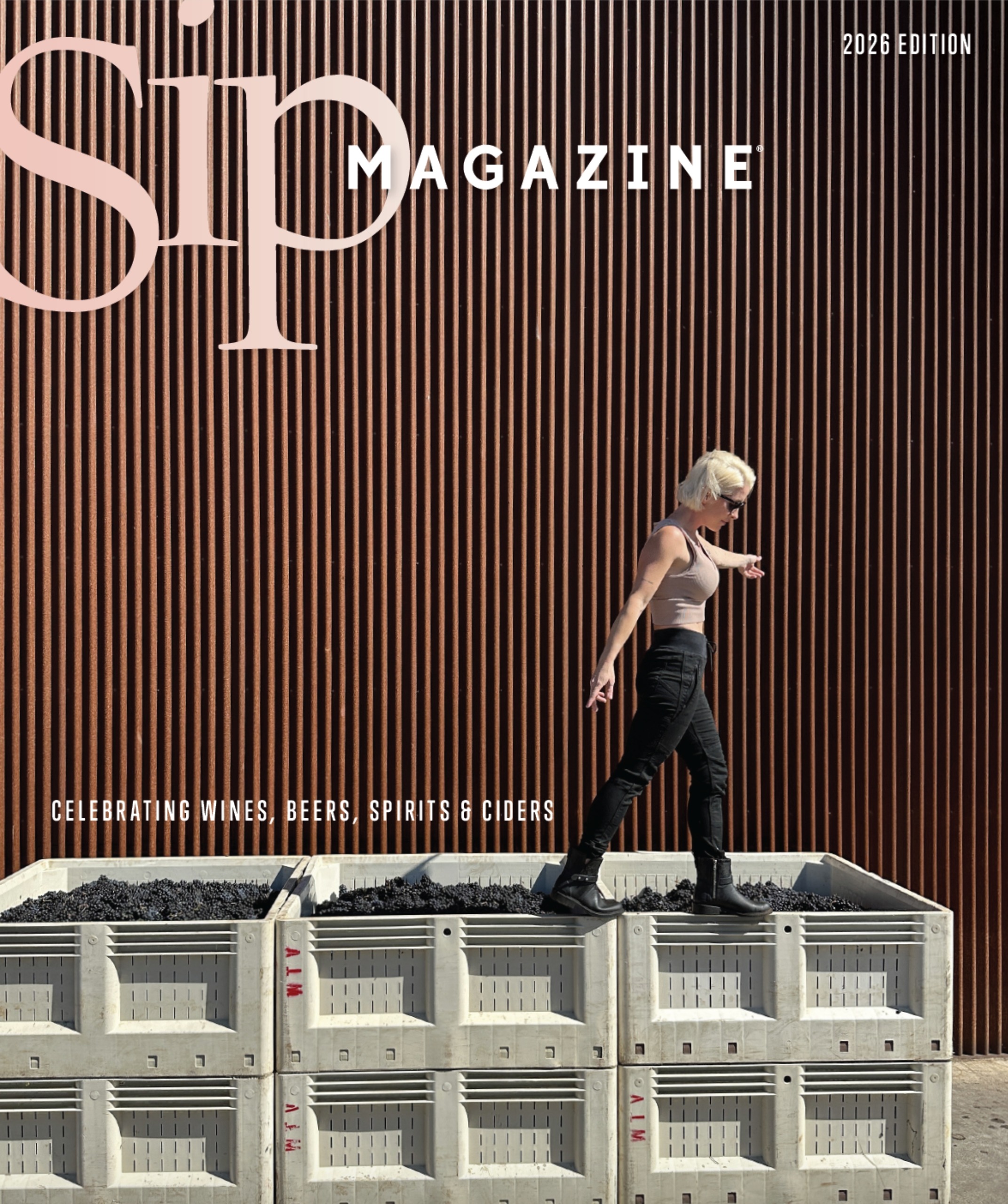
From Manitoba to the Maldives, how a first-generation Canadian built a career without a blueprint.
Linda Milagros Violago calls herself an “itinerant sommelier.”
It’s not a title you find on business cards. It’s a life lived in motion: harvesting grapes in New Zealand, brewing sake in Japan, building wine lists from Vancouver to the Maldives.
Today, she helms the iconic Canlis wine program in Seattle, a restaurant so legendary it needs no first name. Since 1950, Canlis has defined fine dining in the Pacific Northwest. In 2021, Violago became the first woman to run its cellar.
Violago doesn’t romanticize her beginnings. No childhoods spent frolicking in vineyards, no epiphany over a glass of Burgundy. She grew up in Winnipeg, Canada, the daughter of Filipino immigrants, in a city where the winters are long and the wine lists, if they existed, were short.
“You don’t grow up in the Canadian Prairies drinking wine,” she says, without flinching. “And it’s not something my parents were into.”
What they were into was going out to dinner, an early clue that the hospitality bug might bite eventually. But when Violago started working in restaurants, it was out of practicality, not passion. “It was an easy part-time job,” she says. “And I liked food. I loved eating.”
Wine, however, was another story. “I did not like wine when I was young,” she confesses. “I was all about gin and tonics or Manhattans.”
No Map, Just Movement
In many ways, wine snuck up on her. After dropping out of university, she completed a hospitality degree in Winnipeg. In the ’90s, formal wine education there was practically nonexistent. “There was no avenue to learn about wine or taste wine,” she says.
It wasn’t until she moved to Vancouver and started working as a server that the wine bug bit, though even then, it was economics that lit the fire. “The better the wine I could sell, the more money I would make.”
But curiosity crept in. A bartender-slash-wine-buyer at her Italian restaurant job (who later became her partner) demystified the world of wine through storytelling, not snobbery.
“And so, the wine that got me into wine was an Alsatian Gewürztraminer.”
It’s fitting. The grape is famously hard to pin down: aromatic, unpredictable, alive. Like Violago herself, it resists easy categorization.

A Career Built on Questions
“I never once sat down and said, ‘I am going to travel the world,’” she says. But one opportunity led to the next. Cayman Islands. Australia before the Olympics. An attempted move to San Francisco just after the dot-com crash.
New York didn’t offer work, but Ralph Hershom of Le Cirque took time to ask her the right question: What do you want? His advice sent her to Chicago and to Charlie Trotter’s, where she found her footing.
“Working for Charlie Trotter’s really changed the trajectory,” she says.
Trotter’s, with its relentless standards and philosophy-driven kitchen, taught her that wine wasn’t just a beverage. It was a lens for understanding culture, food, and people.
She worked the floor at places like Mugaritz in Spain, Geranium in Denmark, and Restaurant David Toutain in Paris. She spent a season at Soneva resorts in the Maldives and Thailand, building their wine lists while learning about sourcing and sustainability at an island scale.
She even became a kurabito, a sake brewery worker, at Imada Shuzo in Akitsu, Japan.
“Working harvest and brewing sake answered many questions… but also created more questions,” she says. “It was invaluable to work alongside people I respect, doing the work it takes to make the beverage I love to serve.”
At every turn, she chose immersion over observation. “It’s one thing to read about it,” she says. “And another to do it.”
The Wine List
The same curiosity infuses her work at Canlis. She once scoffed, “No one needs a 90-page wine list,” when she arrived. Now, it’s 104 pages, and every addition serves a purpose.
“We’ve continued to seek well-established wineries from various places and balance that with new producers, new grapes, young wineries in established regions.”
There are wine bottles and sakes from almost every place she’s lived: Austria, Japan, New Zealand. Some wines come with two decades of friendship behind them, like a dessert wine from Austria or a Champagne collaboration inspired by recent travels through Europe with Assistant Wine Director Ally Lanoue.
When it comes to Washington wine, Violago is energized by a new generation of producers embracing a more expansive view of sustainability and community care. She nods to Valdemar Estates, Cayuse Vineyards, Itä Wines, and Upsidedown Wine.
“They take a more holistic, forward-looking view of sustainability,” she says. “It’s not enough to protect your investment, you have to protect your people and your soil, too.”
The Body Knows
That same attentiveness to movement, balance, and restoration shows up elsewhere in her life.
Long before wine, there was dance—until, feeling unsupported, she stepped away. Yoga became her way back into her body, a practice she describes as “spiritual, physical, and mental.”
“A lot of my longevity in this career is because of my yoga practice,” she says.
At Canlis, she’s quietly woven mindfulness into the restaurant’s culture by leading stretching and breathing sessions for her team before service, just as she once did for sommeliers in Montreal.
“We only move in one plane,” she says. “We don’t turn. We don’t flow the way our bodies are supposed to. And it shows.”
Violago has led yoga and meditation sessions for sommeliers at SOMM360 in Montreal, helping some of the world’s top wine minds find stillness in the middle of sommelier “boot camps.”
Passing It Forward
Mentorship, for Violago, is both antidote and imperative.
She remembers the years of working in isolation: geographically, racially, culturally, and learning mostly to rely on herself.
It wasn’t until the pandemic, when virtual networks blossomed, that she realized just how many women, people of color, and Filipinos were shaping North America’s wine world.
Today, she’s deliberate about passing it forward. “Canlis has played a big part in my growth,” she says. “They really stress the importance of relationships—with each other, with guests, with ourselves. That was new to me.”
As for what’s next?
“There are a lot of changes happening at Canlis,” she says. “Personally, I embrace change. With change comes innovation. New ideas. New points of view.”
Feature Image by Amber Fouts