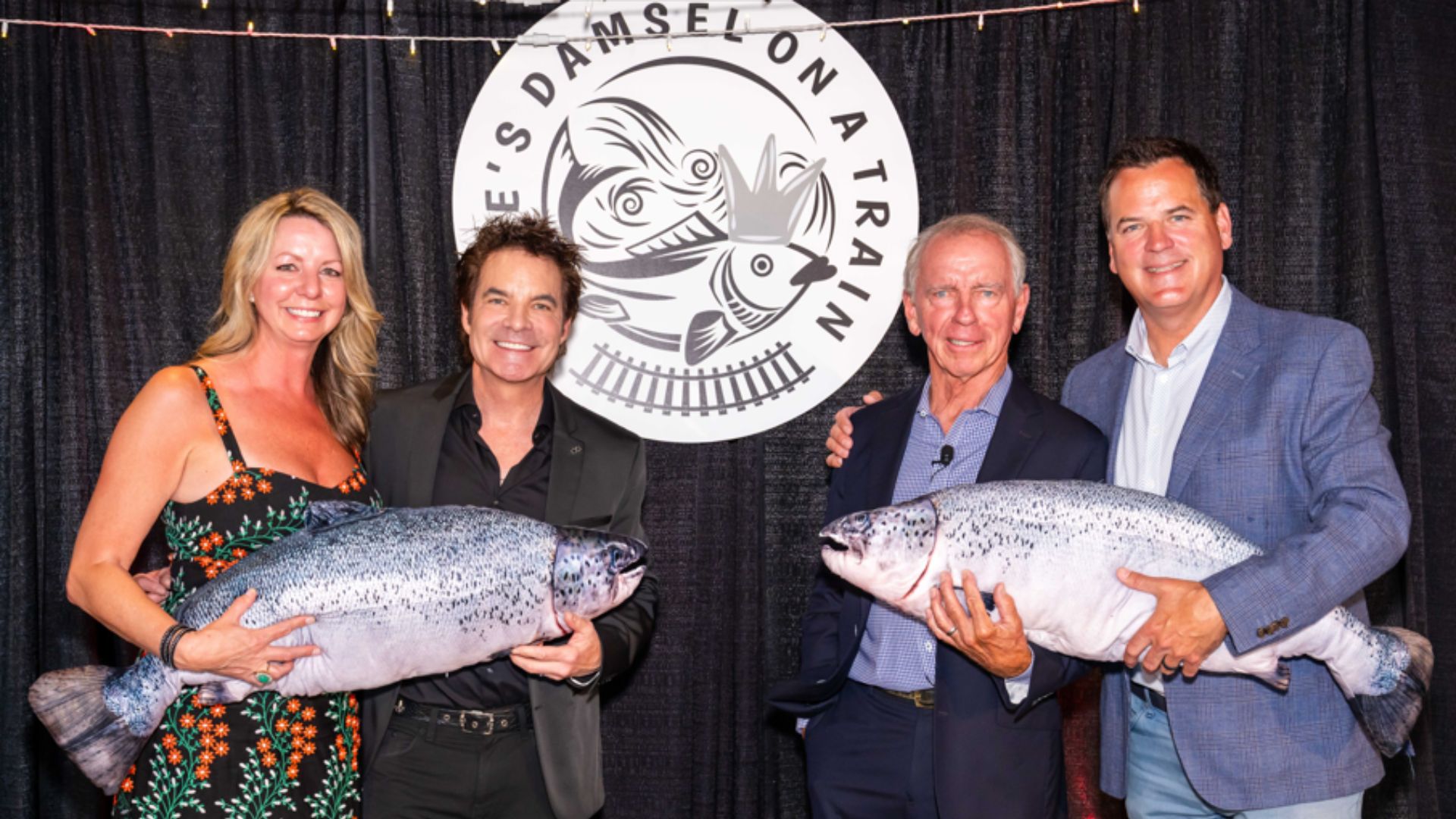
Pictured Left to Right: Duke’s Damsel on a Train Co-Founders Heather Andersen, Pat Monahan, Duke Moscrip and John Moscrip.
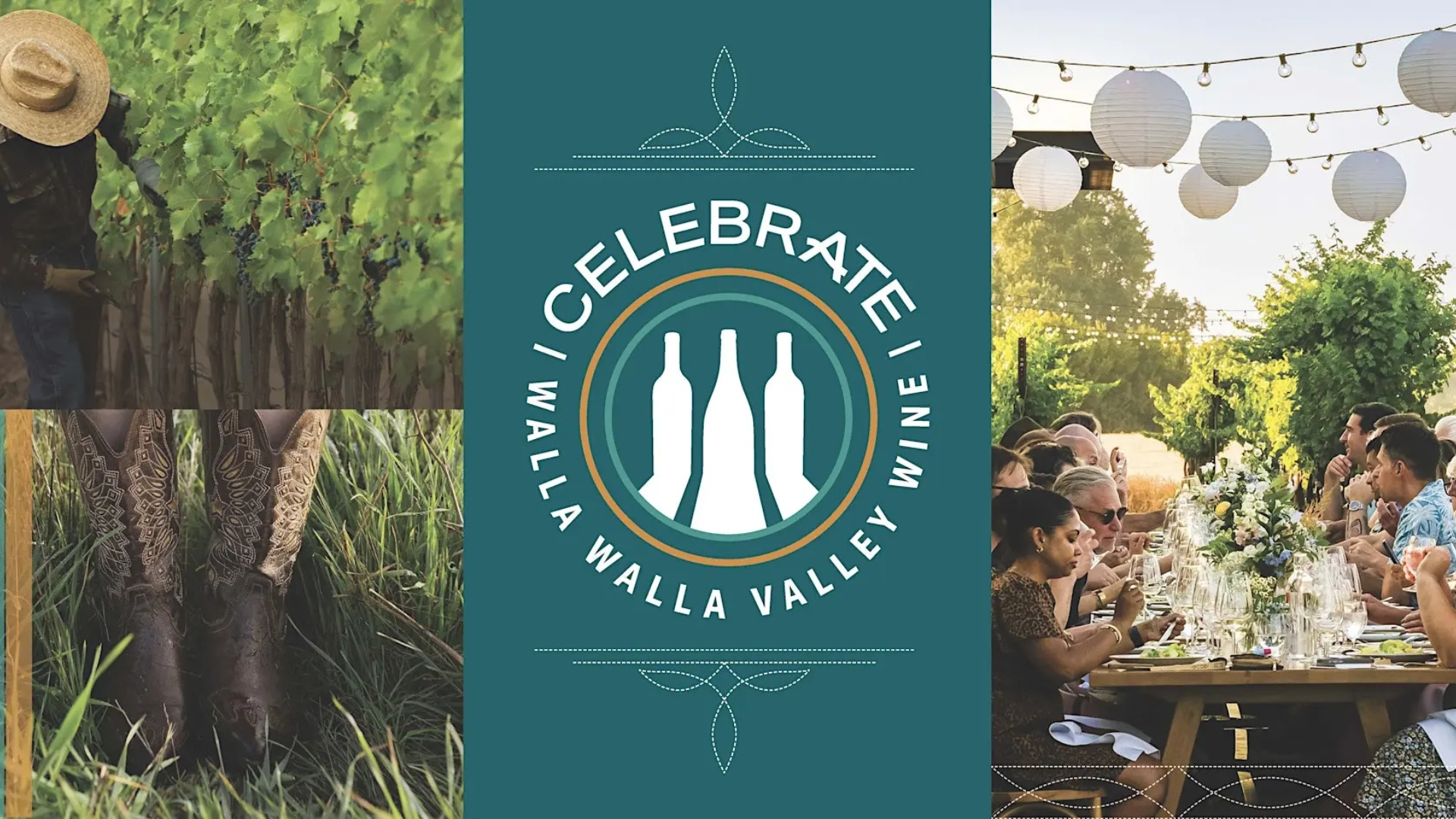
SEATTLE – The Duke’s Damsel on a Train Foundation, a partnership between Duke’s Seafood, Damsel Cellars, and Train’s Pat Monahan, announced today it raised more than $700,000 to help preserve and restore Pacific Northwest wild salmon populations. The Saving Wild Salmon Soirée was held at Dockside at Duke’s on Tuesday, May 6 and featured a seated dinner and wine release of the foundation’s ‘Up River Red’ and ‘Up River White’ benefit wines, a live auction and paddle raise, as well as a special performance by Train.
It is estimated that up to 85% of the Pacific Northwest wild salmon population is already extinct. Environmental organizations, tribes, elected officials, and community members have been working to recover wild salmon and steelhead for decades. Limited government funding and the political viability of some solutions have stalled key actions that are urgently needed to stop salmon extinction – before it’s too late.
“Wild Salmon are going extinct,” said Duke Moscrip, founder of Duke’s Seafood. “There used to be 16 million wild salmon that went up the Columbia River to spawn every year. Now, there are only 500,000. There are many organizations that have done great work to restore wild salmon, but it isn’t enough and it isn’t fast enough. We need a massive amount of money to restore wild salmon. That is our mission in order to restore our iconic wild salmon. Government and non-profits are doing their best, but the issue is much bigger. Experts know what needs to done, but there is simply not enough funding, and not enough public awareness and outrageof the state of salmon. They will go extinct if we don’t change course.”
Duke’s Damsel on a Train Foundation is a 501(c)(3) nonprofit organization working as a catalyst to expand private funding for wild salmon and steelhead recovery efforts. Established in 2022, the volunteer-led Foundation focuses on two objectives: strategic communications that builds awareness for private philanthropy and raising millions to come alongside public investments for salmon and steelhead habitat. The Foundation is operationally lean, granting 85% of all revenue generated to non-profits and community-led organizations working with tribes and government entities to restore habitat and recover wild salmon and steelhead.
In 2023, the Foundation rallied private philanthropists to understand the threat of extinction facing wild salmon and steelhead—raising over $700,000 during the inaugural Saving Wild Salmon Soirée that was distributed to three non-profits. This year, the funds generated will be leveraged to raise $3 to $5 million in the next two years by building and implementing a plan to reach new audiences. With the support of key funders and philanthropists, the Foundation will continue to leverage the funds raised during these initial two phases into millions more, partnering with experts and investing in key habitat conservation and restoration efforts along the way.
“As a winery, being a part of something this important to the PNW region has been an honor,” said Heather Andersen, co-owner of Damsel Cellars. “Working with the region’s salmon experts, alongside Duke, to create a plan for critical short-term solution now has been inspiring. There are dedicated, passionate people here in the Pacific Northwest that know what needs to be done to reverse this situation – we want to help them get the funding they need, river-by-river.”
The Foundation has also partnered with the following organizations to provide funding for issues that require immediate attention: Trout Unlimited for habitat restoration and culvert replacement, Washington Regional Fisheries Recovery Offices for public and private partnership for restoration and culvert replacement, and the installation of Stewardship Partner’s “Boxes of Rain” onto overpasses tofilter out deadly chemicals that are killing salmon instantly. The Boxes of Rain filter out 98% percent of the dangerous chemicals, as tested by UW’s Dr. Ed Kolodgje and WSU chemists and water biologist Jenn McIntyre.